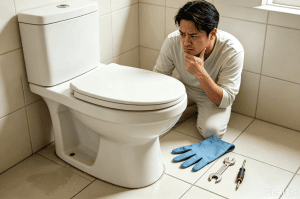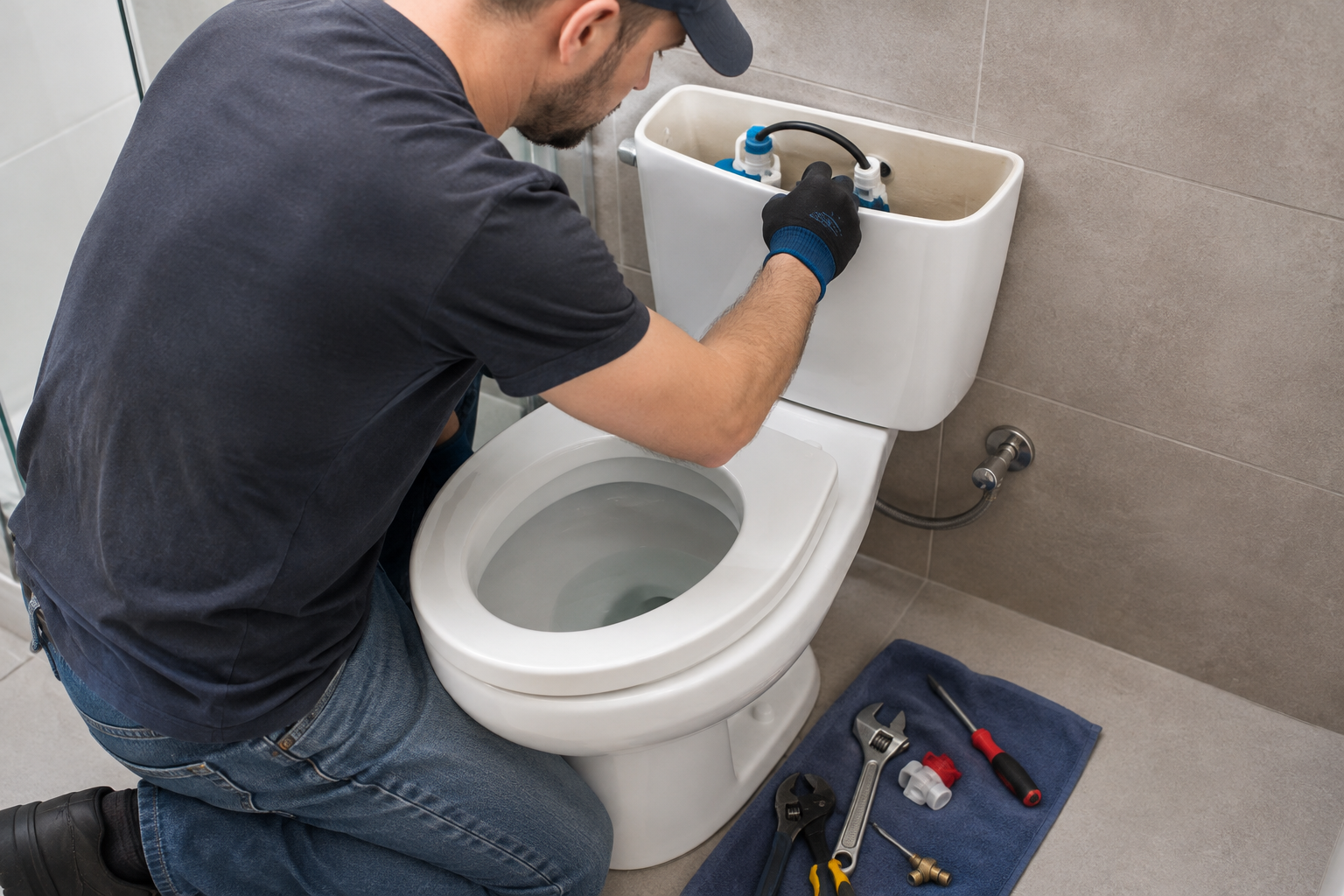
A toilet that starts overflowing can make your heart jump, especially when the bowl is rising even though nothing appears to be blocking the drain. Most people immediately reach for a plunger, but a plunger is not always the answer.
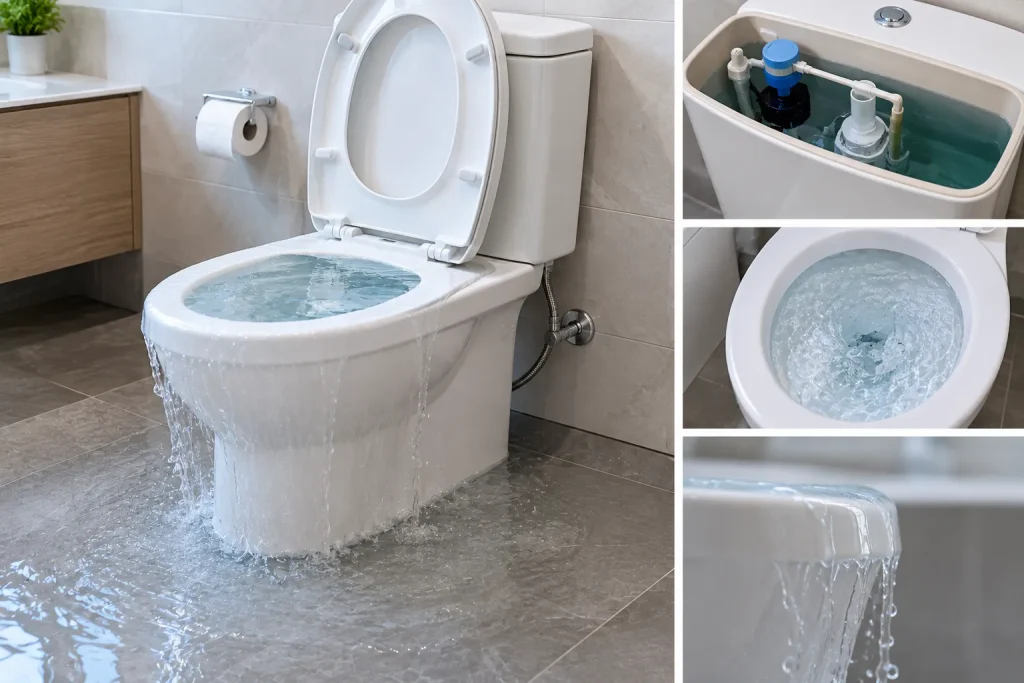
A toilet can overflow even when the trapway and drain are clear. In many cases, the problem is actually inside the tank: the fill valve may not be shutting off, the float may be adjusted too high, or refill water may be entering the overflow tube continuously. A damaged flush valve or a partially restricted drain can create similar symptoms.
The first thing I would do in this situation is stop the water supply and identify where the extra water is coming from. That simple step tells you much more than repeatedly plunging the bowl.
Quick Answer: Why Can a Toilet Overflow Without a Clog?
The most common causes are:
- Faulty fill valve: Water continues entering the tank after it reaches the correct level.
- Float set too high: The fill valve does not shut off soon enough.
- Water flowing into the overflow tube: Excess tank water continues into the bowl.
- Flush valve or flapper problem: Tank water keeps leaking into the bowl.
- Partially restricted drain or venting problem: The bowl can drain too slowly even when there is no complete blockage.
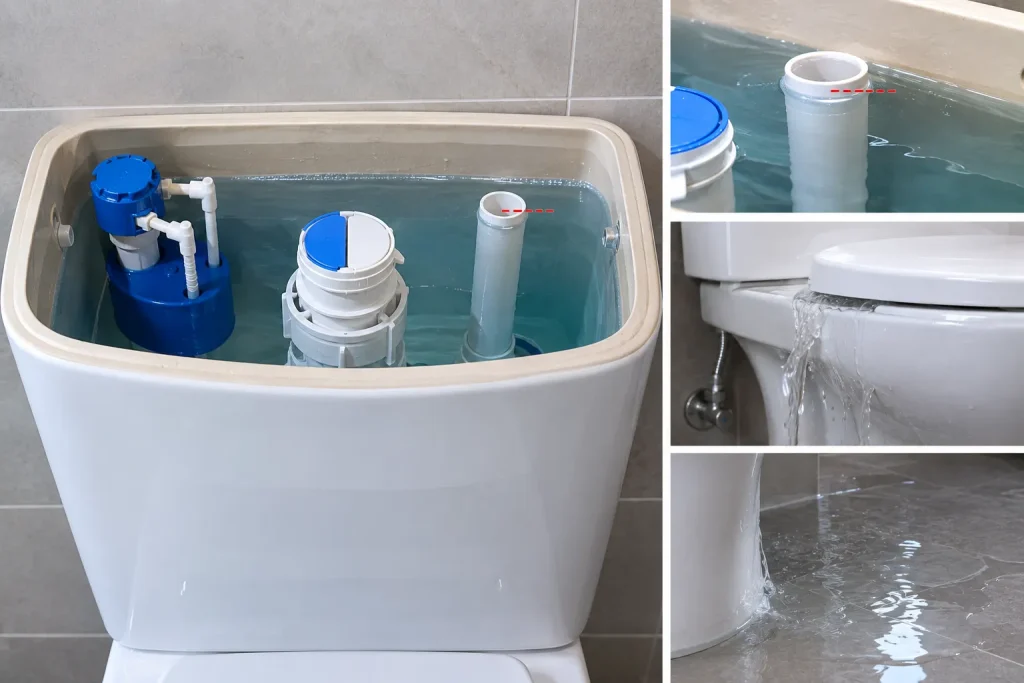
EPA WaterSense specifically recommends checking whether water is flowing over the top of the tank’s overflow tube. If lowering the float does not stop the flow, EPA advises replacing the fill valve.
First: Stop the Overflow Before Diagnosing It
If the bowl is already rising, do not keep flushing to see what happens.
- Turn the toilet’s shutoff valve clockwise.
- If the valve does not work, remove the tank lid and lift or secure the float so the fill valve stops admitting water.
- Give the bowl time to return to a safe level.
This is also a good reason to know where the toilet shutoff valve is located before an emergency happens.
How to Tell Whether the Toilet Is Actually Clogged
A complete clog usually causes the bowl to rise quickly during a flush and drain very slowly afterward. An overflowing toilet caused by a tank problem behaves differently: the bowl may gradually gain water because the tank continues supplying it even though the drain itself is open.
| What You Notice | Likely Cause | What to Check |
|---|---|---|
| Bowl rises immediately after every flush | Drain restriction | Bowl and trapway |
| Bowl slowly rises while toilet is not being used | Continuous tank-to-bowl flow | Flapper or flush valve |
| Tank water reaches overflow tube and keeps flowing | Fill valve or float problem | Float and fill valve |
| Toilet overflows only when another fixture drains | Drain or venting problem | Shared plumbing |
| Water appears around the base | Base seal or supply connection issue | Floor connection |
1. A Faulty Fill Valve Is One of the Most Likely Causes
The fill valve controls how water enters the toilet tank after you flush. Once the water reaches the correct level, the valve should close.
If it sticks, wears out, or becomes clogged with mineral deposits, water can continue entering the tank. Eventually, that water flows through the overflow tube and into the bowl.
EPA guidance specifically tells homeowners to inspect tank-type toilet fill valves and check for water flowing over the top of the overflow tube.
What it looks like: You may hear a steady hissing or filling sound, while water visibly enters the tank even though nobody has flushed.
2. The Float May Be Set Too High
The float tells the fill valve when to stop admitting water. If the float is adjusted too high, the valve may allow the water level to rise into the overflow tube.
Open the tank and watch the water level after a flush. If the water keeps rising and then spills through the overflow tube, lower the float according to the toilet manufacturer’s adjustment method.
Do not assume every toilet uses the same float design. Older toilets may use a ball float, while many newer fill valves use a cup-style float.
3. The Overflow Tube May Be Doing Its Job
When homeowners see water entering the overflow tube, they sometimes think the tube is broken. Usually, the opposite is true: the overflow tube is preventing the tank from overflowing onto the floor.
The problem is that the fill system has allowed the water level to rise too far in the first place.
EPA’s current residential toilet maintenance guidance says to check whether water is continuously flowing into the overflow tube and to adjust the float lower if the water level is too high.
4. A Leaking Flapper Can Keep Sending Water Into the Bowl
A flapper or valve seal controls the opening between the tank and bowl. If the seal does not close correctly, water slowly leaks from the tank into the bowl.
The fill valve then has to keep replacing that lost water. The toilet may sound as if it is continuously running, even though the original problem began with a leaking flapper.
EPA reports that many toilet leaks are caused by worn-out flappers and recommends testing for silent leaks with a dye test.
5. The Flush Valve Seat May Be Preventing a Proper Seal
Replacing the flapper does not always solve a leak. If the surface underneath the flapper is rough, cracked, warped, or covered with mineral deposits, the new seal may still allow water to pass.
This is especially common in older toilets or homes with hard water.
Before replacing multiple flappers, inspect the entire sealing area. If the valve seat itself is damaged, replacing the flush valve assembly may be the more reliable repair.
6. A Partial Drain Restriction Can Still Cause an Overflow
A toilet does not have to be completely blocked to overflow.
A partial restriction in the trapway or drain can slow water movement enough that a flush sends more water into the bowl than the drain can handle quickly. Paper buildup, mineral deposits, or an object lodged farther down the line can all contribute.
This is where a plunger can actually be useful—but only if the symptoms point to a drainage problem.
7. A Venting or Shared Drain Problem Can Be the Real Culprit
If the toilet behaves normally when flushed by itself but begins rising when a nearby shower, sink, or washing machine drains, the issue may be farther down the plumbing system.
That pattern is different from a simple tank problem. It can indicate a partially restricted branch drain, a larger building drain problem, or inadequate venting.
For these symptoms, repeated plunging usually treats the symptom rather than the cause. A plumber may need to inspect the drainage system.
How Much Does It Cost to Fix a Toilet That Overflows?
| Repair | Typical DIY Parts Cost | Installation | Maintenance | Advantages | Disadvantages |
|---|---|---|---|---|---|
| Adjust float | $0 | Easy | Low | Fast and inexpensive | Only works if adjustment is the problem |
| Replace flapper | $5–$20 | Easy | Low | Cheap and quick repair | Will not fix a damaged valve seat |
| Replace fill valve | $15–$60 | Easy to moderate | Low | Fixes many running-water problems | Requires water shutoff and adjustment |
| Replace flush valve | $20–$80+ | Moderate | Low | Useful for persistent tank-to-bowl leaks | More involved installation |
| Professional drain service | $100–$500+ | Professional | Low | Can identify deeper plumbing problems | Higher cost |
These are planning ranges, not fixed service prices. Local labor rates, toilet design, access, and the severity of the plumbing problem can change the final cost substantially.
A Simple Diagnostic Process I Use at Home
Rather than replacing parts randomly, work from the easiest check to the most involved.
- Step 1: Stop the water if the bowl is approaching the rim.
- Step 2: Remove the tank lid.
- Step 3: Watch the water level while the toilet refills.
- Step 4: Check whether water is entering the overflow tube.
- Step 5: Check the flapper and flush valve seal.
- Step 6: If the tank looks normal, test whether the bowl drains slowly.
- Step 7: If multiple fixtures cause the toilet to rise, investigate the shared drain.
This sequence usually identifies whether you’re dealing with a tank problem or a drainage problem before you spend money on replacement parts.
When Should You Use a Plunger?
Use a plunger when the evidence points toward a drainage restriction: the bowl rises quickly when flushed, drains slowly afterward, and does not show signs of continuous tank filling.
Use a flange-style toilet plunger that creates a good seal around the drain opening. Avoid repeatedly plunging a toilet when the actual problem is a faulty fill valve, because pressure in the bowl will not repair the tank mechanism.
Real-Life Scenario: Two Toilets Can Look Identical but Have Different Problems
Imagine two toilets in neighboring homes.
Toilet A rises toward the rim immediately after flushing, then slowly drains over several minutes. That points toward a restriction downstream.
Toilet B begins to refill after every flush, and you can hear water continuously entering the tank. The bowl gradually rises even when nobody has flushed. In that case, I would inspect the fill valve, float, flapper, and overflow tube first.
The symptoms may look similar from the bathroom doorway, but the repair path is completely different.
How Much Water Can a Running Toilet Waste?
EPA WaterSense says household leaks can waste about 180 gallons of water per week, and toilets are frequently responsible for household leaks.
Older WaterSense technical guidance also documents that a continuously running fill valve can waste substantial amounts of water depending on the flow rate.
The exact amount from your toilet depends on the leak rate, so these figures should be treated as an indication of why the problem deserves prompt attention rather than as a guarantee for every toilet.
When Should You Call a Plumber?
- The toilet overflows even after the tank components are adjusted correctly.
- Several fixtures drain slowly at the same time.
- The toilet rises when a shower or washing machine is used.
- Water is coming out around the toilet base.
- The shutoff valve does not work.
- You suspect an object is lodged deep in the drain.
- The home has recurring sewer or drainage backups.
A recurring overflow caused by a larger drainage problem is not a good DIY guessing game. Fixing the tank will not solve a blockage farther down the plumbing line.
Related Toilet Maintenance
For another common toilet symptom, see Why Does My Toilet Keep Losing Water After Flushing?
Frequently Asked Questions
1. Can a toilet overflow if there is no clog?
Yes. A faulty fill valve, incorrectly adjusted float, leaking flapper, or water continuously entering the overflow tube can cause the bowl to receive excess water even when the drain is open.
2. Why does my toilet overflow only after flushing?
If the bowl rises immediately after a flush and drains slowly, suspect a partial restriction in the trapway or drain. If the bowl keeps gaining water after the flush has finished, inspect the tank and fill system.
3. How do I know if the fill valve is causing the overflow?
Remove the tank lid and watch the water level. If the fill valve continues supplying water after the tank reaches its normal level, especially if water is entering the overflow tube, the fill valve or float needs attention.
4. Can a bad flapper cause an overflowing toilet?
Yes, indirectly. A leaking flapper can continuously send tank water into the bowl, causing the fill valve to keep refilling the tank. If enough water enters the bowl and the drain cannot handle the flow, the bowl can overflow.
5. Should I replace the whole toilet if it keeps overflowing?
Usually not. If the porcelain is intact and the toilet otherwise flushes correctly, repairing the fill valve, flapper, flush valve, or drainage problem is usually more practical than replacing the entire fixture.
Conclusion
A toilet can overflow without a complete clog, and the tank is often the first place worth investigating. Start by stopping the water, then watch where the water is moving. If it is entering the overflow tube, check the float and fill valve. If the tank is behaving normally but the bowl drains slowly, investigate the trapway and drain.
The important thing is not to keep plunging blindly. Once you identify whether the problem is coming from the tank, bowl, or shared plumbing system, the correct repair becomes much easier to choose.
A small repair today can also prevent unnecessary water waste and a much messier overflow later.