Introduction
A clogged siphonic toilet is one of the most common household plumbing issues, and it usually happens at the worst possible time. While the system is designed to generate strong suction and clear waste efficiently, it is still vulnerable to blockages caused by excessive toilet paper, foreign objects, or improper waste disposal habits.
In many cases, the problem is not a mechanical failure but a flow restriction inside the trapway or siphon channel. The good news is that most clogs can be resolved quickly using simple tools and basic techniques without calling a plumber.
This guide explains practical, real-world methods to fix a clogged siphonic toilet, including step-by-step solutions, prevention strategies, and usage-based insights drawn from typical household scenarios.
If you’re comparing flushing performance and system behavior, our Siphonic vs Washdown Toilets: Which One Is Better for Your Bathroom? guide explains how different flushing systems respond to clogging risks.
Quick Answer
To fix a clogged siphonic toilet, start with hot water and dish soap, then use a plunger with proper sealing technique. For stubborn blockages, a modified toilet brush method or a drain auger can help break up deeper obstructions. Most clogs are resolved within 10–20 minutes if addressed early.
Why Siphonic Toilets Get Clogged
Although siphonic toilets are designed for strong flushing performance, clogs still occur due to real-world usage patterns.
Common causes include:
- Excessive toilet paper usage
- Flushing wipes or hygiene products
- Cat litter or food waste
- Low water level in the tank
- Partial trapway blockage from buildup
- Weak siphon activation due to mineral deposits
Understanding how the siphon effect works helps explain why partial blockages can quickly escalate into full clogs. You can read more in How Does a Siphonic Toilet Create Strong Suction?.
Quick Comparison of Unclogging Methods
| Method | Cost | Difficulty | Time Required | Advantages | Disadvantages |
|---|---|---|---|---|---|
| Hot Water + Dish Soap | $1–$5 | Easy | 10–20 min | Safe and fast for light clogs | Not effective for deep blockages |
| Plunger Method | $5–$15 | Easy | 5–15 min | Highly effective for most clogs | Requires correct technique |
| Toilet Brush + Plastic Bag Hack | $0–$5 | Moderate | 10–25 min | Breaks stubborn soft blockages | Less hygienic |
| Drain Auger (Snake Tool) | $15–$40 | Moderate | 15–30 min | Removes deep obstructions | Requires careful handling |
Method 1: Hot Water + Dish Soap (First-Line Fix)
This is often the fastest and safest method for minor clogs.
Pour a small amount of dish soap into the toilet bowl, followed by warm water (around 60°C, not boiling). Let it sit for 10–15 minutes to soften the blockage.
In many cases, this alone restores normal flushing because it reduces friction and helps break down organic material.
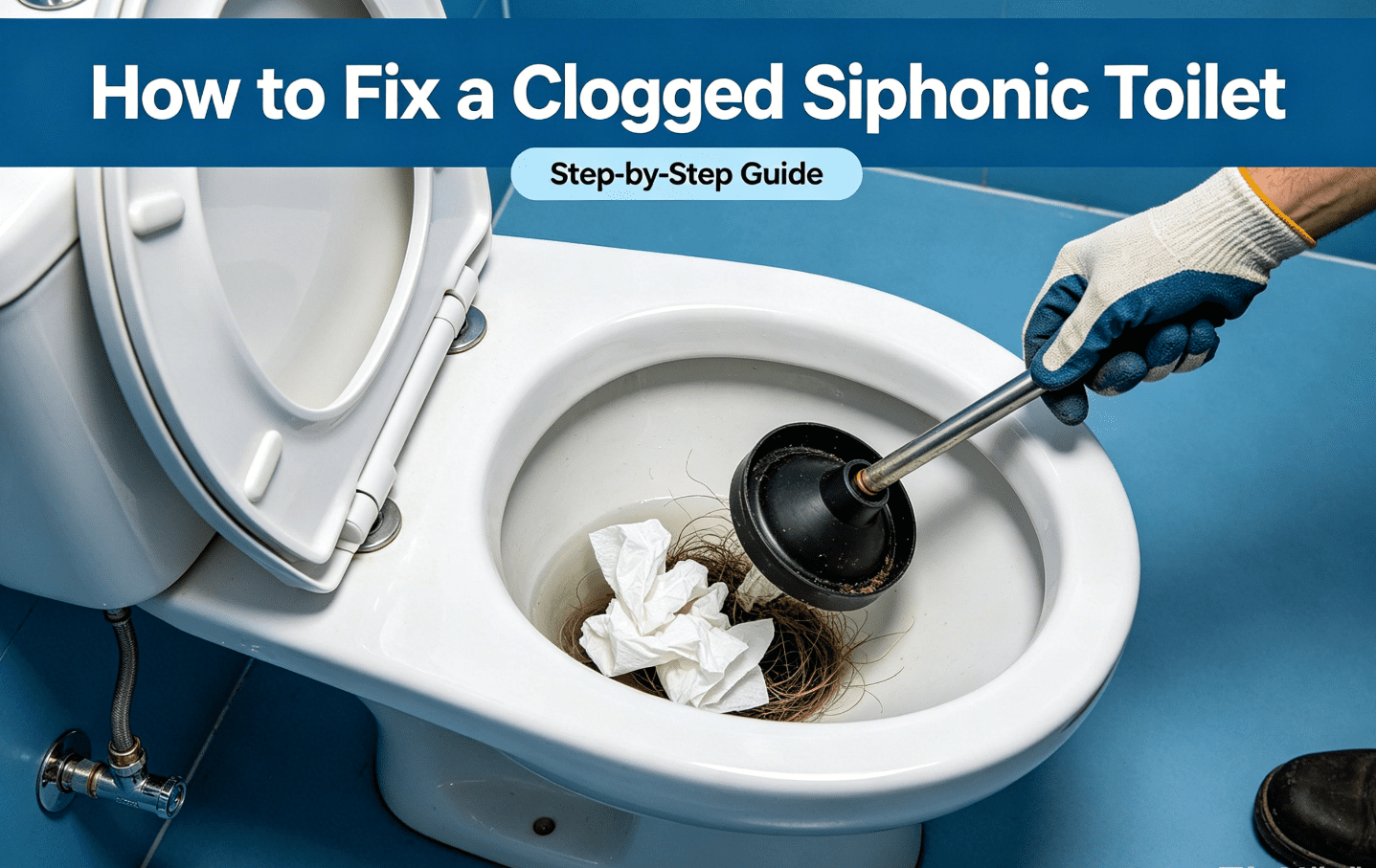
Method 2: Proper Plunger Technique (Most Effective)
The plunger is still the most reliable tool for unclogging a siphonic toilet.
- Ensure a tight seal over the drain opening
- Push down slowly to remove air
- Pull up quickly to create suction
- Repeat 10–20 cycles
The key is pressure consistency. Many homeowners fail because they push too gently or break the seal during motion.
Method 3: Toilet Brush + Plastic Bag Method (Emergency Fix)
This method is useful when a plunger is unavailable.
Wrap a sturdy plastic bag around a toilet brush and secure it tightly. Insert it into the drain opening and apply short, controlled pushing motions to break up the blockage.
While not the cleanest method, it is surprisingly effective for soft clogs caused by paper buildup.
Method 4: Drain Auger for Deep Blockages
If the clog is located deeper in the trapway, a drain auger may be required.
Feed the cable slowly into the drain until resistance is felt, then rotate gently to break apart or retrieve the obstruction.
This method is especially useful in older toilets where mineral buildup narrows internal flow channels.
Real-World Scenario: When Habits Cause Constant Clogs
In many households, toilet clogs are not isolated incidents but recurring patterns caused by usage habits.
One common situation involves family members flushing items that should never enter the toilet—such as cat litter, paper towels, or excessive wipes. Over time, these habits lead to frequent blockages, slow drainage, and stress during everyday use.
In one real example, a household experienced repeated clogging until they changed both behavior and hardware. After upgrading to a more stable flushing system and improving usage discipline, clog frequency dropped significantly.
This highlights an important point: solving clog issues is not only about tools, but also about prevention and system choice.
For a deeper understanding of toilet system differences, see Best Siphonic Toilets in 2026.
When a Clog Indicates a Bigger Problem
If your toilet clogs frequently despite correct usage, the issue may be structural rather than behavioral.
- Partially blocked trapway
- Low tank water level
- Weak siphon formation
- Mineral buildup inside pipes
According to the EPA WaterSense program, inefficient plumbing performance often results from maintenance neglect rather than fixture failure.
Preventing Future Clogs
Preventive habits are more effective than repeated unclogging.
- Flush only toilet paper and human waste
- Avoid flushing wipes or bulky materials
- Maintain proper tank water level
- Clean rim jets and trapway regularly
- Use moderate toilet paper amounts
Small behavioral changes can significantly reduce clog frequency over time.
Pros and Cons of DIY Unclogging Methods
| Pros | Cons |
|---|---|
| Fast and cost-effective | Requires correct technique |
| No professional service needed | Some clogs require multiple attempts |
| Works for most common blockages | Deep blockages may need tools |
| Improves user confidence in maintenance | Improper use may worsen blockage |
Expert Recommendations
From a practical plumbing perspective, most siphonic toilet clogs can be resolved without professional help if addressed early. The key is selecting the correct method based on severity.
- Start with hot water and soap for soft clogs
- Use a plunger for standard blockages
- Use a drain auger for deep or persistent clogs
- Inspect usage habits if clogs are frequent
- Check water level if flushing is weak
In many cases, recurring clogs indicate that both maintenance and usage behavior need adjustment rather than full replacement of the toilet.
Frequently Asked Questions
What is the fastest way to unclog a siphonic toilet?
A properly used plunger is usually the fastest and most effective solution for most clogs.
Can hot water really unclog a toilet?
Yes. Warm water combined with dish soap can soften soft blockages and help restore flow in mild cases.
Why does my toilet keep clogging?
Frequent clogs are often caused by flushing non-flushable items, low water levels, or partial trapway restrictions.
Is a drain snake necessary for toilet clogs?
Not always. It is only needed when the blockage is deeper or resistant to plunging methods.
Can mineral buildup cause clogs?
Yes. Mineral deposits can narrow internal passages and reduce flushing efficiency, increasing clog risk over time.
Conclusion
Fixing a clogged siphonic toilet is usually straightforward when approached methodically. Most clogs can be resolved within minutes using basic household tools like a plunger, hot water, or simple mechanical techniques.
However, long-term prevention is equally important. Understanding usage habits, maintaining proper water flow, and performing basic cleaning routines can significantly reduce future clogging issues and keep the toilet operating efficiently.