A leaking bathroom faucet may look like a small problem, but ignoring it can lead to wasted water, higher utility bills, mineral buildup, and even damage around your sink. Many homeowners notice the issue when they hear a constant dripping sound at night or find water stains around the faucet base.
The good news is that most bathroom faucet leaks have simple causes. In many cases, the problem comes from worn-out internal parts such as cartridges, washers, O-rings, or loose connections rather than needing a complete faucet replacement.
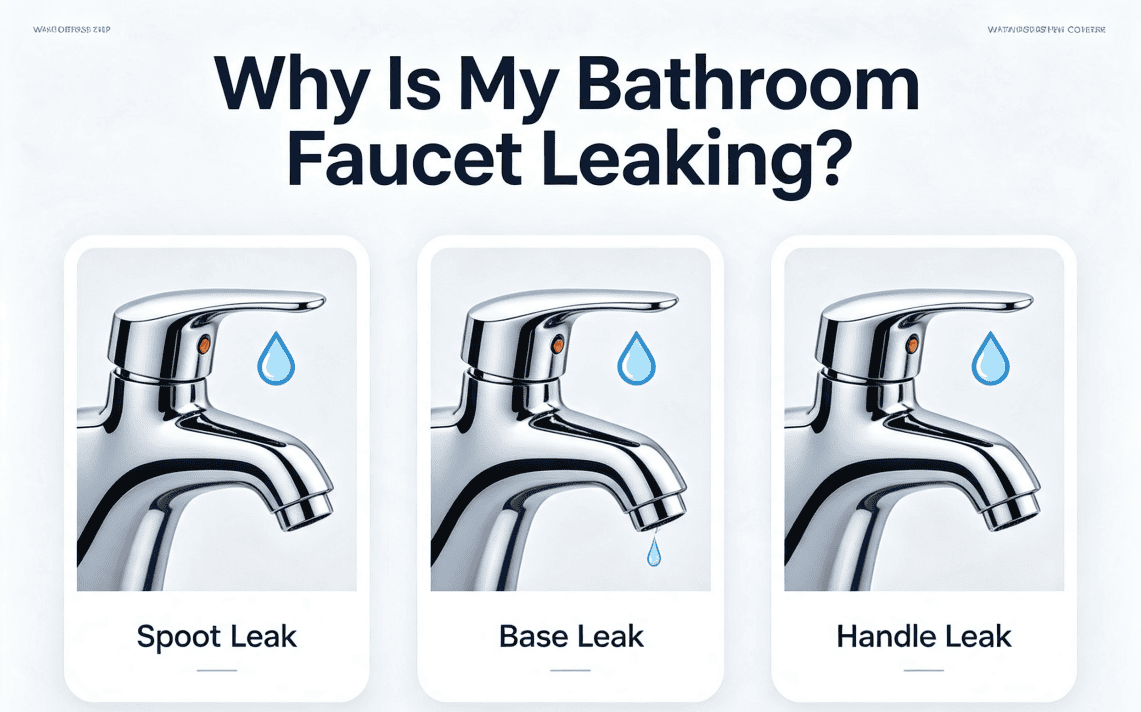
Based on real home maintenance experience, the fastest way to fix a leaking faucet is to first identify where the water is coming from. A leak from the handle requires a different solution than a leak from the spout or faucet base.
Quick Conclusion: What Causes a Bathroom Faucet to Leak?
The most common reasons a bathroom faucet leaks include:
- Worn-out cartridge or valve: The internal sealing component no longer controls water flow properly.
- Damaged O-ring: A small rubber ring becomes cracked or loose over time.
- Loose connections: Water escapes from supply lines or faucet fittings.
- Mineral buildup: Hard water deposits prevent proper sealing.
- Old faucet components: Aging parts lose their ability to stop leaks.
For most homeowners, replacing a small internal component is cheaper and easier than replacing the entire faucet.
How to Identify Where Your Bathroom Faucet Is Leaking
Before repairing a leaking faucet, find the exact source of the water. This simple step prevents replacing the wrong part.
| Leak Location | Possible Cause | Common Solution |
|---|---|---|
| Water dripping from faucet spout | Worn cartridge, washer, or valve | Replace internal valve components |
| Water leaking around handle | Damaged O-ring or cartridge | Replace sealing parts |
| Water leaking at faucet base | Loose seal or damaged gasket | Tighten connection or replace gasket |
| Water leaking under sink | Loose supply line connection | Tighten fittings or replace hose |
Common Reasons Why Bathroom Faucets Leak
1. Worn Faucet Cartridge
Modern bathroom faucets often use ceramic cartridges to control water flow and temperature. Over time, repeated opening and closing can wear down the internal seals.
A damaged cartridge usually causes:
- Continuous dripping after turning off the faucet
- Difficult temperature adjustment
- Reduced water control
For single-handle faucets, cartridge failure is one of the most common reasons for leaks.
2. Damaged O-Rings and Seals
O-rings are small rubber components that prevent water from escaping around moving parts. Although they are inexpensive, they are essential for keeping faucets watertight.
After several years of use, rubber seals may become:
- Dry
- Cracked
- Loose
- Deformed
3. Mineral Deposits From Hard Water
Homes with hard water often experience faucet problems because minerals such as calcium and magnesium accumulate inside the faucet.
Mineral buildup can:
- Block water flow
- Damage seals
- Prevent valves from closing completely
Regular cleaning with suitable bathroom cleaners can help reduce mineral buildup and extend faucet life.
4. Loose Faucet Connections
Sometimes the faucet itself is not damaged. Loose nuts, supply lines, or mounting hardware can allow water to escape.
This problem is especially common after faucet installation or bathroom renovation when connections were not tightened correctly.
How Much Does It Cost to Fix a Leaking Bathroom Faucet?
| Repair Type | Average Cost | Difficulty | Best Situation |
|---|---|---|---|
| Tighten loose connections | $0–$20 | Easy | Minor leaks under sink |
| Replace O-ring or washer | $5–$30 | Easy | Small handle or base leaks |
| Replace cartridge | $20–$100 | Medium | Continuous dripping |
| Replace entire faucet | $100–$500+ | Medium | Old or damaged faucet |
How to Fix a Leaking Bathroom Faucet Step by Step
Step 1: Turn Off the Water Supply
Before removing any faucet parts, close the shut-off valves under the sink. This prevents water from spraying during repair.
Step 2: Remove the Faucet Handle
Depending on the faucet design, you may need to remove a small decorative cap and loosen the handle screw.
Take photos during disassembly. This simple habit makes reassembly much easier.
Step 3: Inspect Internal Components
Check the cartridge, washer, and O-rings for signs of damage.
- Cracks indicate replacement is needed.
- Mineral buildup may require cleaning.
- Loose parts should be tightened carefully.
Step 4: Replace Damaged Parts
Install the new component carefully and ensure it matches the original faucet model.
Using the wrong cartridge size is a common DIY mistake and may cause additional leaks.
Step 5: Test the Faucet
Turn the water supply back on slowly and check:
- Handle operation
- Water pressure
- Leak points
- Faucet stability
Real Home Experience: When Should You Repair or Replace a Faucet?
Many homeowners immediately replace a leaking faucet, but that is not always necessary.
| Situation | Recommended Choice |
|---|---|
| Faucet is less than 5 years old | Repair internal parts |
| Leak caused by cartridge failure | Replace cartridge |
| Visible corrosion or cracks | Replace faucet |
| Frequent repairs are needed | Upgrade to a new faucet |
For example, a homeowner with a modern single-handle bathroom faucet may only need a $30 cartridge replacement instead of spending hundreds on a new faucet.
How to Prevent Bathroom Faucet Leaks
- Clean mineral deposits regularly.
- Avoid forcing the faucet handle when turning it.
- Check connections under the sink every few months.
- Choose quality faucets with durable ceramic valves.
- Fix small drips before they become larger problems.
Related Bathroom Faucet Guides
Frequently Asked Questions About Leaking Bathroom Faucets
1. Why does my bathroom faucet drip after I turn it off?
A dripping faucet usually means the internal cartridge, washer, or valve seal is worn and cannot completely stop water flow.
2. Can I fix a leaking bathroom faucet myself?
Yes. Many faucet leaks can be repaired with basic tools if the problem is a worn cartridge, O-ring, or loose connection.
3. How long do bathroom faucet cartridges last?
A quality faucet cartridge can often last several years, but lifespan depends on water quality, usage frequency, and maintenance.
4. Should I replace my faucet instead of repairing it?
If the faucet body is damaged, corroded, or requires frequent repairs, replacement is usually a better long-term solution.
5. How can I stop hard water from damaging my faucet?
Regular cleaning, removing mineral deposits, and installing water filtration systems can help reduce hard water damage.
Conclusion: Fixing a Leaking Bathroom Faucet Before It Gets Worse
A leaking bathroom faucet is usually a small repair problem rather than a reason to replace the entire fixture. Identifying the leak location and replacing worn components can restore normal performance quickly.
Regular maintenance, proper cleaning, and choosing quality faucet parts can significantly extend the lifespan of your bathroom faucet. A few minutes of inspection today can prevent water waste and expensive repairs in the future.