Introduction
Have you ever wondered why your toilet seems to clog for no obvious reason? In many cases, the problem isn’t the toilet itself—it’s a neglected trapway.
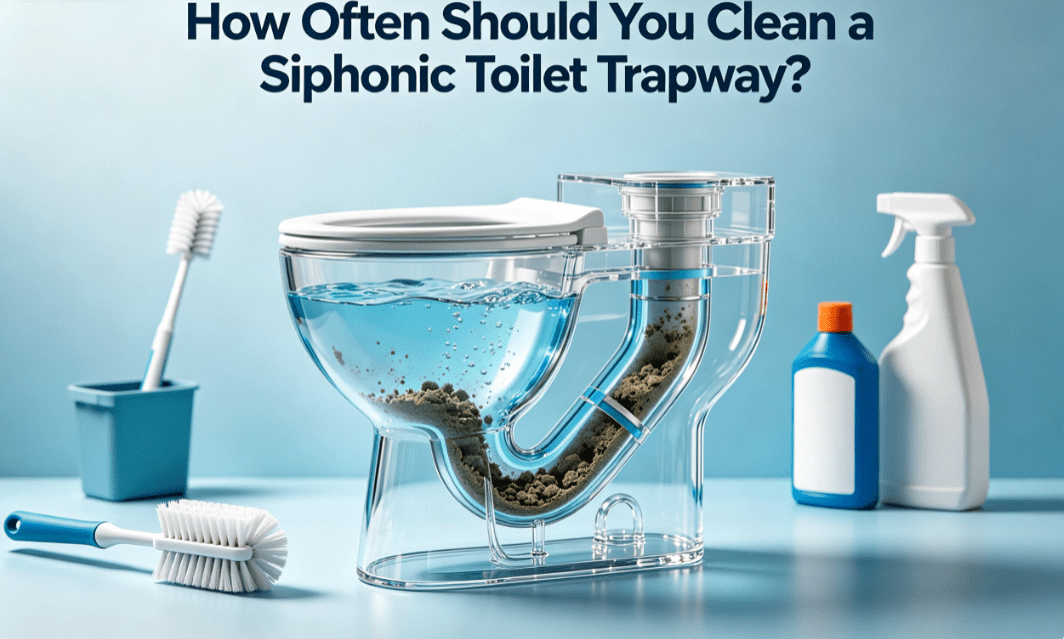
The trapway is the curved passage inside a siphonic toilet that creates the powerful suction needed to remove waste. Over time, mineral deposits, toilet paper residue, organic buildup, and other debris can gradually narrow this passage, reducing flushing performance and increasing the risk of clogs.
Many homeowners focus on cleaning the toilet bowl but rarely think about the hidden trapway. Unfortunately, ignoring this critical component can lead to weak flushing, recurring blockages, unpleasant odors, and expensive repairs.
In this guide, you’ll learn how often to clean a siphonic toilet trapway, warning signs that indicate cleaning is needed, the best cleaning methods, and practical maintenance tips to keep your toilet performing efficiently for years.
For a broader understanding of flushing system performance, our Siphonic vs Washdown Toilets: Which One Is Better for Your Bathroom? guide explains how trapway design influences flushing efficiency and maintenance requirements.
Quick Answer
Most homeowners should clean a siphonic toilet trapway every 3 to 6 months. However, homes with hard water, heavy toilet usage, or recurring clog issues may benefit from trapway cleaning every 1 to 3 months. Regular maintenance helps preserve flushing power, prevent blockages, and extend the lifespan of the toilet.
What Is a Toilet Trapway?
The trapway is the internal S-shaped channel that connects the toilet bowl to the drainpipe.
In a siphonic toilet, the trapway is responsible for generating the siphon effect that rapidly pulls waste from the bowl. Because this passage remains hidden, many homeowners don’t realize that buildup can accumulate inside it over time.
Common trapway contaminants include:
- Mineral deposits from hard water
- Toilet paper residue
- Organic waste buildup
- Soap and cleaning product residue
- Foreign materials accidentally flushed
Even small deposits can reduce flow efficiency and weaken flushing performance.
How Often Should You Clean the Trapway?
| Household Type | Recommended Cleaning Frequency | Reason |
|---|---|---|
| 1–2 Person Household | Every 6 Months | Lower daily usage |
| Family Household | Every 3–4 Months | Moderate to heavy usage |
| Hard Water Areas | Every 1–3 Months | Faster mineral accumulation |
| Rental Properties | Every 3 Months | Higher risk of improper use |
| Frequent Clog Issues | Monthly Inspection | Early detection of buildup |
As a general rule, if flushing performance begins to decline, it’s worth inspecting and cleaning the trapway before the problem becomes severe.
Warning Signs Your Trapway Needs Cleaning
The toilet often provides early warning signs before a complete blockage occurs.
- Water drains slowly after flushing
- Multiple flushes are required
- Weak siphon action
- Gurgling sounds after flushing
- Recurring partial clogs
- Persistent odors despite cleaning the bowl
Many homeowners mistakenly blame the flush valve or tank components when the actual problem is buildup hidden inside the trapway.
Common Habits That Lead to Trapway Buildup
Some everyday habits significantly increase the risk of trapway obstruction.
One of the biggest offenders is excessive toilet paper usage. While toilet paper is designed to break down in water, certain thick or non-dissolving products can accumulate over time.
Another common issue is using the toilet as a garbage disposal. Kitchen scraps, food waste, cat litter, hair, wipes, and hygiene products can become trapped inside the trapway and gradually restrict flow.
Regular maintenance becomes especially important in households where these habits have occurred in the past.
Best Methods for Cleaning a Siphonic Toilet Trapway
Baking Soda and Vinegar Method
This popular DIY solution is effective for light buildup.
- Pour one cup of baking soda into the bowl
- Add two cups of white vinegar slowly
- Allow the mixture to foam for 20–30 minutes
- Flush with warm water
The reaction helps loosen residue and minor mineral deposits inside the trapway.
Toilet Brush Deep Cleaning
A high-quality toilet brush can help remove buildup near the trapway entrance.
Focus on the lower bowl outlet where residue often accumulates before entering the trapway.
Toilet Auger Cleaning
For more stubborn deposits, a toilet auger can safely reach deeper sections of the trapway.
This method is particularly useful when slow drainage suggests partial blockage.
Professional Descaling
In regions with hard water, professional descaling may be beneficial every few years.
Heavy mineral accumulation can significantly reduce the internal diameter of the trapway and impact flushing performance.
Real-World Homeowner Scenario
A homeowner noticed that their siphonic toilet required two flushes almost every time it was used. Initially, they assumed the toilet was aging and considered replacement.
After inspecting the system, they discovered years of mineral buildup inside the trapway. Following a thorough cleaning and descaling process, flushing performance improved dramatically.
The experience highlights an important lesson: weak flushing often results from maintenance neglect rather than a defective toilet.
If recurring clogs are already affecting performance, our guide on How to Fix a Clogged Siphonic Toilet explains additional troubleshooting techniques.
Cleaning vs Ignoring Trapway Maintenance
| Factor | Regular Cleaning | No Maintenance |
|---|---|---|
| Flushing Performance | Consistent | Gradually Declines |
| Clog Risk | Low | High |
| Odor Control | Better | Potential Problems |
| Repair Costs | Minimal | Potentially Expensive |
| Toilet Lifespan | Longer | Reduced Efficiency |
Expert Recommendations
Based on common maintenance patterns, trapway cleaning should be viewed as preventive maintenance rather than an emergency repair.
- Inspect flushing performance monthly
- Clean the trapway every 3–6 months
- Increase cleaning frequency in hard water regions
- Avoid flushing non-degradable materials
- Address slow drainage immediately
According to the EPA WaterSense program, maintaining plumbing fixtures properly can improve efficiency, reduce waste, and extend fixture lifespan.
Frequently Asked Questions
Can a dirty trapway cause toilet clogs?
Yes. Buildup inside the trapway reduces water flow and increases the likelihood of partial or complete blockages.
How do I know if my trapway is clogged?
Common signs include slow flushing, recurring clogs, weak siphon action, and water remaining in the bowl longer than normal.
Is baking soda and vinegar safe for siphonic toilets?
Yes. When used properly, baking soda and vinegar provide a safe and effective cleaning method for light buildup.
Can hard water affect the trapway?
Absolutely. Hard water minerals can gradually accumulate inside the trapway and restrict flow.
Should I use chemical drain cleaners in a toilet?
Most plumbing professionals recommend avoiding harsh chemical cleaners because they may damage toilet components and plumbing systems over time.
Conclusion
Cleaning a siphonic toilet trapway is one of the most overlooked yet valuable maintenance tasks homeowners can perform. While the trapway remains hidden from view, its condition directly affects flushing performance, clog resistance, and overall toilet reliability.
For most households, cleaning the trapway every 3 to 6 months is sufficient. Homes with hard water, heavy usage, or a history of clogging may require more frequent attention. By combining regular inspections, proper flushing habits, and periodic cleaning, you can keep your siphonic toilet operating efficiently and avoid many of the common problems that lead to costly repairs.