Introduction
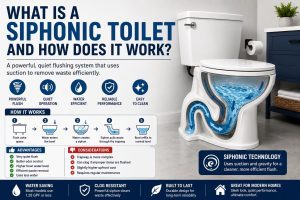
A siphonic toilet is designed to deliver strong flushing performance using a vacuum-assisted siphon effect. In theory, this should reduce clogging. In practice, however, many homeowners still experience repeated blockages that feel frustrating and unpredictable.
The key point is this: most recurring clogs are not caused by the toilet itself, but by a combination of installation conditions, internal buildup, and everyday usage habits that weaken the siphon effect over time.
This guide breaks down the real technical and practical reasons your siphonic toilet keeps clogging—and how to fix the problem step by step using both quick household methods and structural solutions.
For a broader comparison of flushing system behavior, you can refer to Siphonic vs Washdown Toilets: Which One Is Better for Your Bathroom?, which explains how design differences impact clog resistance.
Quick Answer
Your siphonic toilet keeps clogging mainly due to one or more of the following: reduced flushing force caused by pipe layout issues, clogged rim jets, poor water level settings, buildup inside trapways, or user habits such as flushing non-dissolvable materials.
First Self-Check: Common Root Causes
1. Toilet Relocation (Most Overlooked Issue)
If your toilet was moved during renovation, the drainage path may no longer be optimal.
Extended pipes and additional bends reduce flow speed, which weakens the siphon effect. The result is a toilet that flushes but lacks enough force to fully clear waste.
In many real cases, homes with relocated toilets experience 2–3 times more clog incidents compared to original-position installations.
In such layouts, a direct-flush (washdown-style) toilet often performs more reliably.
2. Airflow Imbalance and Pipe Geometry Issues
Siphonic toilets rely on precise pressure balance. If your drainage system includes multiple U-bends or improper venting, air can become trapped.
This “air lock” reduces suction force and disrupts the siphon cycle.
Symptoms include:
- Weak or incomplete flush
- Gurgling sounds after flushing
- Slow water exit from bowl
These issues are often structural rather than surface-level blockages.
3. Everyday Usage Habits
Even high-performance toilets have limits. Siphonic systems are particularly sensitive to what enters the bowl.
Common clog triggers include:
- Wet wipes (even labeled flushable)
- Excess toilet paper in a single flush
- Hair and hygiene products
- Food waste or foreign objects
Over time, these materials accumulate in the trapway and reduce effective flow diameter.
Related usage behavior issues are also discussed in How to Fix a Clogged Siphonic Toilet.
4. Rim Jet and Internal Hole Blockage
Siphonic toilets rely on small rim jets to generate strong water movement. When these jets become partially blocked by limescale or urine deposits, flushing power drops significantly.
Even a 20–30% reduction in jet flow can noticeably weaken the siphon effect.
This is especially common in hard water regions where mineral buildup forms quickly.
Quick Comparison: What Affects Clogging Most
| Cause | Impact Level | Fix Difficulty | Frequency |
|---|---|---|---|
| Toilet relocation / long pipe run | High | Hard | Common in renovated homes |
| Airflow imbalance (pipe geometry) | High | Medium–Hard | Moderate |
| Improper usage habits | Medium | Easy | Very common |
| Rim jet blockage | Medium–High | Easy | Very common |
| Trapway buildup | Medium | Medium | Common |
Step-by-Step Fixes (From Simple to Advanced)
1. Clean Rim Jets (Fastest Fix)
Start with the simplest solution: clear the rim jets.
- Use a thin plastic stick or old toothbrush
- Gently remove mineral deposits inside water outlets
- Avoid metal tools to protect the glaze
This alone can restore 20–40% of lost flushing power in many cases.
2. Improve Flush Pressure
Open the tank and check the water level.
If it is too low, the siphon effect cannot fully activate. Adjust the fill valve so the water reaches the recommended line.
This is a simple but often overlooked fix that improves flushing consistency immediately.
3. Advanced Plunger Technique
Standard plunging sometimes fails because of poor sealing.
A more effective method is to improve pressure sealing using a flexible barrier around the plunger head. This increases pressure differential and helps clear partial blockages in the trapway.
4. Structural Solution: Add a Vent Pipe
If the problem is caused by air lock in relocated plumbing, a vent pipe can restore proper airflow.
A plumber can install a small auxiliary vent line to stabilize pressure inside the drainage system.
While this requires minor construction work, it is one of the most effective long-term solutions for persistent clogging issues.
5. Long-Term Fix: Consider Toilet Type Adjustment
If your plumbing layout is permanently constrained (especially after relocation), switching to a washdown-style toilet may provide better reliability.
Washdown systems are less sensitive to pipe geometry and airflow imbalance.
Real-World Household Scenario
In a typical renovated apartment, the toilet was shifted approximately 1.2 meters from the original position. Initially, performance seemed normal, but within weeks, clogging became frequent.
After inspection, the issue was traced to increased pipe bends and a slight air pressure imbalance in the drainage line. Cleaning alone did not solve the issue.
Only after adjusting water level, cleaning rim jets, and partially improving venting did performance stabilize.
Maintenance Habits That Prevent Future Clogs
- Do not flush wipes or thick paper products
- Clean rim jets every 2–3 months
- Use moderate toilet paper per flush
- Check tank water level monthly
- Perform periodic hot water cleaning to reduce buildup
According to plumbing efficiency guidelines from the EPA WaterSense program, proper maintenance and usage behavior significantly reduce toilet malfunction rates across all flushing systems.
Frequently Asked Questions
Why does my siphonic toilet clog even after plunging?
Because the underlying issue may be airflow imbalance or buildup in rim jets, not just surface blockage.
Does toilet relocation increase clogging risk?
Yes. Longer and more complex pipe paths reduce siphon efficiency.
How often should I clean rim jets?
Every 2–3 months in normal water conditions, more often in hard water areas.
Can low water level cause frequent clogs?
Yes. Insufficient tank water weakens the siphon effect and reduces flushing power.
When should I consider replacing the toilet?
If structural plumbing issues cannot be corrected, switching to a simpler flush system may be more effective long-term.
Conclusion
A siphonic toilet that keeps clogging is usually not defective—it is reacting to real-world conditions such as pipe layout, airflow balance, buildup, and usage habits. The system is powerful but sensitive, which means small inefficiencies can create noticeable performance issues.
By addressing rim jet blockage, ensuring correct water levels, improving airflow, and adjusting usage behavior, most clogging problems can be significantly reduced or eliminated. For more persistent cases, structural adjustments or toilet type reconsideration may be necessary.