Introduction
When choosing a toilet, most homeowners focus on flushing power, design, or water efficiency. But in real-world use, maintenance often becomes the deciding factor over time.
A toilet that is easy to clean, rarely breaks down, and doesn’t require frequent repairs saves both money and frustration. Between different toilet systems—especially standard gravity toilets, siphonic toilets, and washdown designs—maintenance needs can vary significantly depending on structure and usage.
This article breaks down which toilet type truly requires less maintenance based on long-term usage patterns, repair frequency, cleaning difficulty, and real household experience.
For a deeper system-level comparison, you can refer to Siphonic vs Washdown Toilets: Which One Is Better for Your Bathroom?, which explains how flushing mechanics directly affect long-term reliability.
Quick Conclusion
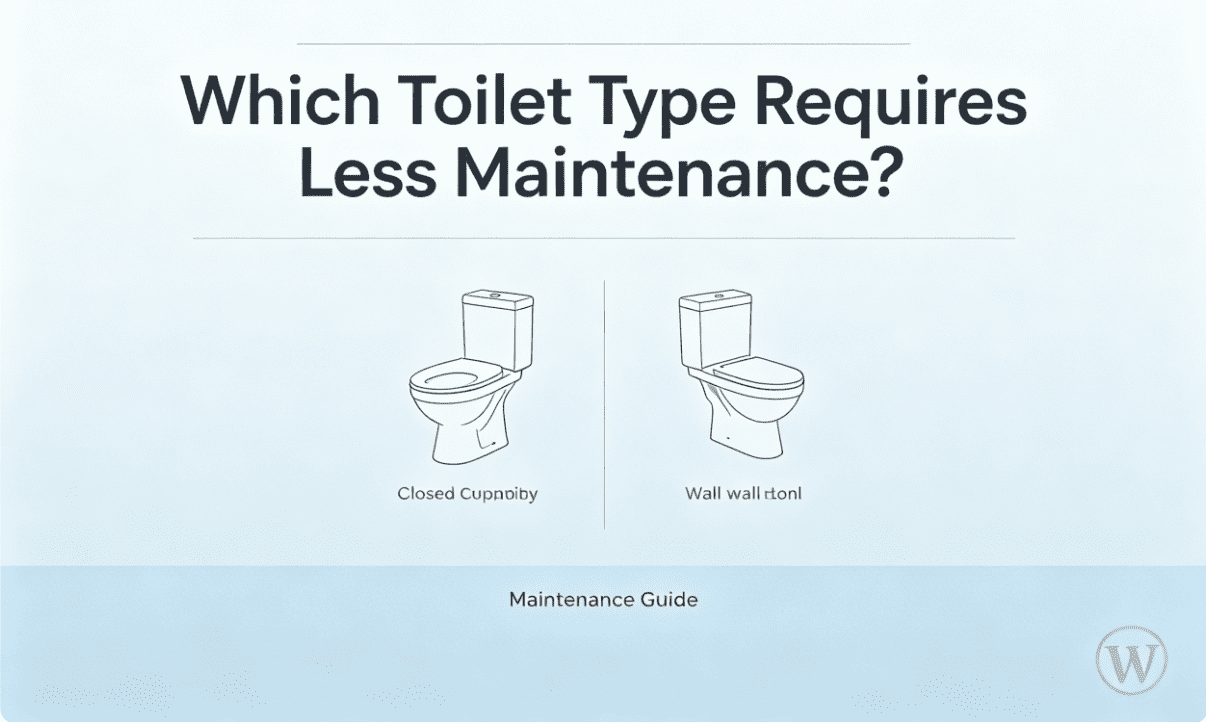
Standard gravity (washdown-style) toilets require the least maintenance overall due to their simple structure, fewer internal components, and easier cleaning process. Siphonic toilets offer stronger flushing performance but typically require more attention to keep trapways and jets clean.
Why Maintenance Depends on Toilet Type
Toilet maintenance is mainly influenced by three engineering factors:
- Internal water flow complexity
- Trapway design and buildup risk
- Mechanical and moving parts inside the tank
The more complex the system, the higher the chance of long-term maintenance issues such as clogging, mineral buildup, or flushing inefficiency.
Maintenance Comparison Overview
| Toilet Type | Maintenance Level | Cleaning Difficulty | Repair Frequency | Main Weakness |
|---|---|---|---|---|
| Standard Gravity (Washdown) | Low | Easy | Rare | Moderate flushing power |
| Siphonic Toilet | Medium | Moderate | Occasional | Trapway buildup risk |
| Smart Toilet Systems | High | Complex | More frequent | Electronic components |
1. Standard Gravity Toilets: Lowest Maintenance Option
Standard gravity toilets rely on direct water flow to push waste through the bowl. The design is simple, which makes it highly reliable in long-term use.
From a maintenance perspective:
- No complex siphon channels
- Fewer internal surfaces for buildup
- Easier to clean with basic household tools
In many households, these toilets can run for years with only basic cleaning and occasional flapper or fill valve replacement.
For example, in small apartments or rental properties, landlords often prefer gravity toilets because they minimize repair calls and maintenance costs.
2. Siphonic Toilets: Strong Performance, Moderate Maintenance
Siphonic toilets use a curved trapway to create a vacuum effect during flushing. This improves waste removal efficiency but adds complexity.
Common maintenance issues include:
- Mineral buildup inside trapway channels
- Reduced flushing efficiency over time
- Occasional partial clogs due to paper accumulation
These toilets perform better in odor control and flushing strength, but require periodic deep cleaning to maintain optimal performance.
Related troubleshooting insights can be found in How to Replace a Siphonic Toilet Fill Valve.
3. Smart Toilets: High Convenience, Higher Maintenance
Smart toilets offer features like heated seats, bidet functions, and automatic flushing—but they introduce electronic complexity.
Maintenance considerations include:
- Electronic board failure risk
- Sensor calibration issues
- Higher repair costs
- Dependence on electricity
While they provide comfort, they are not ideal for users prioritizing low maintenance and long-term reliability.
Real-World Usage Scenarios
Scenario 1: Busy Family Home
A gravity toilet is often the best choice due to low clog risk and minimal maintenance needs.
Scenario 2: Hard Water Area
Siphonic toilets may require frequent descaling due to mineral buildup inside internal channels.
Scenario 3: Elderly Users
Simple gravity toilets reduce maintenance burden and eliminate dependence on electronic systems.
Scenario 4: Modern Luxury Bathroom
Smart toilets offer comfort but require higher maintenance commitment and occasional servicing.
Common Maintenance Issues in Everyday Use
Most toilet maintenance problems are not caused by manufacturing defects but by usage patterns:
- Flushing excessive toilet paper
- Using non-dissolving wipes
- Ignoring early signs of slow drainage
- Hard water mineral accumulation
- Infrequent deep cleaning of internal parts
These habits significantly affect long-term maintenance regardless of toilet type.
Maintenance Cost Overview
| Category | Gravity Toilet | Siphonic Toilet | Smart Toilet |
|---|---|---|---|
| Annual Maintenance Cost | $20–$80 | $40–$150 | $100–$300+ |
| Repair Frequency | Low | Medium | High |
| Expected Lifespan | 10–15 years | 8–12 years | 6–10 years |
Expert Recommendation
From a plumbing maintenance standpoint, simplicity wins. The fewer moving parts and internal channels a toilet has, the less likely it is to require repairs.
If your priority is:
- Lowest maintenance → Choose a gravity (washdown-style) toilet
- Stronger flushing performance → Choose a siphonic toilet
- High comfort features → Choose a smart toilet (accept higher maintenance)
According to general plumbing efficiency guidelines from the EPA WaterSense program, proper usage habits and regular cleaning can significantly extend fixture lifespan and reduce maintenance frequency.
Frequently Asked Questions
Which toilet type is easiest to maintain?
Gravity toilets are the easiest to maintain due to their simple structure and fewer internal components.
Do siphonic toilets require more cleaning?
Yes, especially in areas with hard water, as mineral buildup can affect flushing efficiency.
Are smart toilets worth the maintenance effort?
They offer comfort features but require more maintenance due to electronic parts and sensors.
What causes most toilet maintenance issues?
Improper usage, such as flushing wipes or excessive paper, is the most common cause.
How can I reduce toilet maintenance needs?
Regular cleaning, proper flushing habits, and choosing a simpler toilet design all help reduce maintenance.
Conclusion
When comparing toilet types, maintenance is directly linked to design complexity. Gravity toilets stand out as the most low-maintenance option, while siphonic systems offer better performance at the cost of slightly higher upkeep. Smart toilets provide convenience but require the most care.
For most households, a simple, well-built gravity toilet remains the most practical long-term choice, balancing reliability, cost, and ease of maintenance.