Siphonic toilets are widely regarded as one of the most comfortable and effective toilet flushing systems available today. They are especially popular in North America and many parts of Asia because they combine strong flushing performance with quieter operation and excellent odor control.
After evaluating dozens of toilet models during bathroom renovation projects, I have found that siphonic toilets consistently deliver a more refined user experience than many basic toilets. The higher water level in the bowl reduces odors, and the suction-based flush is noticeably quieter, which makes a significant difference in homes where bathrooms are located near bedrooms.
However, no toilet system is perfect. Siphonic toilets tend to cost more than simpler designs, and some older models can be more prone to clogging. In this article, we will examine the real advantages and disadvantages of siphonic toilets so you can decide whether they are the right choice for your bathroom.
Quick Answer
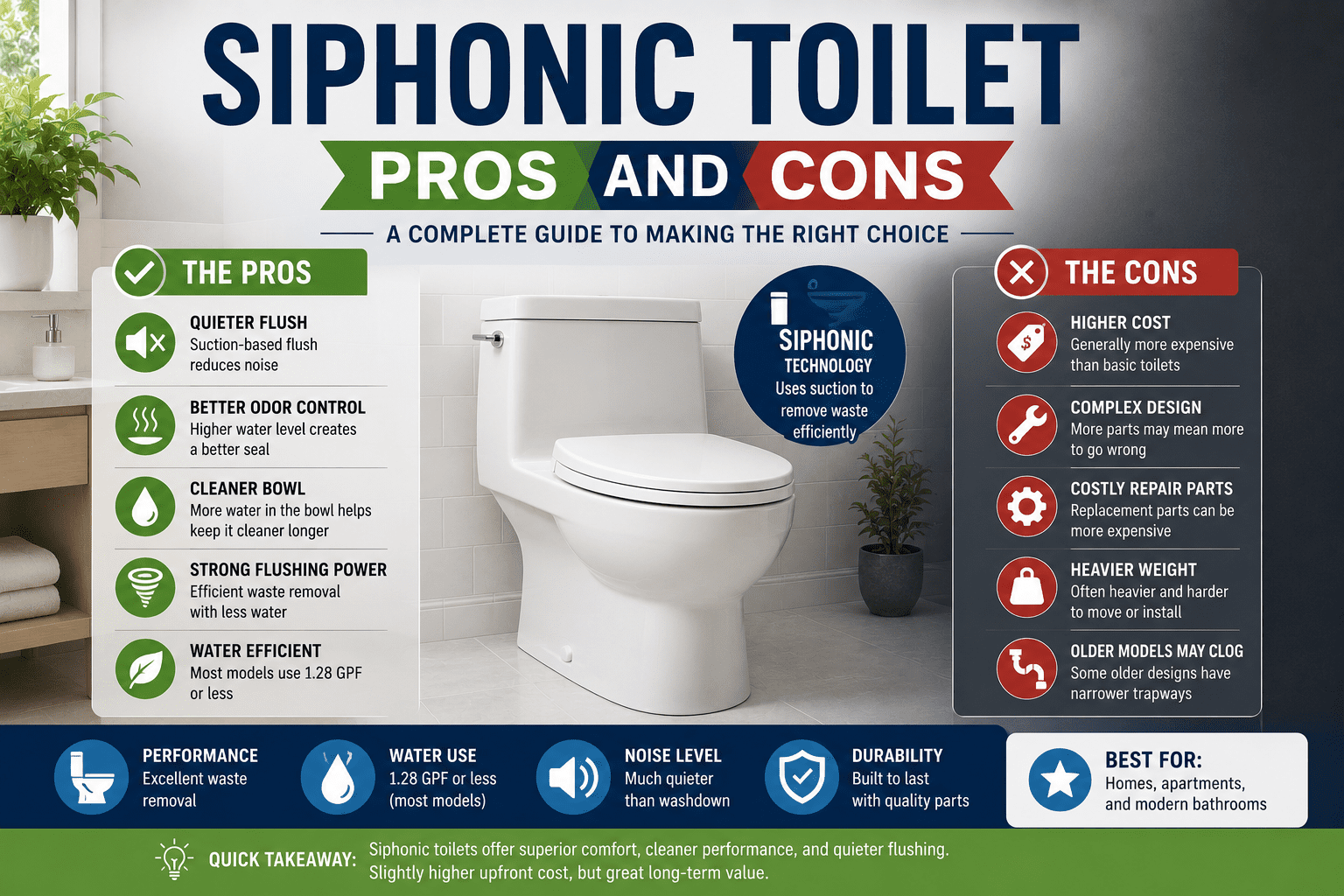
Siphonic toilets offer quiet flushing, strong waste removal, better odor control, and improved bowl cleanliness. Their main disadvantages are higher purchase prices and, in some cases, slightly more complex internal designs. For most homeowners, the benefits outweigh the drawbacks.
What Is a Siphonic Toilet?
A siphonic toilet uses a specially designed curved trapway and a rapid surge of water to create a siphon effect. Once the trapway fills completely, suction pulls waste through the drain efficiently and quietly.
If you are unfamiliar with the flushing mechanism, What Is a Siphonic Toilet and How Does It Work? explains the process in detail.
Pros of Siphonic Toilets
1. Quiet Flushing Operation
One of the biggest advantages of siphonic toilets is their low noise level. Instead of relying on a sudden rush of water, the system uses suction to remove waste smoothly.
In real-world use, this is especially valuable in apartments, en-suite bathrooms, and family homes where nighttime flushing could disturb others.
2. Excellent Odor Control
Siphonic toilets usually maintain a larger water surface in the bowl. This creates a more effective seal against sewer gases and significantly reduces bathroom odors.
3. Better Bowl Cleanliness
The higher standing water level covers more porcelain, which helps prevent waste from sticking to the bowl. Homeowners often report less frequent scrubbing.
4. Strong Flushing Performance
Modern siphonic toilets are capable of removing large amounts of waste in a single flush. Many premium models score 800 to 1,000 grams in standardized performance testing.
For a direct comparison with the alternative flushing design, see Siphonic vs Washdown Toilets: Which One Is Better for Your Bathroom?.
5. Premium User Experience
Siphonic toilets are often featured in higher-end models designed for comfort, efficiency, and improved hygiene.
Cons of Siphonic Toilets
1. Higher Upfront Cost
Compared with basic washdown toilets, siphonic models generally cost more. Entry-level units start around $200, while premium models can exceed $1,000.
2. Older Designs May Clog More Easily
Some older siphonic toilets use narrower trapways. While modern designs are much improved, outdated models may experience more blockages.
3. Replacement Parts Can Be More Expensive
Premium brands sometimes use proprietary flush valves and components that cost more than universal parts.
4. Heavier Toilet Bodies
The larger trapway and bowl design can make some siphonic toilets heavier and slightly more difficult to install.
Siphonic Toilet Pros and Cons Comparison Table
| Category | Typical Cost | Installation | Maintenance | Main Advantages | Main Disadvantages |
|---|---|---|---|---|---|
| Siphonic Toilets | $200–$1,200+ | Standard residential installation | Low to Moderate | Quiet, powerful, odor-resistant, cleaner bowl | Higher purchase price and premium parts cost |
Performance Ratings
| Feature | Rating | Comments |
|---|---|---|
| Flushing Power | ★★★★★ | Excellent single-flush performance |
| Noise Level | ★★★★★ | Very quiet operation |
| Odor Control | ★★★★★ | High water seal reduces sewer odors |
| Bowl Cleanliness | ★★★★☆ | Requires less frequent brushing |
| Initial Cost | ★★★☆☆ | Higher than basic toilets |
| Clog Resistance | ★★★★☆ | Modern glazed trapways perform well |
Real-World Experience
In one recent master bathroom renovation, the homeowner replaced a builder-grade toilet with a modern siphonic model. The first thing they noticed was the quieter flush. Over the following months, they also found that the bowl stayed cleaner and bathroom odors were less noticeable.
These are common observations among homeowners upgrading to higher-quality siphonic toilets.
Who Should Choose a Siphonic Toilet?
- Homeowners seeking a quieter flush
- Families concerned about bathroom odors
- People who want less frequent bowl cleaning
- Those remodeling a master bathroom
- Buyers looking for premium comfort and performance
Who Might Prefer a Washdown Toilet?
- Budget-conscious homeowners
- Rental property owners
- Commercial property managers
- Users who prioritize simpler maintenance
If you are considering the alternative flushing design, What Is a Washdown Toilet and How Does It Work? provides a complete overview.
Independent Testing Data
According to the Maximum Performance (MaP) Testing Program, many high-quality siphonic toilets remove between 800 and 1,000 grams of solid waste in a single flush. This is considered excellent performance and is one of the reasons these toilets are highly rated by plumbing professionals.
Frequently Asked Questions
1. Are siphonic toilets better than regular toilets?
For most homeowners, yes. They are quieter, offer better odor control, and often keep the bowl cleaner.
2. Do siphonic toilets clog easily?
Modern models with fully glazed trapways are highly resistant to clogs.
3. Why are siphonic toilets quieter?
They use suction rather than direct force, which reduces turbulence and flushing noise.
4. Are siphonic toilets more expensive?
Yes. They typically cost more upfront than entry-level washdown toilets.
5. Are siphonic toilets worth the money?
If you value comfort, odor control, and premium flushing performance, they are often an excellent long-term investment.
Conclusion
Siphonic toilets offer several major benefits, including quiet operation, excellent waste removal, improved odor control, and better bowl cleanliness. Their main disadvantages are higher purchase costs and potentially more expensive replacement parts.
Based on extensive product comparisons and real-world renovation experience, siphonic toilets are one of the best options for homeowners seeking a premium bathroom experience. For most households, the advantages clearly outweigh the disadvantages, making them a smart investment in comfort and performance.