
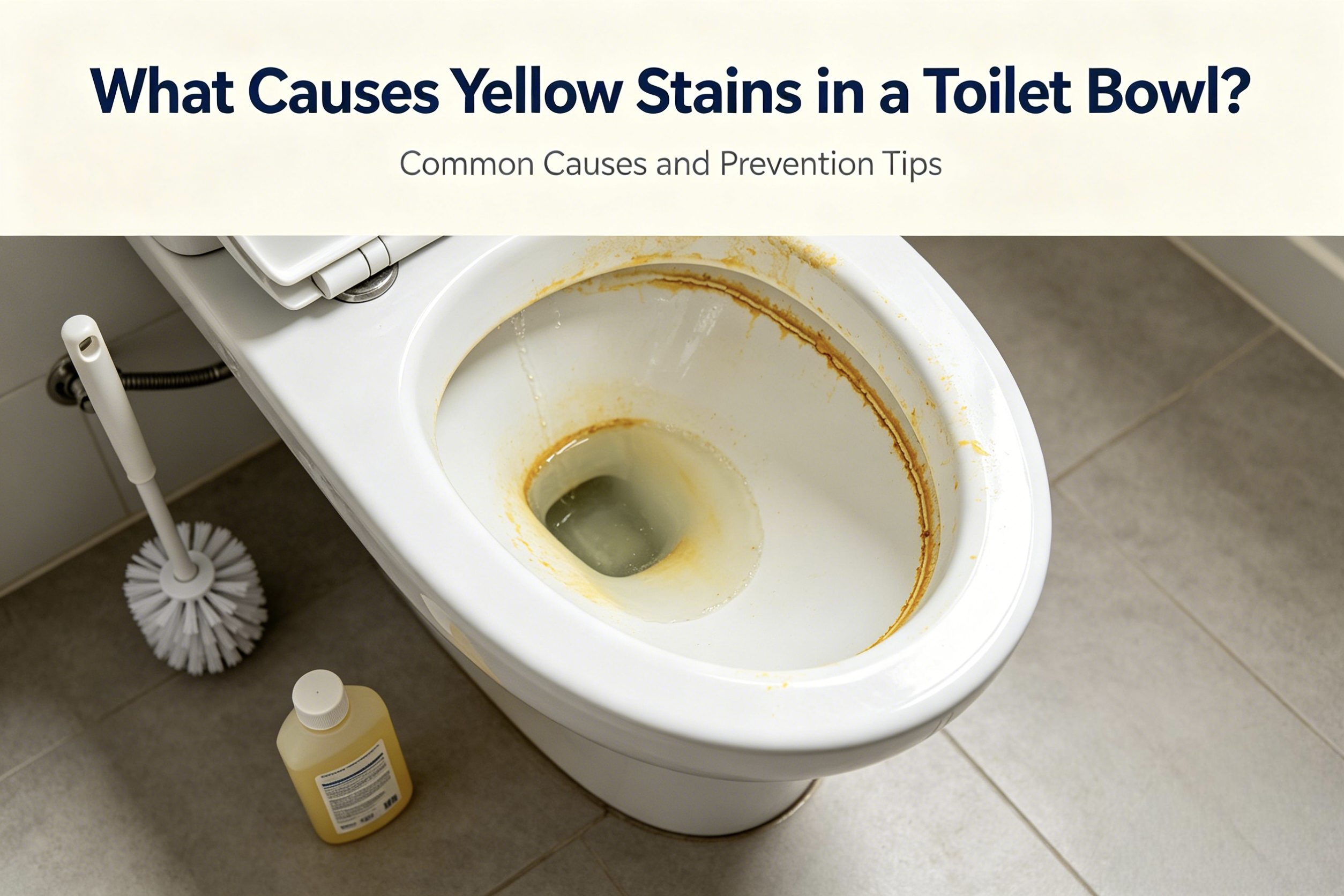
Yellow stains in a toilet bowl are one of those household problems that seem to come back no matter how often you clean. You scrub the bowl until it looks spotless, but a week later the same yellow ring appears around the waterline or under the rim. If this keeps happening in your home, the good news is that the cause is usually easy to identify.
In my experience maintaining bathrooms in both city-water homes and hard-water areas, yellow toilet stains are almost always caused by a combination of uric acid, mineral deposits, and bacterial buildup. Once these substances bond to porcelain, they form stains that regular cleaners often struggle to remove.
This article explains exactly what causes yellow stains in a toilet bowl, how to determine which type of stain you have, and the best strategies to remove and prevent them permanently.
Quick Answer
Yellow stains in a toilet bowl are most commonly caused by uric acid from urine, hard water minerals such as calcium and magnesium, iron in the water supply, bacterial biofilm, and infrequent cleaning. These substances accumulate over time and create yellow rings, crusty deposits, and stubborn discoloration.
1. Uric Acid Deposits from Urine
The most common cause of yellow toilet stains is uric acid. Urine naturally contains minerals and uric acid crystals. When residue remains in the bowl, especially under the rim, these crystals harden and stick to the porcelain surface.
Over time, the deposits become increasingly difficult to remove and may turn dark yellow or amber in color.
If your toilet already has visible staining, our guide How to Remove Yellow Stains from a Toilet provides step-by-step methods for both fresh and stubborn deposits.
2. Hard Water Mineral Buildup
If your home has hard water, dissolved calcium and magnesium are left behind after every flush. As water evaporates, these minerals form scale that traps dirt and organic residue.
According to the U.S. Geological Survey (USGS), hard water is a major contributor to mineral deposits throughout bathrooms, including toilet bowls.
When hard water minerals combine with uric acid, the resulting stains become much more difficult to remove.
3. Bacterial Biofilm
Bathrooms are constantly exposed to moisture, which creates ideal conditions for bacterial growth. These bacteria form a slimy layer called biofilm that traps minerals and waste residue.
Biofilm often develops under the rim where cleaning tools do not reach effectively, causing yellow or orange discoloration that returns quickly after cleaning.
4. Iron and Sediment in the Water Supply
Homes with well water or aging plumbing systems may contain iron and rust particles. These contaminants can leave yellow-orange stains that resemble mineral deposits.
If the stains appear shortly after flushing and have a rusty tint, your water supply may be contributing to the problem.
5. Infrequent Cleaning
Even with soft water, toilets that are not cleaned regularly will develop yellow stains. In most households, weekly brushing is enough to prevent significant buildup.
When cleaning is delayed for several weeks, uric acid and minerals have enough time to harden into stubborn deposits.
How to Identify the Type of Yellow Stain
| Stain Location | Likely Cause | Typical Cost to Fix | Maintenance Frequency | Advantages of Treatment | Disadvantages |
|---|---|---|---|---|---|
| Waterline ring | Hard water minerals | $5–$20 | Monthly | Dissolves easily with acids | Returns in hard water areas |
| Under rim | Uric acid buildup | $3–$15 | Weekly | Responds well to citric acid | Can become rock-hard |
| Orange-yellow stains | Iron or bacteria | $5–$25 | As needed | Usually easy to diagnose | May indicate water quality issues |
| Thick yellow crust | Years of buildup | $15–$40 | Occasional | Can be fully removed | Requires more labor |
| Recurring stains | Hard water + poor maintenance | $500–$3,000 | Minimal | Water softener solves root cause | Higher initial investment |
Real-World Example
A homeowner in Texas told me their toilet developed a yellow ring every few days despite frequent cleaning with bleach. After testing the water, we found very high calcium levels. Switching to citric acid cleaning and installing a compact water softener reduced cleaning time from 20 minutes to less than 5 minutes per week.
Why Bleach Often Fails
Bleach is excellent for disinfecting, but it does not dissolve calcium scale or uric acid crystals. This is why many homeowners find that bleach temporarily brightens the bowl but does not remove the underlying stain.
Best Cleaning Solutions for Each Cause
- Uric acid: Citric acid, white vinegar, enzymatic cleaners
- Hard water: CLR, Lime-A-Way, citric acid powder
- Bacteria: Bleach-based cleaners
- Iron stains: Rust removers
- Heavy buildup: Pumice stone and acid soak
How to Prevent Yellow Toilet Stains
- Brush the toilet once per week.
- Use citric acid monthly.
- Clean under the rim thoroughly.
- Flush guest bathrooms regularly.
- Install a water softener if you have hard water.
- Inspect tank components for rust and sediment.
If the discoloration keeps returning, our article Why Yellow Toilet Stains Keep Coming Back explains the long-term solutions that work best.
When to Replace the Toilet
Older toilets with worn porcelain glaze tend to stain more easily because microscopic scratches trap minerals and organic residue. If your toilet is over 20 years old and requires constant deep cleaning, replacement may be a more practical option.
Frequently Asked Questions
1. Are yellow toilet stains caused by urine?
Yes. Uric acid in urine is one of the leading causes of yellow toilet bowl stains.
2. Does hard water make stains worse?
Absolutely. Calcium and magnesium deposits combine with organic residue and create stubborn scale.
3. Why do stains return so quickly?
The underlying cause—usually hard water or uric acid buildup—has not been fully addressed.
4. What is the best natural cleaner?
Citric acid is one of the most effective natural solutions for yellow toilet stains.
5. Can yellow stains permanently damage porcelain?
Usually no, but thick scale deposits become harder to remove if left untreated for long periods.
Conclusion
Yellow stains in a toilet bowl are most commonly caused by uric acid, hard water minerals, bacterial biofilm, and iron in the water supply. Although they can appear stubborn, they are usually easy to eliminate once you identify the underlying cause.
In my experience, the most effective long-term strategy is a combination of weekly cleaning, monthly citric acid treatment, and addressing hard water if necessary. When you solve the root cause instead of just scrubbing the symptoms, yellow stains stop coming back and your toilet stays cleaner with far less effort.