Have you ever cleaned your toilet thoroughly, only to notice a yellow ring coming back a few days later? It can be frustrating, especially when the bowl looks clean immediately after scrubbing.
The good news is that a yellow toilet bowl usually has a fairly simple explanation. In most homes, the discoloration is related to mineral deposits, urine-related buildup, iron or rust in the water, or residue that has been allowed to accumulate over time.
The important part is identifying what kind of stain you are dealing with before choosing a cleaner. A yellow waterline ring caused by hard water needs a different approach from a stain caused mainly by organic residue.
In this guide, I’ll show you how to identify the likely cause of yellow toilet stains, which cleaning methods work best for each type, what mistakes to avoid, and how to prevent the stains from returning.
For more bathroom maintenance advice, visit our Toilet Cleaning category.
Quick Answer: Why Does My Toilet Bowl Turn Yellow?
A toilet bowl can turn yellow because of hard-water mineral deposits, urine-related residue, iron or rust in the water, organic buildup, or a combination of these factors.
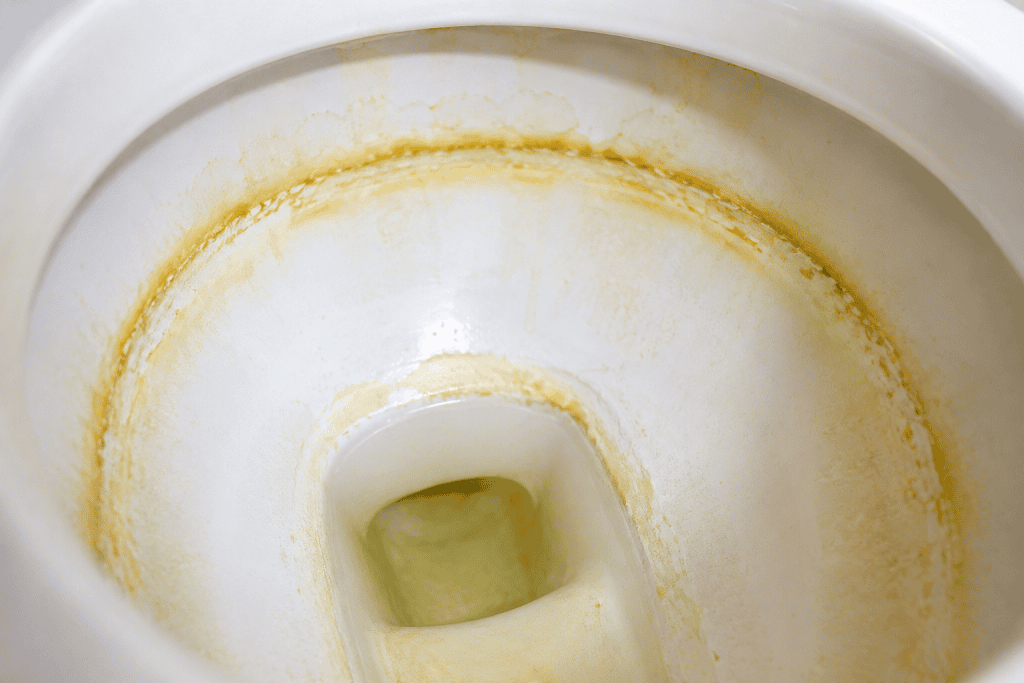
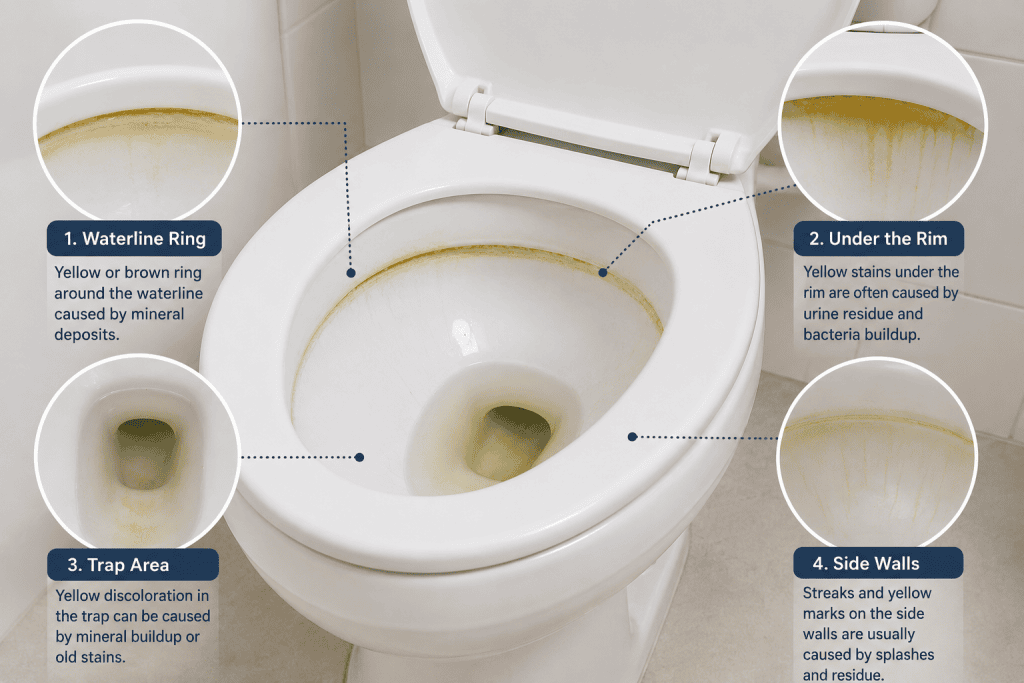
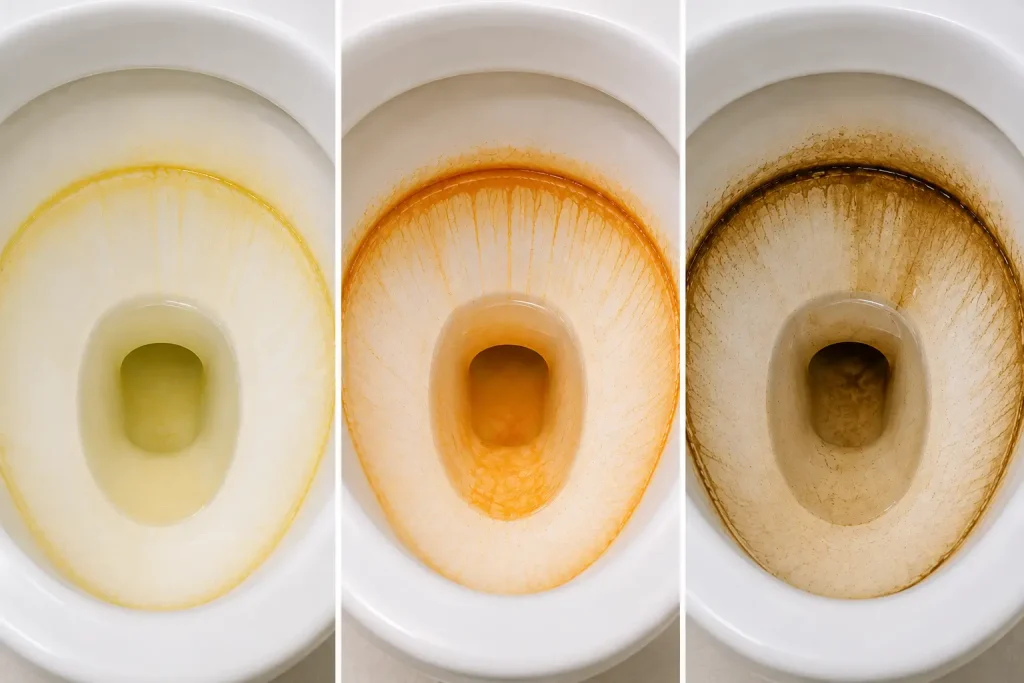
The location and appearance of the stain can provide useful clues. A hard, yellow ring around the waterline is often associated with mineral buildup, while orange-yellow discoloration may indicate iron or rust. Stains that appear under the rim or in areas exposed to urine may have a different composition.
That is why simply using bleach does not always solve the problem. The cleaner needs to match the type of buildup.
What Causes Yellow Stains in a Toilet Bowl?
There are several common reasons a toilet bowl develops yellow discoloration:
- Hard-water minerals: Calcium and other dissolved minerals can leave a hard ring around the waterline.
- Urine-related residue: Repeated exposure to urine and mineral salts can contribute to yellow or amber-colored buildup.
- Iron and rust: Iron in household water can produce yellow, orange, or reddish stains.
- Organic residue and biofilm: Dirt and organic material can accumulate in areas that are not cleaned regularly.
- Worn or damaged glaze: Older porcelain with scratches or a deteriorated surface can hold onto stains more easily.
- Tank or plumbing sediment: Rust or sediment entering the bowl during flushing can contribute to recurring discoloration.
In many bathrooms, more than one cause is involved. For example, mineral deposits can create a rough surface that allows other residue to stick more easily.
1. Hard Water Is a Common Cause of Yellow Toilet Rings
If the yellow stain forms mainly around the waterline and feels rough or crusty, hard-water buildup should be one of the first things you check.
Hard water contains dissolved minerals that can remain on surfaces as water evaporates. Over time, repeated flushing and evaporation can leave a visible ring inside the bowl.
Mineral deposits may initially look white or chalky, but they can become yellow, tan, or brown when they combine with other residues.
This is especially common when the same toilet develops a ring repeatedly even after it has been thoroughly cleaned.
2. Urine-Related Residue Can Create Yellow Buildup
Urine contains compounds and mineral salts that can leave residue on toilet surfaces. If small amounts remain on the porcelain, repeated exposure can contribute to yellow or amber-colored buildup.
This can be particularly noticeable around the underside of the rim, near areas that are difficult to reach with a standard toilet brush, or on surfaces that are not cleaned frequently.
Regular brushing and cleaning can prevent this residue from becoming a thick, hardened deposit.
If you already have significant discoloration, see our guide on how to remove yellow stains from a toilet for more detailed cleaning instructions.
3. Iron or Rust in the Water Can Make the Bowl Look Yellow
Not every yellow or orange toilet stain is caused by the toilet itself.
If your household water contains iron, it can leave yellow, orange, or reddish deposits on plumbing fixtures. This can be more noticeable in homes using well water or in plumbing systems where corrosion is occurring.
The EPA notes that stained plumbing fixtures can be a reason to test household water for iron, copper, or manganese, while scaly residues can be associated with water hardness.
If multiple fixtures in your home develop similar yellow or orange staining, the water supply may be worth investigating rather than repeatedly cleaning each toilet.
4. Organic Buildup and Biofilm Can Add to the Discoloration
Toilet bowls remain damp for long periods, and areas under the rim can be difficult to clean thoroughly. Organic residue can accumulate when a toilet is not cleaned regularly.
This type of buildup may appear yellow, brown, or orange depending on what is present on the surface.
However, it is important not to assume that every yellow stain is bacterial. A hard, rough ring around the waterline is more likely to involve mineral scale than a simple surface biofilm.
5. Older or Damaged Porcelain Can Hold Stains More Easily
A toilet’s porcelain surface is designed to be smooth and relatively easy to clean. Over many years, however, the surface can develop scratches, wear, or areas where the glaze is no longer in ideal condition.
Once the surface becomes rougher, mineral deposits and other residues may have more places to cling to.
If you repeatedly remove the stain but it returns very quickly, inspect the porcelain closely. A permanently rough or damaged surface may be one reason the toilet is difficult to keep clean.
6. Toilet Tank Sediment Can Cause Recurring Discoloration
Take a look inside the toilet tank if the bowl develops discoloration shortly after flushing.
Rust, sediment, or other deposits inside the tank can sometimes enter the bowl with the flush water. If the discoloration appears after flushing and similar staining is visible inside the tank, the tank and water supply deserve attention.
This is especially worth checking if you have older plumbing or a private well.
How to Identify the Cause of a Yellow Toilet Stain
Before reaching for the strongest cleaner you can find, look at the stain carefully.
The location, color, and texture can provide useful clues:
| What You See | Most Likely Cause | What to Check |
|---|---|---|
| Hard yellow ring around the waterline | Mineral buildup | Water hardness and scale |
| Yellow or amber residue under the rim | Urine-related or organic buildup | Cleaning frequency and hard-to-reach areas |
| Orange-yellow or reddish staining | Iron or rust | Water supply and plumbing |
| White, yellow, or tan crust | Mineral scale | Hard-water deposits |
| Staining across several bathroom fixtures | Water-related issue | Iron, manganese, or water hardness |
| Stain returns unusually quickly after cleaning | Recurring source | Water quality, surface condition, or cleaning routine |
Why Does the Yellow Ring Keep Coming Back?
If the stain disappears after cleaning but returns within days or weeks, cleaning the visible stain is only treating the symptom.
There may be an ongoing source such as:
- Hard water continuously depositing minerals
- Iron or rust entering the toilet through the water supply
- Residue accumulating under the rim
- A rough or damaged porcelain surface
- Infrequent cleaning that allows small deposits to harden
This distinction is important. If the same mineral ring returns every week, scrubbing harder is not necessarily the best solution. Finding and reducing the source of the buildup can save considerably more time.
Best Way to Clean a Yellow Toilet Bowl
The best cleaning method depends on what is causing the stain.
For Light Yellow Surface Stains
Start with routine toilet-bowl cleaning and a good-quality toilet brush.
- Flush the toilet.
- Apply a toilet cleaner according to its label.
- Brush the bowl thoroughly, paying particular attention to the waterline and underside of the rim.
- Flush to rinse away the loosened residue.
Regular cleaning is usually easier and safer than allowing a thin layer of buildup to become a hard deposit.
For Hard Water Mineral Deposits
Mineral scale generally responds better to an acidic cleaner designed for hard-water or lime buildup than to bleach.
Depending on the product, this may include a commercial toilet-bowl descaler or another acid-based cleaner specifically labeled for toilet use.
Always follow the product label, including contact time, ventilation requirements, and surface compatibility.
Bleach is useful for disinfection, but it is not the right tool for dissolving mineral scale. Commercial cleaning guidance also distinguishes acidic products for rust and hard-water deposits from bleach-based disinfectants.
For Orange or Rust-Colored Stains
If the stain looks orange, reddish-yellow, or rust-colored, choose a product specifically designed to remove rust or iron deposits and make sure it is labeled for use on toilets.
If the same staining appears repeatedly on sinks, tubs, or other fixtures, consider testing the household water rather than treating each stain independently.
For Heavy Mineral Buildup
Severe deposits may require several rounds of treatment rather than one aggressive cleaning session.
A toilet-safe pumice product can sometimes help with stubborn mineral scale, but it should be used carefully. Keep both the porcelain and the pumice wet, use light pressure, and stop if the surface appears to be scratching.
If you are unsure whether the porcelain surface is suitable, use a less abrasive cleaning method first.
Why Bleach May Not Remove a Yellow Toilet Ring
Bleach is primarily useful for disinfecting and treating certain organic stains. It does not work the same way as an acidic descaler that dissolves mineral deposits.
That is why a yellow or brown mineral ring can remain even after a toilet has been cleaned with bleach.
Using more bleach is not necessarily the answer. First identify whether the stain is mineral, rust-related, organic, or a combination of these.
Important: Never Mix Toilet Cleaners
Never mix bleach with vinegar, citric acid, acidic toilet cleaners, rust removers, ammonia, or other household cleaning chemicals.
Mixing bleach with acidic products can produce chlorine gas, while mixing bleach with ammonia can produce chloramine gases. These reactions can cause serious irritation and breathing problems.
If you switch from one type of cleaner to another, follow the product instructions and make sure the previous product has been thoroughly rinsed away before using another cleaner.
Yellow Toilet Stain Prevention
Once you have removed the stain, prevention is much easier than repeatedly dealing with thick buildup.
- Clean the toilet regularly: Weekly cleaning is a practical starting point for most household bathrooms.
- Brush under the rim: This area is easy to overlook and can collect residue.
- Do not allow mineral deposits to build up: Treat early scale before it becomes a thick crust.
- Investigate recurring orange stains: Repeated rust-colored staining may point to iron or plumbing issues.
- Check the tank: Look for visible rust or sediment if the bowl becomes discolored after flushing.
- Address hard water when necessary: If multiple fixtures have scale buildup, consider testing the water and evaluating appropriate treatment.
What If Your Toilet Keeps Turning Yellow Even After Cleaning?
If you clean the toilet correctly but the yellow stain keeps returning, use this simple troubleshooting process.
- Check the stain location. Is it mainly at the waterline, under the rim, or throughout the bowl?
- Check the texture. A rough or crusty surface usually suggests mineral buildup.
- Check the color. Orange or reddish tones can indicate iron or rust.
- Inspect the tank. Look for sediment, rust, or unusual discoloration.
- Check other fixtures. If sinks and tubs show similar stains, investigate the water supply.
- Consider the porcelain condition. A heavily scratched or worn surface may retain stains more easily.
This approach is usually more effective than repeatedly switching between different cleaning products.
Natural vs. Commercial Cleaning Methods
| Method | Best For | Advantages | Limitations |
|---|---|---|---|
| Regular toilet brush cleaning | Light surface residue | Simple and inexpensive | Not enough for heavy scale |
| Citric-acid-based cleaner | Some mineral buildup | Useful for acidic descaling | Must be used according to label directions |
| Commercial toilet descaler | Hard-water scale | Designed for mineral deposits | Requires careful handling |
| Rust remover for toilets | Iron and rust stains | Targets rust-related discoloration | Product compatibility matters |
| Toilet-safe pumice product | Heavy mineral deposits | Can remove stubborn scale | Improper use can scratch surfaces |
The goal is not to choose the strongest cleaner. It is to choose the right type of cleaner for the type of stain.
When Should You Consider Replacing the Toilet?
Yellow stains alone are usually not a good reason to replace a toilet.
However, replacement may be worth considering if the porcelain is badly damaged, heavily scratched, cracked, or permanently discolored despite appropriate cleaning.
If the toilet is otherwise functioning well and the glaze remains smooth, cleaning and addressing the source of the staining is usually the more practical option.
Frequently Asked Questions
Is a yellow toilet bowl dirty?
Not necessarily. Yellow discoloration can be caused by mineral scale, iron, urine-related residue, or other buildup. The appearance of the stain alone does not tell you exactly what caused it.
Why does my toilet get a yellow ring so quickly?
A rapidly returning ring often points to an ongoing source such as hard water, iron in the water, or frequent residue buildup. If the same problem occurs on multiple fixtures, investigate the household water as well.
Does bleach remove yellow toilet stains?
Bleach can help with some organic stains and provides disinfection, but it is generally not the best choice for mineral scale or rust. An appropriate descaling or rust-removal product may work better for those deposits.
Is vinegar good for yellow toilet stains?
Vinegar is mildly acidic and may help with some light mineral deposits, but it may not be strong enough for thick or long-established scale. Never mix vinegar or any other acid with bleach.
Can hard water cause a yellow toilet bowl?
Yes. Hard-water minerals can accumulate around the waterline and may become yellow, tan, or brown as they combine with other residues.
Why is my toilet bowl orange-yellow instead of bright yellow?
Orange-yellow or reddish staining can be associated with iron or rust. If similar discoloration appears on other plumbing fixtures, testing the household water can help identify the source.
Can a toilet bowl be permanently stained?
Severe mineral buildup can become extremely difficult to remove, and damaged porcelain may continue to hold stains. If the surface remains rough or discolored after appropriate cleaning, replacement may eventually make more sense than repeated deep cleaning.
Final Thoughts
If your toilet bowl keeps turning yellow, do not assume that you simply need a stronger cleaner.
Start by identifying where the stain appears, what color it is, and whether it feels smooth or crusty. A hard waterline ring points you toward mineral buildup, orange or reddish staining may suggest iron or rust, and residue around the rim may have a different cause.
Once you identify the source, choose a cleaner designed for that type of buildup and use it exactly as directed. Most importantly, never mix bleach with acidic toilet cleaners or other household chemicals.
For most homeowners, the best long-term strategy is simple: clean the bowl regularly, remove mineral buildup before it becomes severe, and investigate recurring stains instead of repeatedly treating the visible symptom.
About Home Experts Blog
At Home Experts Blog, we focus on practical home improvement and maintenance advice that helps homeowners understand common problems and choose sensible solutions. Our bathroom guides combine hands-on maintenance experience with practical troubleshooting and prevention tips.