Toilet Buying Guides
If you’ve ever compared toilet types and wondered why some models flush with a quick forceful push while others create a longer swirling suction effect, you’re looking at two fundamentally different technologies. One of the oldest and most efficient designs is the washdown toilet.
Washdown toilets are widely used in Europe, Asia, hotels, and many commercial buildings. They are known for their simple design, large trapway, and strong direct flush. While they are less common in the United States, they remain an excellent option for homeowners who want reliable performance and easy maintenance.
In this guide, I’ll explain exactly what a washdown toilet is, how it works, where it performs best, and whether it is the right choice for your bathroom.
Quick Answer
A washdown toilet uses gravity and a rapid flow of water to push waste directly through a short, wide trapway. It has a simpler design than a siphonic toilet, offers excellent clog resistance, and is commonly used in Europe and commercial buildings.
What Is a Washdown Toilet?
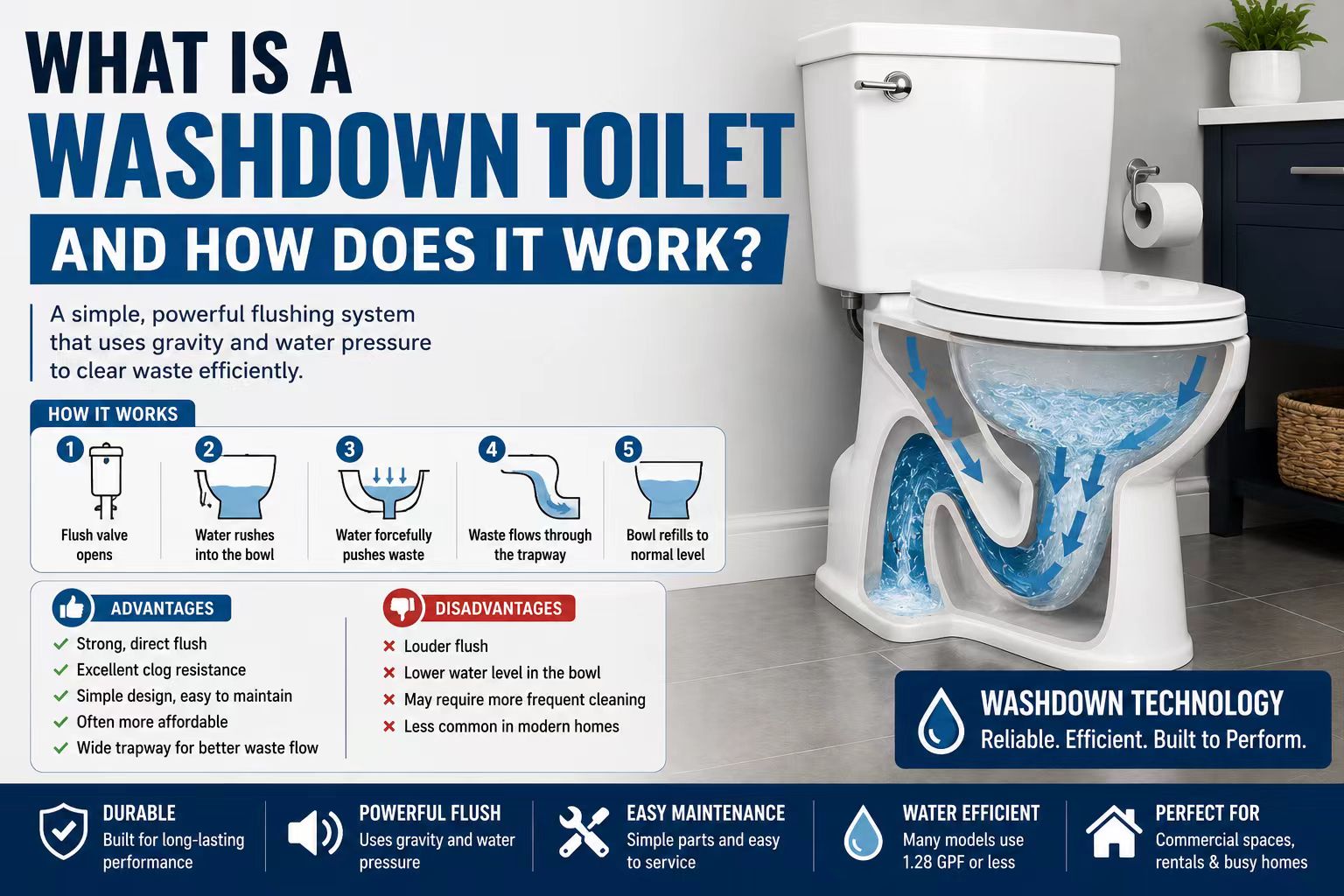
A washdown toilet is a gravity-flush toilet that relies on a large volume of water entering the bowl quickly. Instead of creating a vacuum or siphon, the water forcefully pushes waste through the trapway and into the drain.
The bowl typically has:
- A larger and shallower waste outlet
- A shorter trapway
- A lower standing water level
- A fast and direct flush pattern
This straightforward engineering makes washdown toilets highly dependable and relatively easy to maintain.
How Does a Washdown Toilet Work?
- The flush valve opens when the handle or button is activated.
- Water rushes from the tank into the bowl.
- The incoming water creates strong downward pressure.
- Waste is pushed through the short trapway.
- The bowl refills to its normal water level.
Unlike siphonic toilets, there is little vacuum action. The system relies primarily on water momentum and gravity.
Washdown Toilet vs Siphonic Toilet
| Feature | Washdown Toilet | Siphonic Toilet |
|---|---|---|
| Flush Method | Direct gravity push | Suction-based siphon action |
| Noise Level | Louder | Quieter |
| Trapway Design | Short and wide | Longer and curved |
| Clog Resistance | Excellent | Very Good |
| Bowl Water Level | Lower | Higher |
| Odor Control | Moderate | Excellent |
| Typical Regions | Europe, commercial buildings | United States, Canada, Japan |
| Maintenance | Simple | Low to Moderate |
For a complete side-by-side comparison, read Siphonic vs Washdown Toilets: Which One Is Better for Your Bathroom?.
Advantages of Washdown Toilets
- Simple mechanical design
- Large trapway reduces clog risk
- Strong direct waste removal
- Easier troubleshooting and maintenance
- Often lower purchase cost
Disadvantages of Washdown Toilets
- Louder flush
- Lower bowl water level may allow more odors
- Can require more frequent bowl brushing
- Fewer residential models available in the United States
Typical Price and Installation Cost
| Expense | Typical U.S. Cost |
|---|---|
| Washdown Toilet | $150–$900 |
| Professional Installation | $200–$500 |
| Maintenance per Year | $0–$100 |
Real-World Experience
In one rental property renovation, the owner installed washdown toilets to minimize maintenance calls. Over several years, the toilets performed reliably and handled heavy use with very few clog complaints. The only drawback noted by tenants was that the flush was noticeably louder than the siphonic toilets they were used to.
When a Washdown Toilet Is the Best Choice
- Commercial restrooms
- Rental properties
- Budget-focused renovations
- Homes prioritizing easy maintenance
- Users who want a simple and robust design
Performance Testing
Related Guides
If you want to understand how the competing technology works, read What Is a Siphonic Toilet and How Does It Work?.
To evaluate the strengths and weaknesses of siphonic systems, see Siphonic Toilet Pros and Cons.
If you are shopping for premium models, Best Siphonic Toilets for Modern Bathrooms highlights top-performing designs.
Frequently Asked Questions
1. What is the main difference between washdown and siphonic toilets?
Washdown toilets push waste directly using gravity, while siphonic toilets use suction to pull waste through the trapway.
2. Are washdown toilets better at preventing clogs?
They are highly resistant to clogs because they use a shorter and wider trapway.
3. Why are washdown toilets louder?
The flush depends on a rapid surge of water rather than a gradual siphon effect.
4. Are washdown toilets common in the United States?
They are less common in residential homes but are available and often used in commercial settings.
5. Do washdown toilets use more water?
No. Many modern models are highly efficient and use 1.28 gallons per flush or less.
Conclusion
A washdown toilet is a practical and efficient design that uses direct water force and gravity to remove waste quickly. Its simple engineering, excellent clog resistance, and easy maintenance make it an attractive option for many applications.
Although siphonic toilets remain the dominant choice in American homes, washdown toilets are still worth considering if you prioritize straightforward mechanics and dependable performance. Understanding how washdown toilets work will help you make a more informed decision when selecting the right toilet for your bathroom.