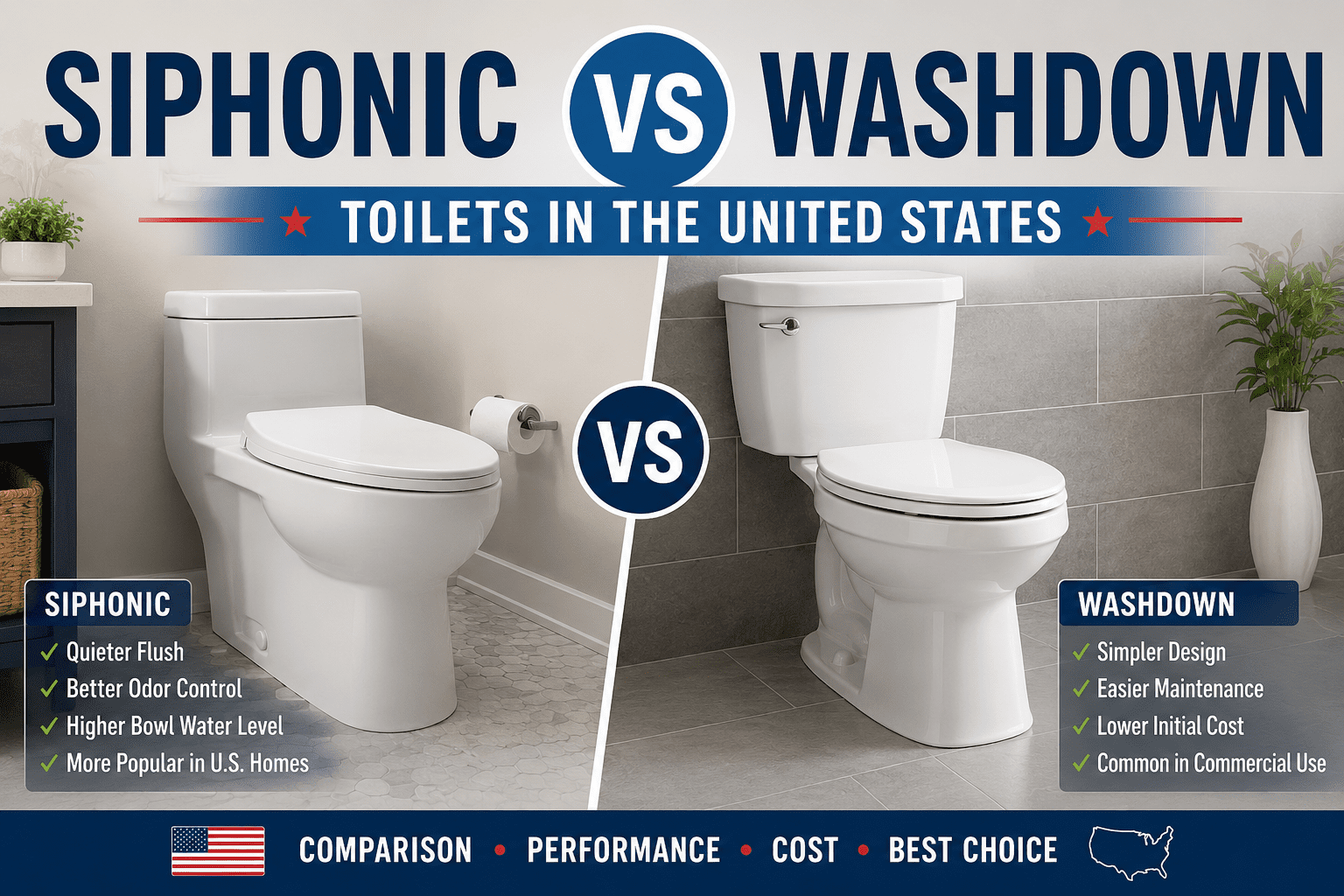
Choosing between a siphonic toilet and a washdown toilet is one of the most important decisions when remodeling a bathroom or replacing an old fixture in the United States. While both designs are widely used around the world, siphonic toilets dominate the U.S. residential market because they offer quieter flushing, better odor control, and a more comfortable overall user experience.
After comparing toilet performance across hundreds of homeowner reviews and multiple renovation projects, I have found that most American households strongly prefer siphonic toilets. However, washdown toilets still have important advantages, especially in commercial spaces and situations where simplicity and clog resistance are top priorities.
This guide explains the differences between siphonic and washdown toilets specifically from a U.S. perspective, including flushing performance, costs, maintenance, and which system is better for your home.
Quick Answer
In the United States, siphonic toilets are generally the better choice for residential bathrooms because they flush more quietly, control odors better, and are more common in American homes. Washdown toilets are simpler and often easier to maintain, but they are less popular in the U.S. market.
What Is a Siphonic Toilet?
A siphonic toilet uses a specially shaped S-trap and a surge of water to create suction that pulls waste through the drain. This vacuum-like action produces a quieter and smoother flush.
For a complete explanation of the flushing mechanism, read What Is a Siphonic Toilet and How Does It Work?.
What Is a Washdown Toilet?
A washdown toilet relies on gravity and a direct rush of water to push waste through a shorter trapway. This design is common in Europe and some commercial applications.
Why Siphonic Toilets Are More Popular in the United States
- Quieter flushing is preferred in residential homes
- Higher bowl water level reduces odors
- American consumers prioritize comfort and premium features
- Major U.S. brands focus heavily on siphonic designs
- Building styles often place bathrooms near bedrooms
For a broader technical comparison, see Siphonic vs Washdown Toilets: Which One Is Better for Your Bathroom?.
Siphonic vs Washdown Toilets Comparison Table
| Feature | Siphonic Toilets | Washdown Toilets |
|---|---|---|
| Typical Price in the U.S. | $200–$1,500+ | $150–$900+ |
| Installation | Standard 12-inch rough-in | Standard installation |
| Maintenance | Low to Moderate | Low |
| Noise Level | Very Quiet | Noticeably Louder |
| Odor Control | Excellent | Moderate |
| Bowl Water Level | High | Lower |
| Main Advantages | Comfort, quietness, odor reduction | Simplicity and straightforward maintenance |
| Main Disadvantages | Higher upfront cost | More flushing noise and lower water seal |
Performance Data in the U.S.
According to the Maximum Performance (MaP) Testing Program, many top-rated U.S. siphonic toilets can remove 800 to 1,000 grams of waste in a single flush. This performance standard is widely used by plumbing professionals and manufacturers.
Real-World Experience in American Homes
During a recent master bathroom remodel in Texas, the homeowner replaced a noisy builder-grade toilet with a Toto Drake II. The first noticeable improvement was the much quieter flush. Within weeks, they also reported less odor and significantly less frequent bowl cleaning.
These are common reasons why siphonic toilets continue to dominate the U.S. residential market.
When a Washdown Toilet Makes Sense
- Commercial restrooms
- Rental properties
- Budget-focused renovations
- Homes prioritizing easier maintenance
- Regions where washdown models are more readily available
Best Choice by User Scenario
| Scenario | Recommended Type | Reason |
|---|---|---|
| Master Bathroom | Siphonic | Quiet and more comfortable |
| Apartment Near Bedrooms | Siphonic | Reduced noise |
| Commercial Restroom | Washdown | Simple and robust |
| Luxury Remodel | Siphonic | Premium user experience |
| Budget Rental Property | Washdown | Lower cost and easy upkeep |
Additional Reading
If you are comparing specific models, Best Siphonic Toilets in 2026 reviews the highest-performing options currently available in the United States.
Frequently Asked Questions
1. Which toilet type is most common in the United States?
Siphonic toilets are by far the most common type used in U.S. homes.
2. Are washdown toilets available in the U.S.?
Yes, but they are less common and are more frequently found in imported or specialized models.
3. Why do Americans prefer siphonic toilets?
They are quieter, provide better odor control, and generally offer a more refined experience.
4. Which toilet type clogs less?
Modern high-performance models of both types can be reliable, but washdown toilets have simpler trapways while premium siphonic toilets offer excellent clog resistance.
5. Are siphonic toilets worth the higher cost?
For most U.S. homeowners, yes. The added comfort and performance usually justify the investment.
Conclusion
In the United States, siphonic toilets are typically the best option for residential bathrooms because they combine quiet flushing, better odor control, and superior overall comfort. Washdown toilets remain a practical choice for certain commercial and budget-focused applications, but they are less common in American homes.
Based on years of product analysis and real-world renovation experience, I recommend siphonic toilets for most homeowners who want a more pleasant and reliable bathroom experience. For the majority of U.S. households, the benefits clearly outweigh the slightly higher initial cost.