If your toilet makes a loud hissing, buzzing, whistling, or rushing-water sound every time the tank refills, you probably don’t need to replace the entire toilet. In most cases, the noise comes from the fill valve, water pressure, supply line, or the way water enters the tank.
A toilet should make some noise while it refills. What matters is whether the sound is unusually loud, lasts too long, or has recently changed.
I’ve dealt with this problem many times during bathroom repairs. One of the most common mistakes is immediately replacing the fill valve without first identifying what kind of noise the toilet is making. A high-pitched whistle points you in a different direction than a deep rushing sound or a vibrating pipe.
Quick conclusion: If your toilet is noisy every time it refills, first identify the sound. A hissing or whistling noise usually points to the fill valve, while banging or vibrating can indicate a supply-line or water-pressure problem. Start with the simplest inspection before replacing parts.
Why Does My Toilet Make Noise Every Time It Refills?
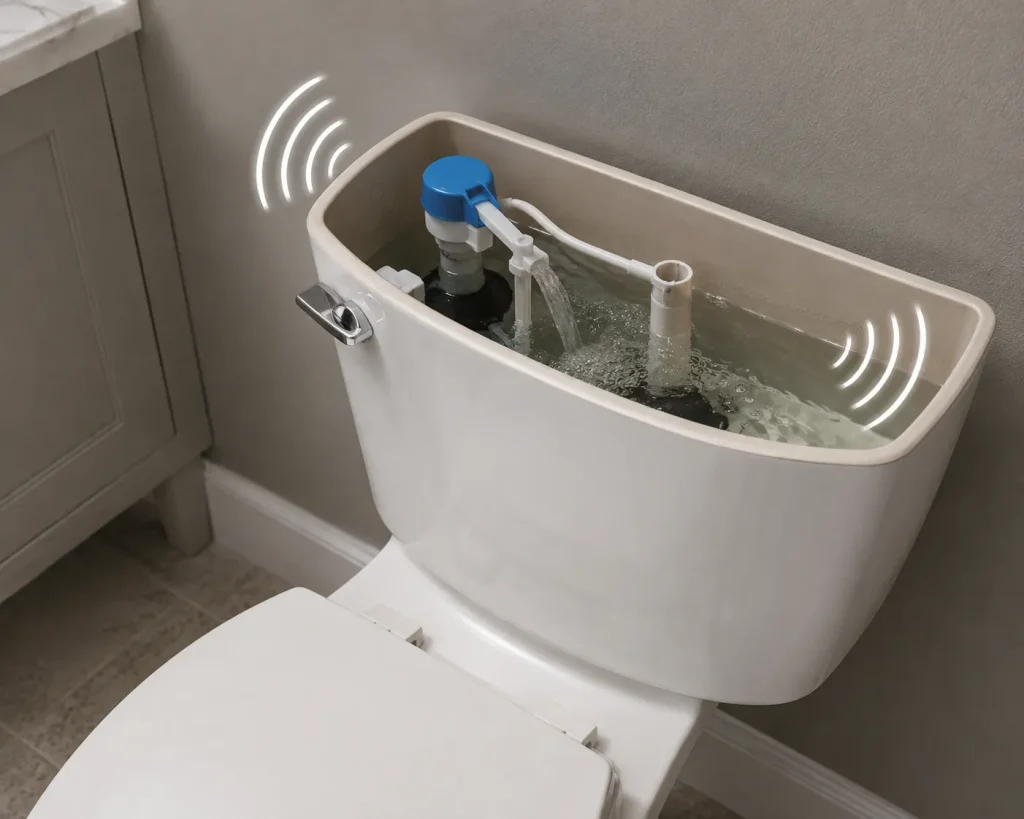
The toilet’s refill cycle is controlled primarily by the fill valve. After you flush, the tank empties and the fill valve opens to allow fresh water into the tank. Once the water reaches the correct level, the valve closes.
That process normally produces some water noise. However, a worn, partially blocked, incorrectly adjusted, or poorly functioning fill valve can create much louder sounds.
The most common causes include:
- Worn fill valve: Internal components can vibrate or restrict water flow as the valve operates.
- Mineral buildup: Sediment and mineral deposits can partially restrict the water passage.
- Excessive water pressure: Higher pressure can make the valve louder and sometimes cause vibration.
- Loose supply components: A loose connection can vibrate when water starts flowing.
- Water hammer: A sudden change in water flow can cause pipes to bang or shake.
- Incorrect water-level adjustment: An improperly adjusted valve may operate inefficiently or run longer than necessary.
- Old toilet hardware: Older fill valves are often noisier than modern replacement valves.
What Kind of Toilet Noise Are You Hearing?
Before touching the toilet, listen carefully to the sound. This simple step can save you from replacing the wrong component.
| Noise | Most likely cause | First thing to check |
|---|---|---|
| High-pitched whistle | Fill valve restriction or worn valve | Fill valve |
| Hissing | Fill valve or partially open valve | Fill valve and supply connection |
| Strong rushing sound | Normal high-volume refill or excessive flow | Water pressure and fill valve |
| Buzzing or vibrating | Valve vibration | Fill valve and supply line |
| Knocking or banging | Water hammer or pipe movement | Supply line and plumbing |
| Short squeal near the end of filling | Valve closing mechanism | Fill valve |
| Noise continues after tank is full | Possible valve or flapper problem | Check whether water continues entering the tank |
A useful rule: if the noise begins exactly when water starts entering the tank and stops when the tank reaches its normal level, the fill valve is one of the first components I would inspect.
How to Stop a Toilet From Making Noise When It Refills
1. Check Whether the Fill Valve Is the Problem
The fill valve is usually the first suspect because it controls the water entering the tank.
Remove the toilet tank lid and flush the toilet. Watch the valve while the tank refills. Listen carefully as water enters.
If the noise is clearly coming from the valve assembly, you have narrowed down the problem considerably.
Older fill valves can become noisy as their internal seals, diaphragms, or other components wear. Mineral deposits can also restrict the water passage and create turbulence.
If the valve is several years old and has become progressively louder, replacement is often more practical than trying to repair a small internal component.
2. Check the Toilet’s Water Supply Valve
The shutoff valve on the wall or floor behind the toilet controls the water entering the toilet.
Make sure it is fully open.
A partially closed supply valve can restrict water flow and sometimes produce a noticeable hissing or whistling sound.
However, don’t force an old shutoff valve. If it feels stuck, corroded, or begins leaking when you touch it, stop and have the valve inspected rather than forcing it.
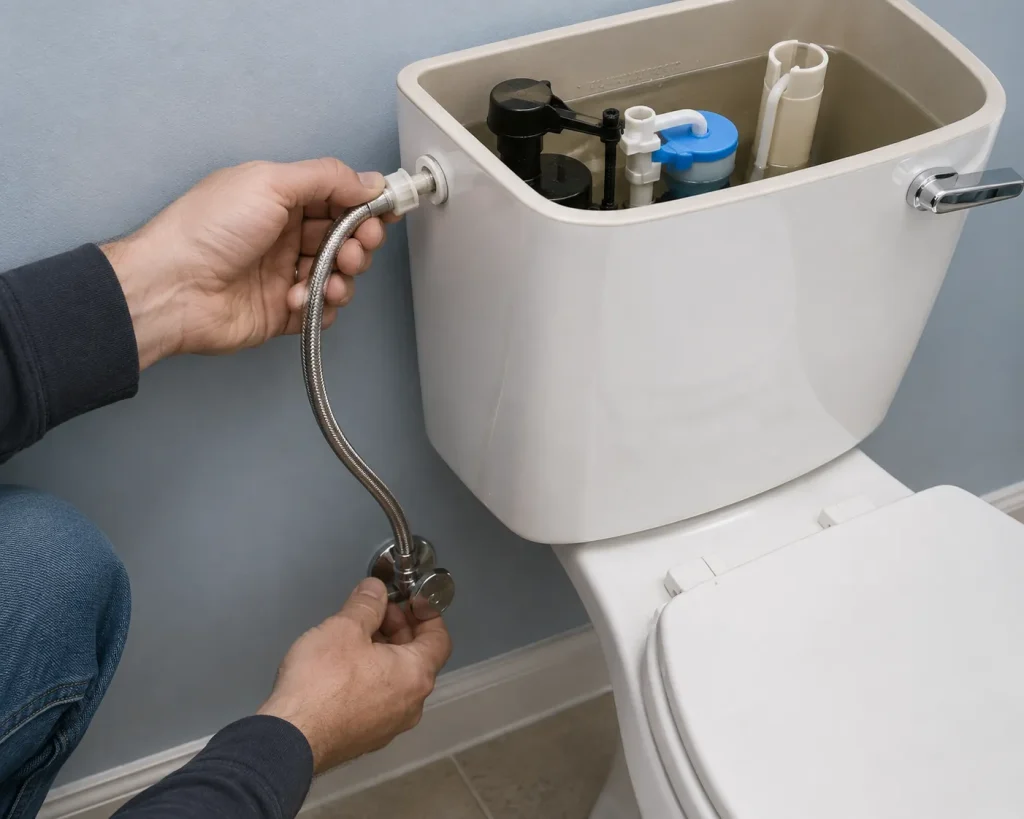
3. Inspect the Flexible Supply Line
A flexible toilet supply line can sometimes vibrate when water begins flowing rapidly.
While the toilet is refilling, carefully observe the line. If you can hear or feel a vibration coming directly from the supply line, the noise may not be caused solely by the fill valve.
Check that the line is not sharply bent, rubbing against another surface, or under unusual tension.
4. Adjust the Fill Valve
Some modern fill valves allow you to adjust the water level or flow characteristics.
If the tank is filling significantly higher than the manufacturer’s recommended level, adjust the valve according to its instructions.
The water level should normally remain below the top of the overflow tube. Many toilets also have a marked waterline inside the tank.
Don’t simply raise the water level because you think more water will produce a stronger flush. The correct level is determined by the toilet’s design, and excessive water can cause unnecessary water use or overflow problems.
5. Clean Mineral Deposits From the Fill Valve
If you live in an area with hard water, mineral deposits can accumulate inside plumbing components.
A partially restricted valve can create turbulence as water passes through a smaller opening. That turbulence can produce whistling, squealing, or hissing.
Some fill valves can be cleaned according to the manufacturer’s instructions. Others are inexpensive enough that replacement is more sensible.
My practical rule: If the valve is old, heavily scaled, or already unreliable, replacement is usually a better long-term repair than spending a lot of time trying to restore a worn valve.
6. Replace the Fill Valve if It Is Worn Out
If you’ve confirmed that the fill valve is producing the noise and cleaning or adjustment doesn’t help, replacement is usually the next step.
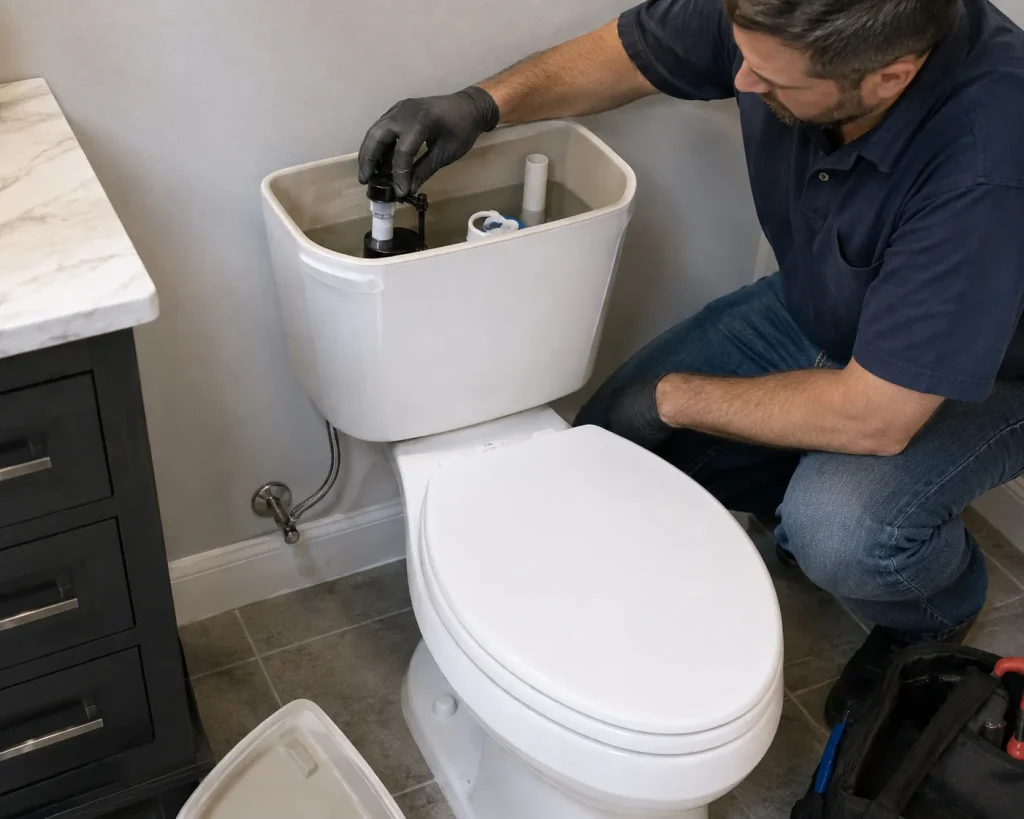
A typical replacement involves shutting off the water, draining the tank, disconnecting the supply line, removing the old valve, installing the new valve, adjusting the water level, and checking for leaks.
For a straightforward toilet, an experienced DIY homeowner can often complete this type of replacement relatively quickly. However, the exact installation procedure varies by valve design.
Follow the manufacturer’s instructions rather than assuming every fill valve installs identically.
What If the Toilet Makes a Banging or Knocking Noise?
This is different from a simple noisy fill valve.
If you hear a sharp bang immediately when the water stops, the problem may be water hammer.
Water hammer occurs when flowing water is stopped or redirected suddenly. The change in pressure can cause movement or vibration in plumbing pipes.
You may notice the noise not only from the toilet but also from nearby fixtures such as sinks, washing machines, or dishwashers.
If several fixtures create similar banging noises, the toilet’s fill valve may not be the underlying problem.
In that situation, inspect the plumbing system rather than repeatedly replacing toilet parts.
Can High Water Pressure Make a Toilet Fill Valve Loud?
Yes. Excessive water pressure can contribute to noisy plumbing fixtures.
Residential plumbing systems are generally designed to operate within a controlled pressure range. If pressure is unusually high, valves can become louder and fixtures may experience additional stress.
If the toilet has always been noisy, the fill valve itself may simply be loud. If the noise suddenly appeared throughout the house, however, broader water-pressure or plumbing changes deserve attention.
A pressure gauge can help determine whether the home’s water pressure is unusually high. If you’re not comfortable testing or adjusting the home’s pressure-reducing equipment, this is a reasonable situation for a plumber.
Should You Repair or Replace the Fill Valve?
| Option | Typical cost level | Installation | Maintenance | Advantages | Disadvantages |
|---|---|---|---|---|---|
| Adjust existing valve | Very low | Easy | Low | Fast and inexpensive | Won’t fix worn components |
| Clean existing valve | Low | Easy to moderate | Low | Useful for mineral buildup | Not effective for every valve |
| Replace fill valve | Low to moderate | Easy to moderate | Low | Reliable long-term solution | Requires correct adjustment |
| Call a plumber | Moderate to high | Professional | Low | Useful for complex plumbing problems | Higher labor cost |
For most homeowners: If the toilet is otherwise working normally and the noise clearly comes from an old fill valve, replacing the valve is usually the most practical solution.
Real-World Scenarios: Which Fix Makes Sense?
If the toilet is only a few years old and suddenly becomes noisy
Start with inspection rather than replacement. Check the supply valve, supply line, water level, and fill valve for mineral buildup or signs of wear.
If the toilet has been noisy since the day it was installed
The valve design itself may simply be noisy. If the toilet works correctly, replacing the fill valve with a quieter compatible model may solve the problem.
If the noise happens in multiple bathrooms
Don’t replace several toilet fill valves immediately. If several fixtures are suddenly noisy, investigate household water pressure or a broader plumbing issue.
If the toilet makes a loud bang when filling stops
Think about water hammer rather than ordinary fill-valve noise. Check whether nearby plumbing fixtures produce the same banging sound.
If the toilet is also constantly running
Prioritize the repair. A continuously running toilet wastes water and can keep the fill valve operating much longer than intended.
How Long Should a Toilet Take to Refill?
There is no single refill time that applies to every toilet because tank size, fill-valve design, water pressure, and supply plumbing all affect the result.
As a practical diagnostic clue, however, a toilet that suddenly takes much longer to refill than it used to deserves inspection.
A slow refill combined with noise can indicate a restricted fill valve, partially closed supply valve, mineral buildup, or another flow restriction.
Don’t judge the toilet solely by the number of seconds it takes. Compare its current behavior with how it performed previously.
How to Replace a Noisy Toilet Fill Valve
If adjustment and cleaning do not solve the problem, replacing the fill valve is a common repair.
- Step 1: Shut off the toilet’s water supply.
- Step 2: Flush the toilet and allow most of the tank water to drain.
- Step 3: Disconnect the water supply line underneath the tank.
- Step 4: Remove the retaining nut securing the old fill valve.
- Step 5: Remove the old valve and clean the mounting area.
- Step 6: Install the compatible replacement valve according to its instructions.
- Step 7: Reconnect the supply line and turn the water back on slowly.
- Step 8: Adjust the water level to the manufacturer’s recommended position.
- Step 9: Flush several times and check every connection for leaks.
Don’t overtighten plastic toilet connections. Excessive force can damage components that only need to be securely seated.
When Should You Call a Plumber?
A noisy toilet is often a manageable DIY repair, but there are situations where the noise points beyond the toilet itself.
- The toilet supply connection leaks after you operate the shutoff valve.
- You hear loud banging from several plumbing fixtures.
- The home’s water pressure appears unusually high.
- The toilet continues running after replacing or adjusting the fill valve.
- You find water leaking inside the wall or around the floor.
- The shutoff valve is corroded or will not operate safely.
- You cannot identify where the noise is coming from.
When a simple toilet refill noise is actually part of a larger plumbing problem, replacing the toilet’s fill valve repeatedly will not solve the underlying issue.
Frequently Asked Questions
Why does my toilet make a high-pitched noise when refilling?
A high-pitched whistle commonly comes from the fill valve. Mineral buildup, worn internal components, or restricted water flow can create vibration and turbulence inside the valve.
Why does my toilet hiss after flushing?
A short hissing sound during the refill cycle is normal. If it is unusually loud or continues after the tank reaches its normal water level, inspect the fill valve and check whether water is still entering the tank.
Can I make my toilet fill quieter without replacing it?
Sometimes. Check the water supply valve, inspect the supply line, adjust the fill valve, and clean mineral deposits if the valve design allows it. If the internal valve is worn, replacement is usually more effective.
Why does my toilet bang when the tank finishes filling?
A sharp bang when the water flow stops can indicate water hammer. If similar banging occurs elsewhere in the home, investigate the plumbing system rather than treating the toilet alone.
Is a noisy toilet a serious plumbing problem?
Usually not, especially if the toilet still fills, flushes, and shuts off normally. However, a new or progressively louder noise can indicate a failing fill valve, excessive pressure, or another plumbing problem worth addressing.
Conclusion
A toilet should make some noise when it refills, but a loud whistle, hiss, buzz, vibration, or bang is worth investigating—especially if the noise has recently changed.
Start by identifying the type of sound and where it comes from. If it is coming from the fill valve, check the supply valve, inspect for mineral buildup, adjust the valve, and replace it if necessary. If the noise sounds like a bang or occurs throughout the house, look beyond the toilet and consider water pressure or water hammer.
In my experience, the best toilet repairs usually start with diagnosis rather than replacing parts at random. A five-minute inspection can tell you whether you’re dealing with a worn fill valve, restricted water flow, or a much larger plumbing issue.