When planning a bathroom renovation, one of the most confusing topics for homeowners is the difference between liquid waterproofing and waterproof membranes. The terms are often used interchangeably, which leads many people to believe they are two completely different systems. In reality, liquid waterproofing is actually one type of waterproof membrane.
After working on bathroom renovation and leak repair projects for more than 15 years, I’ve found that choosing the right waterproofing system is one of the most important decisions in the entire renovation process. A beautiful bathroom can fail in just a few years if the wrong waterproofing method is selected or installed incorrectly.
For a broader overview of waterproofing systems and renovation strategies, visit our Bathroom Waterproofingcategory.
Quick Answer: Liquid Waterproofing vs Waterproof Membrane
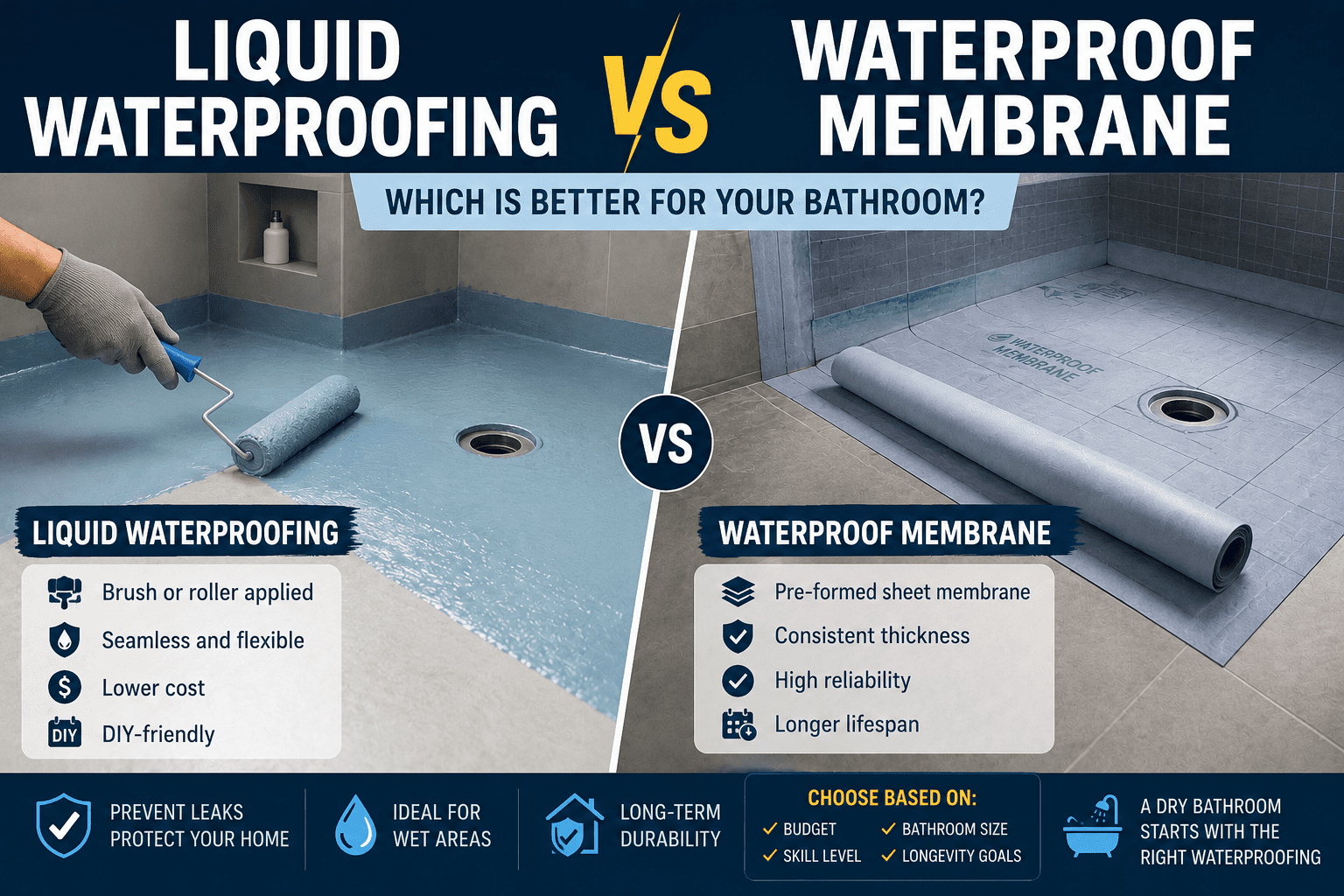
Liquid waterproofing is a brush-, roller-, or trowel-applied coating that cures into a seamless waterproof barrier.
Waterproof membrane is a broader term that includes all waterproofing systems, such as:
- Liquid-applied membranes
- Sheet membranes
- Cementitious coatings
- Polyurethane membranes
So technically, liquid waterproofing is a type of waterproof membrane, while sheet membranes are a different category within the same family of products.
Why This Distinction Matters
Many homeowners ask whether they should choose “liquid waterproofing or waterproof membrane,” but the real comparison is usually:
- Liquid-applied waterproofing
- Sheet waterproof membranes
Each system has different strengths, installation requirements, and long-term performance characteristics.
What Is Liquid Waterproofing?
Liquid waterproofing is a coating applied directly to prepared surfaces. Once cured, it forms a flexible and seamless barrier beneath tiles.
How It Is Applied
- Surface is cleaned and primed
- Reinforcement tape is installed at corners
- Two or more coats are applied
- Each coat must cure fully
- Tiles are installed after final curing
Advantages of Liquid Waterproofing
- No seams
- Excellent for irregular shapes
- DIY-friendly
- Lower material cost
- Widely available
Disadvantages of Liquid Waterproofing
- Thickness must be carefully controlled
- Pinholes may occur if applied too thin
- Requires curing time between coats
What Is a Sheet Waterproof Membrane?
Sheet membranes are factory-made waterproof sheets installed with adhesive or thin-set mortar.
Because they are manufactured to a consistent thickness, they eliminate many of the application variables associated with liquid systems.
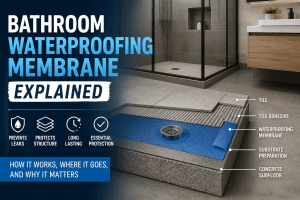
For a deeper technical explanation, read Bathroom Waterproofing Membrane Explained
Advantages of Sheet Membranes
- Consistent thickness
- Excellent reliability
- Long service life
- Immediate visual quality control
Disadvantages of Sheet Membranes
- Higher cost
- More labor-intensive installation
- Requires precise seam treatment
Liquid Waterproofing vs Waterproof Membrane Comparison Table
| Feature | Liquid Waterproofing | Sheet Waterproof Membrane |
|---|---|---|
| Typical Material Cost | Low to Medium | Medium to High |
| Installation Difficulty | Moderate | Moderate to Difficult |
| Maintenance | Low | Low |
| Main Advantages | Seamless, flexible, DIY-friendly | Consistent thickness, highly reliable |
| Main Disadvantages | Application thickness is critical | Higher cost and more labor |
| Best For | DIY projects and irregular layouts | Premium bathrooms and large wet areas |
| Typical Lifespan | 12–20 years | 20–25+ years |
Real-World Installation Scenarios
DIY Guest Bathroom
A homeowner renovating a small guest bathroom used a liquid membrane because the room had several pipe penetrations and tight corners. The flexible coating was easy to apply and provided excellent protection at a reasonable cost.
Luxury Master Bathroom
In a large bathroom with expensive marble tile, we chose a sheet membrane to reduce installation variables and maximize long-term reliability.
Apartment Renovation
In multi-story buildings, I often recommend premium sheet membranes because preventing leaks into neighboring units is a top priority.
Performance Data and Expected Lifespan
Based on manufacturer specifications and field experience:
- Basic liquid membranes typically last 12–20 years
- Premium liquid polyurethane systems may exceed 20 years
- Sheet membranes commonly last 20–25 years or longer
If you are evaluating long-term durability, see How Long Does Bathroom Waterproofing Last?
Which System Is Better for Your Bathroom?
Choose Liquid Waterproofing If You:
- Are doing a DIY renovation
- Need a lower-cost solution
- Have complex corners and penetrations
- Are working in a small bathroom
Choose Sheet Membranes If You:
- Want maximum reliability
- Are installing expensive tile or stone
- Need consistent membrane thickness
- Are renovating an apartment or high-risk wet area
Common Installation Mistakes
Regardless of which system you choose, the most frequent failures are caused by:
- Insufficient surface preparation
- Skipping reinforcement tape
- Poor drain sealing
- Ignoring curing times
- Rushing tile installation
These errors are covered in detail in Most Common Bathroom Waterproofing Mistakes
Industry Standards and External Guidance
About Our Renovation Experience
At Home Experts Blog, our recommendations are based on real renovation projects, product testing, and long-term leak repair experience across bathrooms of all sizes and budgets.
Frequently Asked Questions
1. Is liquid waterproofing a waterproof membrane?
Yes. Liquid waterproofing is one category of waterproof membrane.
2. Which lasts longer: liquid waterproofing or sheet membranes?
Sheet membranes generally offer a longer and more predictable lifespan when installed correctly.
3. Is liquid waterproofing suitable for DIY projects?
Yes. Many liquid membranes are well suited to DIY installations when manufacturer instructions are followed carefully.
4. Are sheet membranes worth the extra cost?
For premium bathrooms or projects where leak prevention is critical, the added reliability often justifies the higher cost.
5. Can either system be repaired without removing tiles?
Minor surface leaks may be addressed non-destructively, but widespread membrane failure usually requires renovation.
Conclusion
Liquid waterproofing and waterproof membranes are not opposing products. Liquid waterproofing is simply one type of waterproof membrane, while sheet membranes represent another major category. The best choice depends on your budget, installation skill, bathroom layout, and durability expectations.
In my experience, liquid waterproofing is ideal for DIY projects and irregular spaces, while sheet membranes provide the most consistent and dependable performance for high-value renovations. When installed correctly, both systems can protect your bathroom from leaks and structural damage for many years.