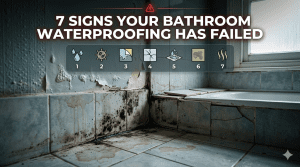
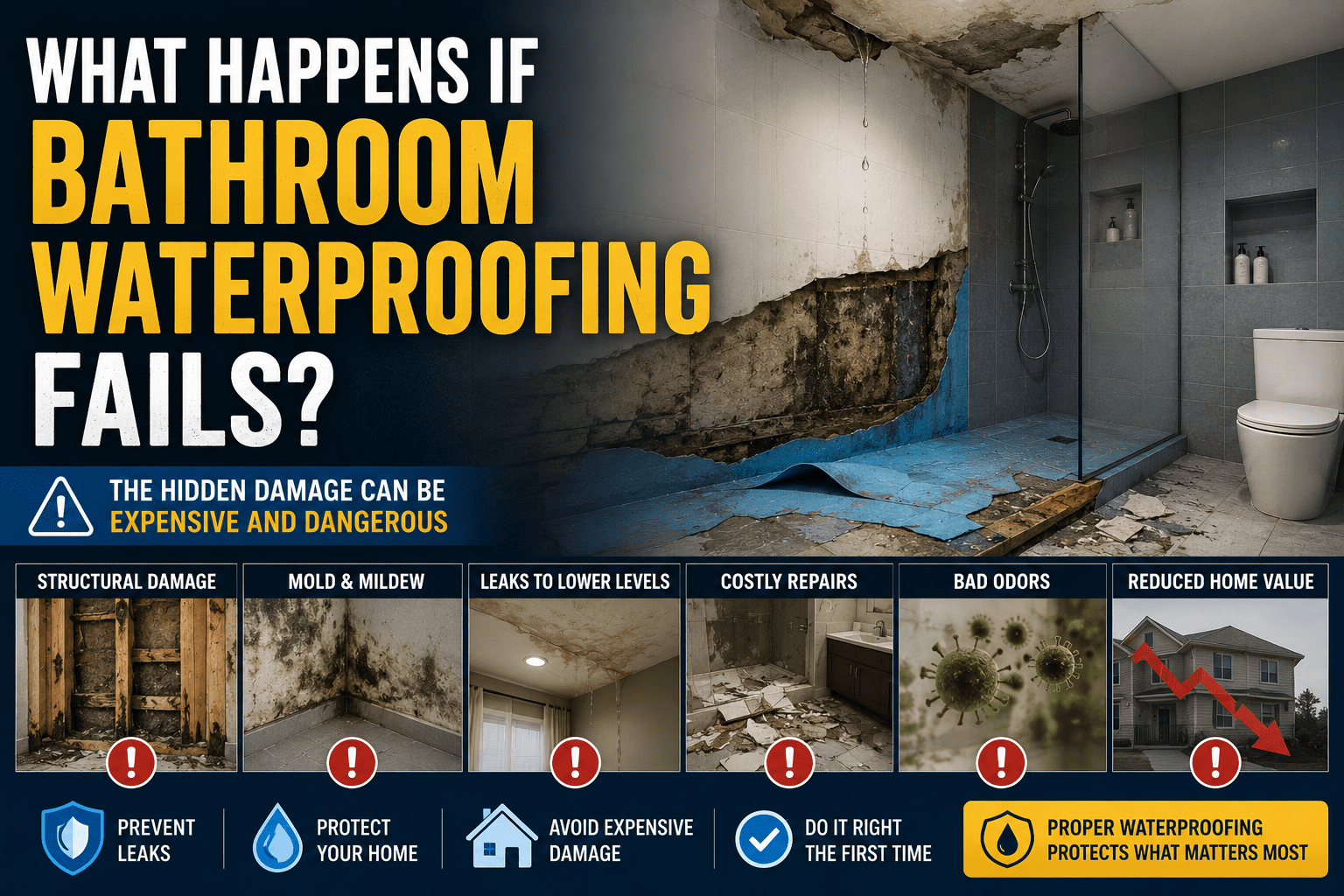
Bathroom waterproofing is often overlooked until it’s too late. Many homeowners assume that once tiles and grout are in place, the bathroom is safe from leaks. However, if waterproofing fails, the consequences can be severe, ranging from mold growth to structural damage and costly repairs.
Having renovated hundreds of bathrooms over the past 15 years, I’ve witnessed firsthand the results of failed waterproofing. Understanding the signs and consequences of failure helps homeowners take preventive measures or act quickly to mitigate damage.
For a comprehensive understanding of waterproofing systems, visit our Bathroom Waterproofingcategory.
Quick Answer
If bathroom waterproofing fails, water can penetrate tiles and grout, reaching the subfloor and structural elements. This leads to:
- Mold and mildew growth
- Rotting of wooden subfloors
- Damage to walls and ceilings below
- Tile detachment or cracking
- Increased repair costs and inconvenience
Common Causes of Waterproofing Failure
1. Poor Material Choice
Using waterproof paint or low-quality membranes can fail under continuous water exposure. Cementitious coatings without flexibility are also prone to cracking.
2. Improper Installation
Failure often occurs due to insufficient surface preparation, skipping corner reinforcement, or inadequate curing times. Even the best membranes will fail if not installed correctly.
3. Structural Movement
Concrete slabs expand and contract. Rigid membranes like standard cementitious coatings can crack, allowing water infiltration.
4. Drain and Pipe Penetration Mistakes
Leaks commonly originate from improperly sealed drains or penetrations. Reinforcement tape and quality sealants are essential at these points.
Consequences of Waterproofing Failure
| Consequence | Impact |
|---|---|
| Mold and Mildew | Health hazards, unpleasant odors, damaged paint and grout |
| Subfloor Damage | Wood rot, weakening of floor structure, potential tile detachment |
| Structural Damage | Ceiling stains, wall degradation, possible leaks to neighboring units |
| Tile Failure | Cracking, detachment, increased maintenance cost |
| Financial Loss | High repair costs, potential re-renovation |
Real-World Examples
Small Guest Bathroom
A DIY installation used cementitious waterproofing without reinforcement tape in corners. Within two years, water seeped under tiles, causing minor subfloor swelling and tile popping.
Luxury Master Bathroom
In a large bathroom with polyurethane membrane, the failure occurred due to poorly sealed drain penetration. Quick detection and repair prevented extensive structural damage.
Apartment Renovation
Sheet membrane installed incorrectly at wall-floor junctions leaked into the apartment below, emphasizing the need for professional installation in multi-story buildings.
Preventing Waterproofing Failures
- Use high-quality membranes suitable for your bathroom layout
- Follow manufacturer instructions carefully
- Reinforce corners, wall-floor junctions, and pipe penetrations
- Allow proper curing before tiling
- Consider structural movement in material selection
Frequently Asked Questions
1. How can I detect early waterproofing failure?
Look for damp spots, musty smells, water stains, or loose tiles.
2. Can minor leaks be repaired without removing tiles?
Yes, localized repairs with injection systems or sealants may work, but extensive failure usually requires membrane replacement.
3. Which materials reduce the risk of failure?
Flexible liquid membranes, polyurethane coatings, and high-quality sheet membranes perform best in high-moisture areas.
4. How long does proper waterproofing typically last?
Liquid membranes: 12–20 years; Sheet membranes: 20–25+ years; Polyurethane: 20–30+ years.
5. What are the long-term consequences of ignoring leaks?
Mold growth, structural decay, higher renovation costs, and potential legal issues in multi-unit buildings.
Comparison Table: Material vs Risk of Failure
| Material | Average Lifespan | Common Failure Mode | Cost | Installation Difficulty |
|---|---|---|---|---|
| Cementitious Coating | 10–15 years | Cracking due to movement | Low | Easy |
| Liquid Membrane | 12–20 years | Pinholes or thin application | Medium | Moderate |
| Polyurethane Membrane | 20–30+ years | Poorly sealed corners or penetrations | High | Moderate |
| Sheet Membrane | 20–25+ years | Incorrect seam sealing | High | Moderate-Difficult |
Related Articles
- How Long Does Bathroom Waterproofing Last?
- Bathroom Waterproofing Membrane Explained
- Most Common Bathroom Waterproofing Mistakes
- 2026 Bathroom Waterproofing Guide
Core reference: Bathroom Waterproofing Core Guide
External reference: TCNA Waterproofing Guidelines
Conclusion
Bathroom waterproofing failure can have serious consequences including mold, structural damage, and costly repairs. Proper material selection, careful installation, corner reinforcement, and adherence to curing times are essential to prevent failure. In my experience, professional planning combined with high-quality membranes ensures bathrooms remain leak-free and structurally safe for decades.