Bathroom waterproofing is one of those hidden systems homeowners rarely think about—until something goes wrong. The tiles may still look beautiful on the surface, but underneath, moisture could already be damaging the floor structure, walls, or ceiling below.
From my experience in bathroom renovation and leak repair projects, failed waterproofing is far more common than most homeowners realize. In many cases, the warning signs appear months or even years before major damage becomes visible. The problem is that people often ignore small symptoms like peeling paint or musty smells until expensive structural repairs become unavoidable.
The good news is that bathroom waterproofing failure usually leaves early clues. If you recognize these signs early, you can often fix the problem before it turns into a full bathroom renovation.
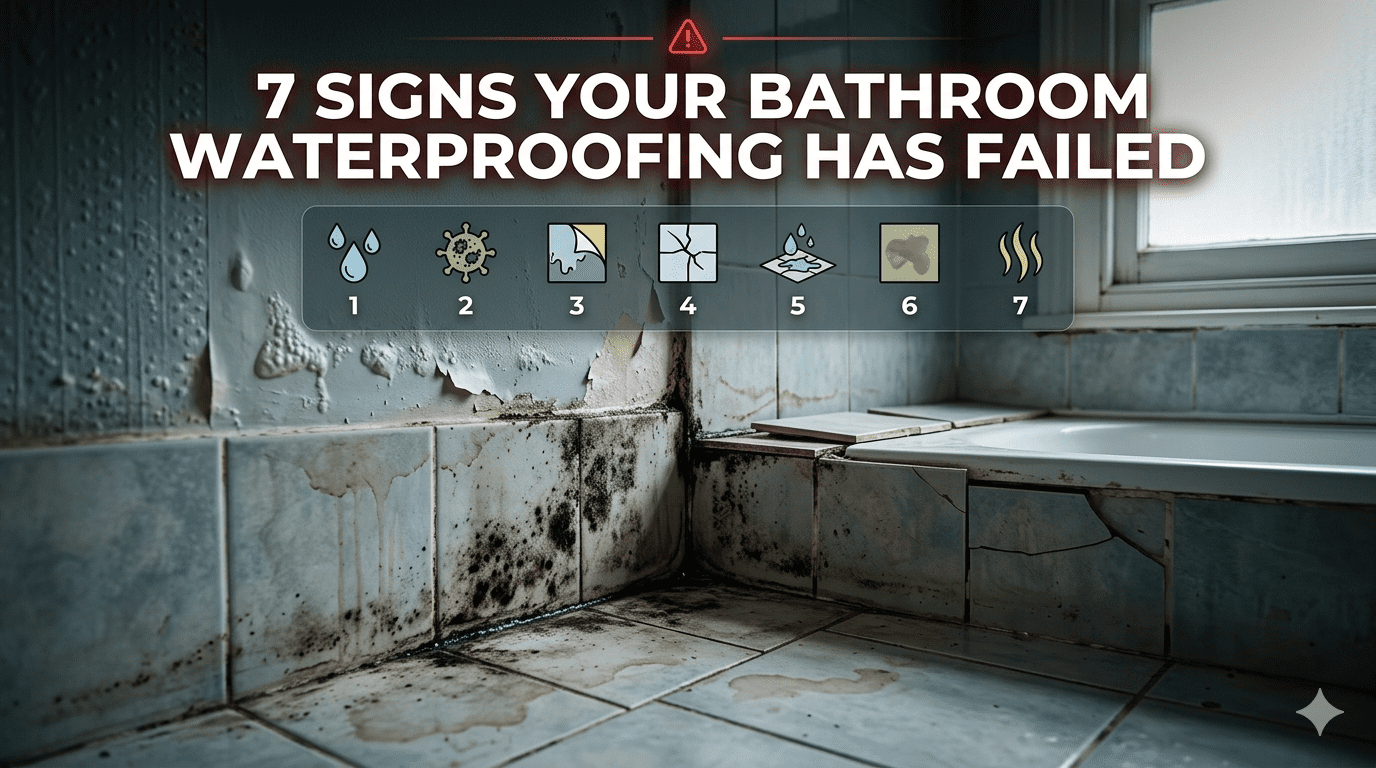
Quick Answer: What Are the Signs of Failed Bathroom Waterproofing?
- Persistent mold or mildew growth
- Loose or hollow floor tiles
- Peeling paint near bathroom walls
- Water stains on ceilings below
- Bad smells that never go away
- Cracked grout and silicone joints
- Damp floors or swollen materials
Why Bathroom Waterproofing Failure Happens
Bathroom waterproofing systems are constantly exposed to:
- Water splashes
- Steam and humidity
- Temperature changes
- Cleaning chemicals
- Structural movement
Over time, even small installation mistakes can allow water to penetrate behind tiles and underneath flooring materials.
In older homes, failed waterproofing is often caused by outdated materials or improper renovation work. In newer homes, the problem is more commonly linked to rushed construction or poor workmanship.
Sign #1: Persistent Mold and Mildew Growth
Mold is one of the earliest and most obvious signs of hidden moisture problems.
If mold keeps returning even after cleaning, the issue may not be surface-level anymore. Moisture trapped behind tiles or inside wall cavities creates the perfect environment for mold growth.
Common areas include:
- Bathroom corners
- Ceiling edges
- Behind toilets
- Near shower walls
- Around floor joints
One homeowner I worked with repeatedly repainted their bathroom ceiling every six months without realizing the actual issue was failed shower waterproofing leaking moisture into the wall cavity.
Sign #2: Loose or Hollow Floor Tiles
Tiles should feel solid underfoot. If you notice:
- Hollow sounds when tapping tiles
- Movement under pressure
- Cracked grout lines
- Tiles lifting at corners
there’s a good chance water has weakened the adhesive underneath.
In many bathrooms, water slowly breaks down tile adhesive over time after waterproofing failure begins.
Sign #3: Peeling Paint or Bubbling Walls
Paint should not bubble, peel, or blister in a properly ventilated bathroom.
When waterproofing fails, moisture migrates into surrounding drywall or plaster. Over time, trapped moisture pushes paint away from the surface.
This is especially common around:
- Bathroom door frames
- Lower wall edges
- Adjacent bedrooms
- Hallway walls behind showers
Sign #4: Water Stains on the Ceiling Below
If there’s a room beneath your bathroom, ceiling stains are one of the clearest warning signs of waterproofing failure.
Typical symptoms include:
- Yellow or brown stains
- Sagging drywall
- Peeling ceiling paint
- Musty odors downstairs
Unfortunately, by the time stains become visible downstairs, water damage is often already significant.
Sign #5: Persistent Musty or Damp Smells
A healthy bathroom should not smell damp all the time.
If unpleasant odors remain even after deep cleaning, hidden moisture may already be trapped beneath flooring or inside wall cavities.
One important detail many homeowners miss is that waterproofing failure smells different from normal bathroom odors. It often has a “wet concrete” or “moldy wood” smell.
Sign #6: Cracked Grout and Silicone Joints
Small cracks around:
- Shower corners
- Bathtub edges
- Floor joints
- Wall transitions
can allow water to penetrate beneath the tile surface.
While grout itself is not fully waterproof, damaged grout accelerates moisture penetration significantly.
In many older bathrooms, deteriorated silicone sealant is the first visible sign that the waterproofing system underneath may also be aging.
Sign #7: Damp Floors or Swollen Materials
If bathroom floors feel damp long after use, or if nearby materials begin swelling, moisture is likely escaping where it shouldn’t.
Common symptoms include:
- Warped wooden door frames
- Swollen cabinets
- Soft flooring areas
- Laminate lifting outside the bathroom
This often indicates long-term water exposure beneath the surface.
Comparison Table: Waterproofing Failure Severity
| Problem | Severity | Repair Cost | Repair Difficulty | Advantages of Early Repair | Risk If Ignored |
|---|---|---|---|---|---|
| Minor Grout Cracks | Low | Low | Easy | Prevents leaks early | Moisture penetration |
| Mold Growth | Medium | Medium | Moderate | Improves indoor air quality | Health issues |
| Loose Tiles | Medium-High | Medium-High | Moderate | Prevents structural damage | Tile collapse |
| Ceiling Water Damage | High | High | Difficult | Avoids major repairs | Structural deterioration |
| Subfloor Rot | Very High | Very High | Difficult | Protects building structure | Major renovation needed |
Real Bathroom Waterproofing Failure Scenarios
Apartment Bathrooms
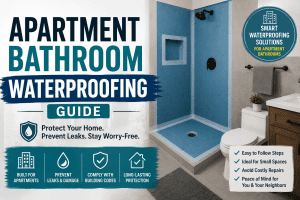
In apartment buildings, failed waterproofing can quickly affect neighboring units below. Water leaks often spread through concrete slabs and appear in unexpected locations.
Many apartment owners only discover waterproofing failure after receiving complaints from downstairs neighbors.
Small Bathrooms
Smaller bathrooms trap humidity more easily, increasing long-term moisture exposure.
Poor ventilation combined with weak waterproofing is a very common problem in compact urban apartments.
Old Homes
Bathrooms renovated over 15–20 years ago may use outdated waterproofing systems that have already exceeded their lifespan.
How Long Does Bathroom Waterproofing Last?
Most professionally installed bathroom waterproofing systems last:
- 10–15 years for basic systems
- 15–25 years for premium systems
- Longer with proper ventilation and maintenance
However, poor installation can cause failure within just a few years.
Professional Experience: The Most Overlooked Waterproofing Problem
One of the biggest mistakes homeowners make is assuming that tiles themselves are waterproof. In reality, water slowly penetrates grout lines over time.
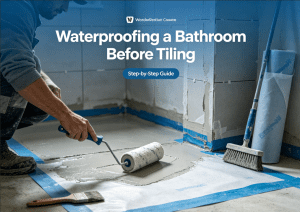
The actual waterproof protection comes from the membrane underneath the tiles—not the tiles themselves.
I’ve inspected bathrooms where expensive luxury tiles looked perfect on the surface while severe mold and rotting plywood were hidden underneath.
What Should You Do If Waterproofing Has Failed?
- Identify the source of moisture quickly
- Stop water exposure immediately
- Inspect nearby walls and flooring
- Improve ventilation
- Repair damaged grout and sealant
- Consult a waterproofing professional if structural damage exists
Best Solutions Based on Your Situation
- Minor grout cracks: Regrouting and resealing may be enough
- Localized leaks: Partial waterproof repair possible
- Major mold or subfloor damage: Full bathroom renovation may be required
- Apartment bathrooms: Immediate repair recommended to avoid neighbor damage claims
Frequently Asked Questions
1. Can bathroom waterproofing fail without visible leaks?
Yes. Hidden moisture damage often develops long before visible water appears.
2. Is mold always caused by waterproofing failure?
Not always, but recurring mold is often linked to hidden moisture problems.
3. Can cracked grout cause leaks?
Yes. Cracked grout allows water to penetrate beneath the tile surface.
4. How expensive is waterproofing repair?
Minor repairs may cost relatively little, but severe structural damage can require full bathroom renovation.
5. Should I replace tiles if waterproofing fails?
In many cases, yes. Failed waterproofing often requires removing tiles to access the damaged membrane underneath.
Related Articles
- 2026 Bathroom Waterproofing Guide
- How to Waterproof a Bathroom Floor Properly
- Most Common Bathroom Waterproofing Mistakes
- Bathroom Leak Repair Without Removing Tiles
- Best Bathroom Waterproofing Materials
External reference: EPA Mold and Moisture Guide
Conclusion
Bathroom waterproofing failure rarely happens overnight. In most cases, the warning signs appear gradually through mold growth, loose tiles, damp smells, peeling paint, or hidden moisture damage.
The earlier these problems are identified, the easier and less expensive the repair process usually becomes. Whether you own an apartment, renovate older homes, or simply want to protect your bathroom investment, understanding these waterproofing failure signs can help prevent serious structural damage and costly future repairs.