When it comes to bathroom renovations, the tiles, vanities, and fixtures often get all the attention. But the real protection against leaks and moisture damage happens behind the scenes — in the waterproofing membrane. A high-quality waterproofing membrane ensures your bathroom stays dry, safe, and mold-free for years.
From my experience overseeing hundreds of bathroom projects, I’ve seen cases where the most expensive tiles failed simply because the waterproofing membrane was applied incorrectly or skipped entirely. Understanding how these membranes work is critical for both DIY homeowners and professionals planning a renovation.
If you want a broader overview of bathroom waterproofing techniques, you can explore our Bathroom Waterproofing category
Quick Answer: What Is a Bathroom Waterproofing Membrane?
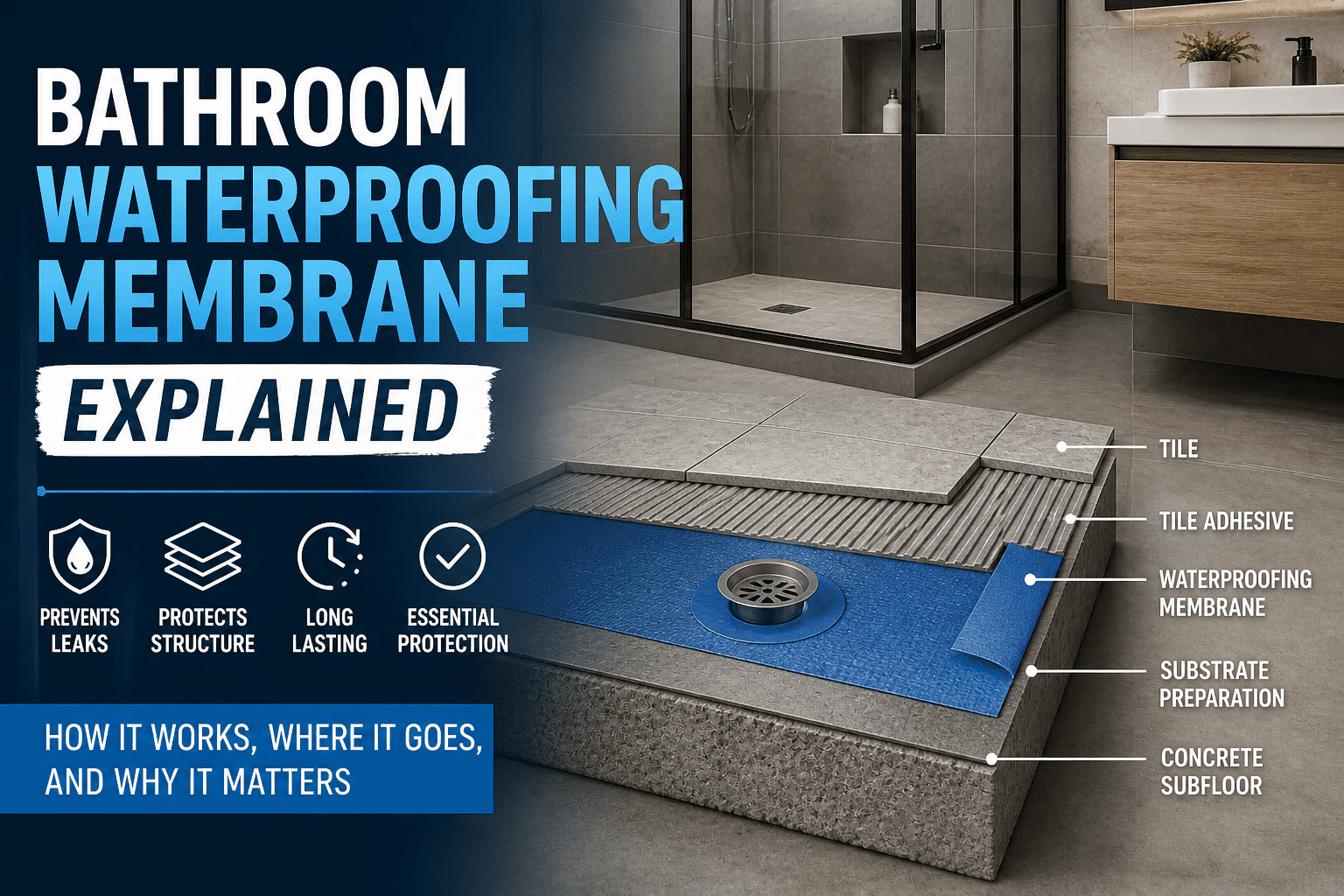
A bathroom waterproofing membrane is a barrier installed beneath tiles and surface finishes that prevents water from penetrating into walls, floors, and structural materials. It protects against leaks, mold growth, and costly structural damage.
Why Bathroom Waterproofing Membranes Are Critical
Bathrooms face constant exposure to water through:
- Shower splashes
- Humidity and steam
- Standing water
- Cleaning and chemical use
- Temperature changes
Without a membrane, water can penetrate grout and tiles, slowly damaging subfloors, walls, and ceilings below.
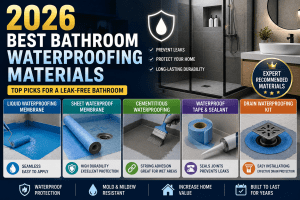
Types of Bathroom Waterproofing Membranes
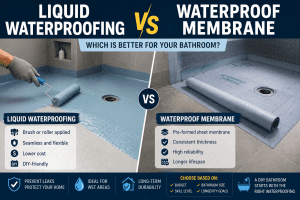
1. Liquid Waterproof Membrane
Applied with brushes, rollers, or trowels, liquid membranes create a seamless waterproof layer once cured.
Advantages
- Flexible and adaptable
- Seamless coverage for irregular surfaces
- DIY-friendly
Disadvantages
- Requires careful application thickness
- Improper curing reduces effectiveness
2. Sheet Membrane
Pre-manufactured sheets provide consistent thickness and excellent durability. Popular for luxury bathrooms or commercial applications.
Advantages
- High reliability
- Long lifespan
- Durable and resistant to tears
Disadvantages
- Higher material and labor cost
- Requires professional installation
3. Cementitious Waterproofing
Cement-based coatings are commonly used in concrete subfloors and budget-friendly renovations.
Advantages
- Affordable and easy to apply
- Good for DIY beginners on stable concrete
Disadvantages
- Less flexible; may crack under movement
- Lower long-term durability than liquid or sheet membranes
4. Polyurethane Waterproofing
Premium membrane with excellent flexibility and crack resistance, ideal for long-lasting protection.
Advantages
- Outstanding flexibility
- High durability
- Excellent for large or high-end bathrooms
Disadvantages
- Higher material cost
- Professional installation recommended
Comparison Table of Bathroom Waterproofing Membranes
| Type | Cost | Installation Difficulty | Maintenance | Advantages | Disadvantages |
|---|---|---|---|---|---|
| Liquid Membrane | Medium | Easy-Moderate | Low | Seamless, flexible | Thickness critical |
| Sheet Membrane | High | Moderate-Difficult | Low | Durable, reliable | Labor-intensive |
| Cementitious | Low | Easy | Medium | Affordable | Less flexible |
| Polyurethane | High | Moderate | Low | Flexible, long-lasting | Costly, professional install recommended |
Real-Life Examples
Luxury Bathroom
In a high-end bathroom renovation, a liquid membrane was incorrectly applied with insufficient coats. Minor leaks appeared within two years beneath tiles, emphasizing the importance of correct thickness and curing.
Apartment Bathroom
Apartment floors often require sheet membranes to prevent water from affecting neighbors. A partially installed sheet membrane led to small but persistent water seepage under the tiles, solved after professional intervention.
DIY Bathroom Renovation
A DIY homeowner used cementitious waterproofing over a concrete subfloor. While initially successful, cracks formed due to slight floor movement, showing why flexibility is important in waterproofing systems.
Choosing the Right Membrane
- DIY-Friendly: Liquid membranes for smaller or irregular areas
- Long-Term Durability: Sheet or polyurethane membranes
- Budget Option: Cementitious coatings for stable floors
- Apartment or Multi-Story: Sheet membranes to protect neighbors below
- Luxury or High-Moisture: Polyurethane for maximum crack resistance
Frequently Asked Questions
1. Are tiles waterproof on their own?
No. Tiles are water-resistant, but grout joints allow water to penetrate. The membrane provides the real protection.
2. How thick should a waterproof membrane be?
Check manufacturer specifications; most liquid membranes require 2–3 coats for effective coverage.
3. Can I install a membrane myself?
Liquid and cementitious membranes can be DIY-friendly; sheet and polyurethane membranes usually require professionals.
4. How do I know if my membrane is failing?
Signs include loose tiles, persistent mold, water stains, or soft flooring.
5. Is waterproofing required by code?
Most building codes require waterproofing in wet areas, including showers and wet zones of bathrooms.
Related Articles
- 2026 Bathroom Waterproofing Guide
- How to Waterproof a Bathroom Floor Properly
- 7 Signs Your Bathroom Waterproofing Has Failed
- Bathroom Leak Repair Without Removing Tiles
- Most Common Bathroom Waterproofing Mistakes
For additional guidance, check EPA Mold and Moisture Guide
Conclusion
Bathroom waterproofing membranes are critical to preventing leaks, mold, and structural damage. Choosing the right type depends on your bathroom size, budget, installation experience, and long-term durability goals. Whether you’re a DIY homeowner or hiring professionals, understanding these membranes ensures your bathroom stays safe, dry, and functional for years to come.