Washdown toilets are extremely common across many European countries, especially in Germany, the Netherlands, Austria, Switzerland, and parts of Scandinavia. While homeowners in North America often prefer siphonic toilets, European bathrooms have historically leaned toward washdown flushing systems.
The reason is not simply tradition. Washdown toilets match many European priorities, including water efficiency, compact bathroom design, easier plumbing layouts, and strong direct flushing performance.
Understanding why Europe favors washdown toilets can help homeowners and renovators choose the best toilet type for their own bathrooms.
Quick Answer
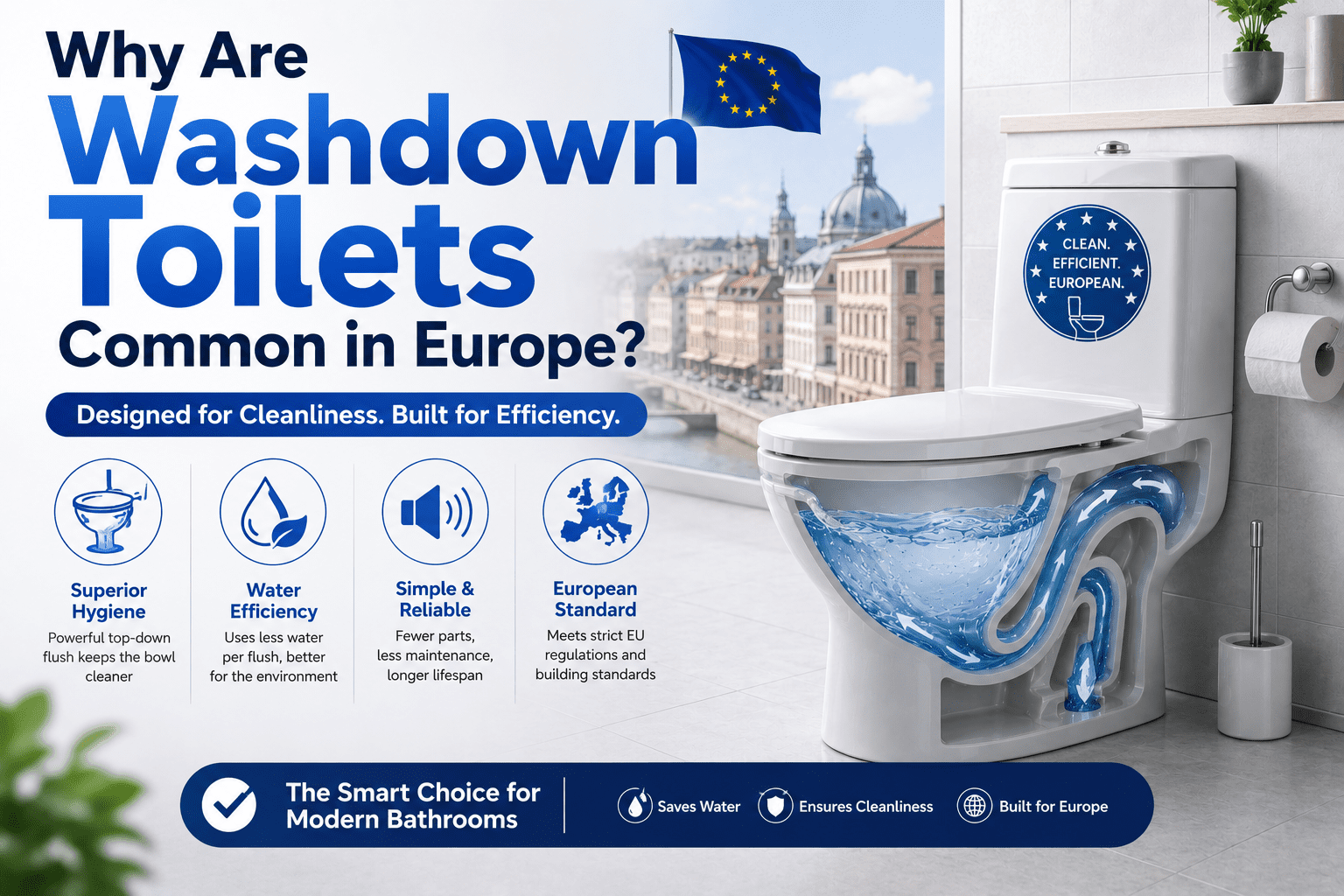
Washdown toilets are common in Europe because they provide strong flushing power, compact design, efficient waste removal, simpler plumbing construction, and excellent performance in smaller bathrooms commonly found across European homes.
What Is a Washdown Toilet?
A washdown toilet uses direct gravity-driven water force to push waste through a short trapway into the drain system.
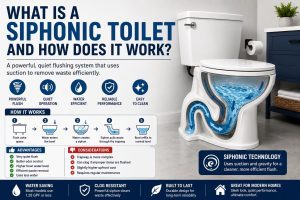
Unlike siphonic toilets that rely heavily on suction, washdown systems focus on rapid water movement and direct waste removal.
This design creates a fast, powerful flush with fewer internal flow restrictions.
For a complete technical explanation, read What Is a Washdown Toilet and How Does It Work?.
Why Europe Prefers Washdown Toilets
1. Smaller European Bathrooms
Many European apartments and homes have smaller bathroom spaces compared to North American homes.
Washdown toilets are often more compact because they use:
- Shorter trapways
- Simpler internal bowl structures
- Reduced tank depth
- Space-saving wall-mounted designs
This makes them ideal for urban apartments and compact bathrooms.
2. Strong Direct Flushing Power
European homeowners and commercial buildings often prioritize reliable waste removal over ultra-quiet flushing.
Washdown toilets are known for:
- Fast waste evacuation
- Reduced clogging risk
- Direct flushing performance
- Simple mechanical operation
In busy households and public restrooms, this reliability is highly valued.
3. Plumbing System Compatibility
European plumbing systems historically evolved differently from North American systems.
Washdown toilets work well with:
- Short horizontal drain systems
- Wall outlet configurations
- Compact drainage layouts
- Older building plumbing structures
This made washdown designs easier to standardize across Europe.
4. Water Efficiency Standards
Many European countries adopted strict water-saving regulations earlier than some other regions.
Modern washdown toilets are highly efficient and often use:
- Dual-flush systems
- Low water consumption
- Efficient direct flushing
- Reduced refill volumes
This aligns well with Europe’s environmental and sustainability goals.
Washdown vs Siphonic Toilets in Europe
| Feature | Washdown Toilet | Siphonic Toilet |
|---|---|---|
| Main Flush Method | Direct gravity force | Suction effect |
| Flush Noise | Louder | Quieter |
| Bathroom Space Efficiency | Excellent | Moderate |
| Clog Resistance | Very High | Moderate |
| Bowl Water Surface | Smaller | Larger |
| Popularity in Europe | Very High | Moderate |
For a broader side-by-side comparison, read Siphonic vs Washdown Toilets: Which One Is Better for Your Bathroom?.
Why European Hotels Often Use Washdown Toilets
Hotels across Europe commonly choose washdown toilets because they:
- Reduce clogging incidents
- Require simpler maintenance
- Fit smaller bathrooms
- Provide reliable high-traffic performance
Maintenance teams often prefer washdown systems because the shorter trapways are easier to service.
Real-World Example
A homeowner moving from the United States to Germany noticed that almost every apartment they toured used washdown toilets instead of siphonic models.
At first, the louder flush sounded unusual compared to North American toilets. However, after several months, they appreciated:
- The strong flushing performance
- Fewer clogging problems
- The compact bathroom layout
- The simple maintenance requirements
This experience is very common among international homeowners adapting to European plumbing systems.
Are Washdown Toilets More Hygienic?
Opinions vary.
Washdown toilets remove waste quickly and efficiently, which can improve flushing cleanliness.
However, because they usually have smaller water spots, some models may show bowl marks more easily between cleanings.
Many modern European designs now include:
- Rimless bowls
- Anti-bacterial glazing
- Improved bowl rinsing systems
- Easy-clean ceramic coatings
These innovations have significantly improved hygiene performance.
Noise: One of the Main Tradeoffs
The biggest complaint about washdown toilets is flushing noise.
Because the flush relies on aggressive water movement instead of gradual suction, the sound level is usually higher.
Fortunately, modern manufacturers have improved:
- Tank valve design
- Water flow control
- Acoustic insulation
- Flush optimization
If noise is a concern, How to Reduce Washdown Toilet Noise explains several effective solutions.
Typical Cost Comparison
| Category | Washdown Toilet | Siphonic Toilet |
|---|---|---|
| Average Unit Price | $180–$700 | $250–$1,000 |
| Installation Complexity | Lower | Moderate |
| Maintenance Difficulty | Low | Moderate |
| Clog Repair Frequency | Low | Moderate |
| Long-Term Reliability | Very High | High |
European Water Efficiency Standards
According to the European Union Ecolabel Program, water-saving bathroom fixtures play an important role in reducing residential water consumption across Europe.
This focus on efficiency helped accelerate the popularity of modern washdown toilet systems.
Frequently Asked Questions
1. Why are washdown toilets popular in Europe?
They fit smaller bathrooms, flush strongly, and work well with European plumbing systems.
2. Are washdown toilets better than siphonic toilets?
It depends on priorities. Washdown toilets excel at clog resistance and compact design, while siphonic toilets are quieter and cleaner-looking.
3. Why are European toilets louder?
Many use washdown flushing systems that rely on aggressive water movement.
4. Do washdown toilets save water?
Yes. Many modern European models are highly water-efficient.
5. Are washdown toilets harder to clean?
Sometimes slightly, because they usually have smaller bowl water surfaces.
Conclusion
Washdown toilets became common in Europe because they match the region’s practical approach to plumbing, water efficiency, and space-saving bathroom design. Their compact construction, strong flushing performance, and excellent clog resistance make them especially suitable for European apartments, hotels, and urban homes.
Although they may produce more flushing noise than siphonic toilets, modern washdown systems continue evolving with better bowl designs, improved hygiene features, and greater water efficiency. For many European households, they remain one of the most reliable and practical toilet solutions available today.