One of the biggest frustrations homeowners face is a toilet that struggles with heavy waste. Frequent clogs, weak flushing, double flushing, and incomplete bowl clearing can quickly turn an everyday bathroom experience into an ongoing plumbing problem.
Not all toilets handle heavy waste equally well. Some are engineered for strong suction and quiet operation, while others prioritize fast direct waste removal and clog resistance.
If you are choosing between siphonic toilets, washdown toilets, pressure-assisted systems, or modern dual-flush models, understanding how flushing technology works can help you choose the right toilet for long-term reliability.
Quick Answer
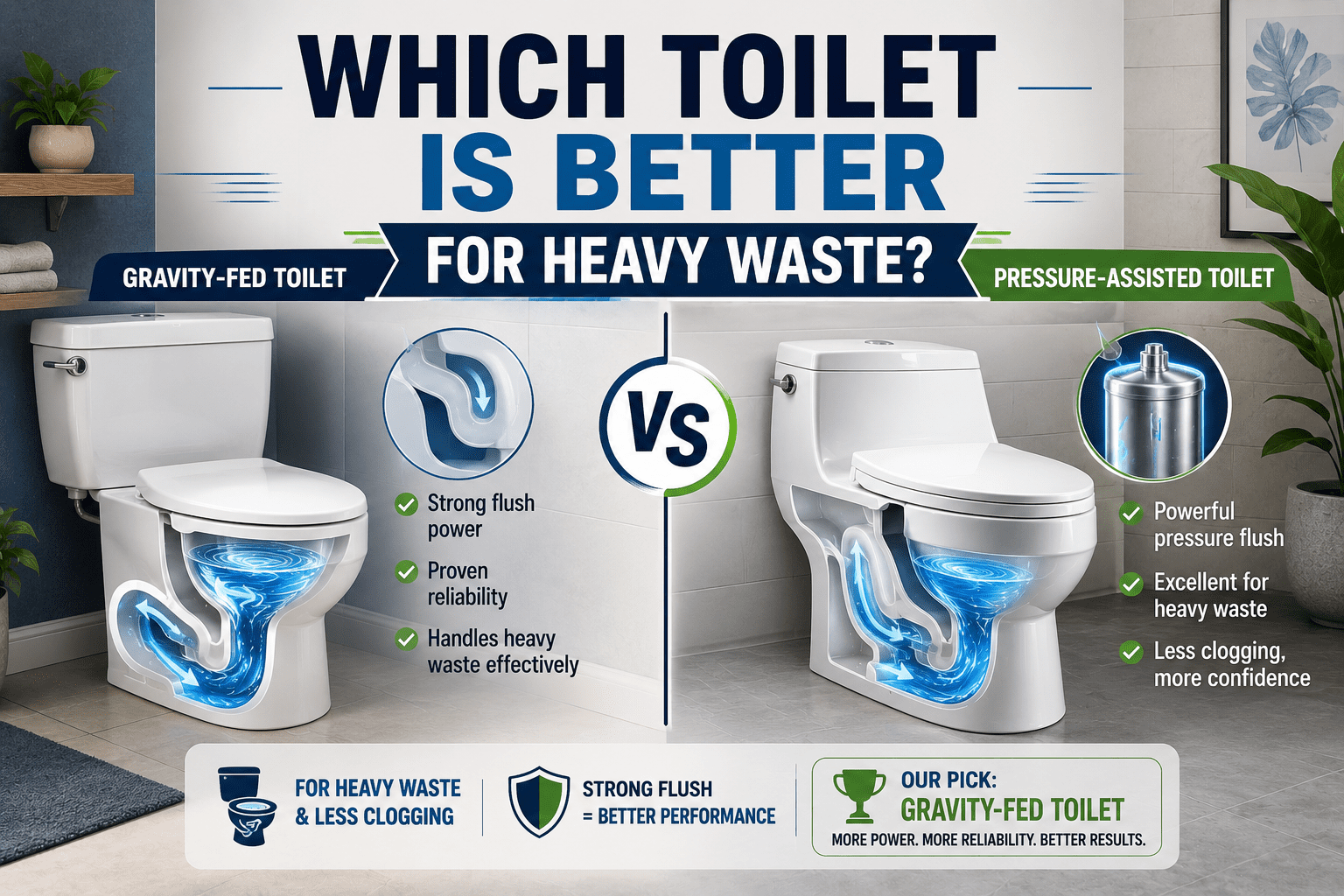
Washdown toilets and pressure-assisted toilets are generally better for heavy waste because they use direct force and faster waste evacuation. Modern high-performance siphonic toilets can also handle heavy waste effectively when equipped with large glazed trapways and optimized flushing systems.
Why Some Toilets Struggle with Heavy Waste
Heavy waste requires:
- Strong water flow
- Efficient trapway design
- Fast waste evacuation
- Proper bowl geometry
- Consistent flushing pressure
Older or poorly designed toilets often fail because:
- The trapway is too narrow
- The flushing system is weak
- The bowl water level is too low
- The toilet uses outdated hydraulic engineering
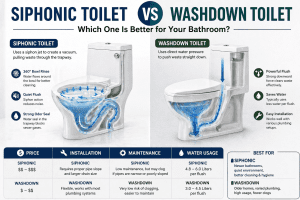
Siphonic vs Washdown Toilets for Heavy Waste
| Feature | Siphonic Toilet | Washdown Toilet |
|---|---|---|
| Flushing Method | Suction-based | Direct gravity flush |
| Heavy Waste Handling | Good to Very Good | Excellent |
| Clog Resistance | Moderate to High | Very High |
| Flush Noise | Quiet | Louder |
| Water Usage | Moderate | Low |
| Cleaning Performance | Excellent bowl rinse | Strong waste removal |
For a complete comparison, read Siphonic vs Washdown Toilets: Which One Is Better for Your Bathroom?.
Why Washdown Toilets Perform Well with Heavy Waste
Washdown toilets use a shorter and wider trapway combined with a direct gravity flush.
This design helps:
- Move large waste quickly
- Reduce clogging risk
- Minimize suction loss
- Improve drain speed
Because waste travels through a shorter path, washdown toilets are often preferred in commercial spaces and high-traffic bathrooms.
European bathrooms commonly use washdown systems because of their reliability and efficiency.
You can learn more in Why Are Washdown Toilets Common in Europe?.
Can Siphonic Toilets Handle Heavy Waste?
Yes — especially modern high-performance models.
Today’s premium siphonic toilets include:
- Larger glazed trapways
- Improved rim jets
- Optimized siphon channels
- Enhanced flush valves
- Computer-engineered bowl hydraulics
These upgrades significantly improve flushing power compared to older siphonic systems.
In many modern homes, siphonic toilets offer an excellent balance between:
- Strong flushing
- Quiet operation
- Comfort
- Low maintenance
Pressure-Assisted Toilets: Maximum Power
Pressure-assisted toilets use compressed air inside a sealed tank to create an extremely forceful flush.
These toilets are highly effective for:
- Heavy waste
- Large households
- Commercial bathrooms
- High-frequency usage
However, they also have disadvantages:
- Louder flushing
- Higher purchase cost
- More complex maintenance
- Industrial-style operation
Real-World Example
A family with three children experienced frequent clogging with an older low-flow toilet that used a narrow trapway.
After switching to a modern washdown toilet with:
- A larger glazed trapway
- Direct flush technology
- Efficient bowl geometry
Their clogging issues dropped dramatically within the first few months.
In another case, a homeowner upgrading to a premium siphonic toilet noticed improved flushing consistency while maintaining quieter nighttime operation.
How Trapway Design Affects Heavy Waste Performance
The trapway is one of the most important components influencing waste removal.
Larger and smoother trapways:
- Improve waste flow
- Reduce blockage risk
- Increase flushing consistency
- Support low-water flushing systems
Modern toilets often use fully glazed trapways to reduce friction and improve waste movement.
You can explore this topic further in How Toilet Trapway Design Affects Flushing Performance.
Best Toilet Types for Different Households
Best for Large Families
Pressure-assisted or high-performance washdown toilets.
Best for Quiet Bathrooms
Modern siphonic toilets with optimized suction systems.
Best for Commercial Spaces
Pressure-assisted or washdown toilets due to heavy daily usage.
Best for Small Apartments
Compact siphonic toilets with efficient low-flow flushing.
Water Usage vs Heavy Waste Performance
| Toilet Type | Water Usage | Heavy Waste Performance | Noise Level | Maintenance |
|---|---|---|---|---|
| Siphonic Toilet | 1.28–1.6 GPF | Good to Very Good | Quiet | Low |
| Washdown Toilet | 1.0–1.28 GPF | Excellent | Moderate | Low |
| Pressure-Assisted Toilet | 1.1–1.6 GPF | Outstanding | Loud | Moderate |
| Older Gravity Toilet | 3.5+ GPF | Variable | Moderate | Higher |
Signs Your Toilet Is Not Designed for Heavy Waste
- Frequent clogging
- Double flushing
- Slow bowl clearing
- Weak suction
- Water rising before draining
- Incomplete waste removal
If these issues happen regularly, upgrading the toilet may solve the problem more effectively than repeated repairs.
Choosing the Right Toilet for Heavy Waste
Before buying a new toilet, consider:
- Household size
- Bathroom noise sensitivity
- Water efficiency goals
- Plumbing compatibility
- Maintenance preferences
In general:
- Washdown toilets prioritize direct waste removal
- Siphonic toilets prioritize comfort and quietness
- Pressure-assisted toilets maximize flushing force
Frequently Asked Questions
1. Which toilet is best for preventing clogs?
Washdown and pressure-assisted toilets are usually the most clog-resistant.
2. Are siphonic toilets good for heavy waste?
Modern high-performance siphonic toilets can handle heavy waste very effectively.
3. Why do some toilets clog more often?
Poor trapway design, weak flushing systems, and narrow internal passages are common causes.
4. Do pressure-assisted toilets use more water?
No. Many pressure-assisted models are highly water-efficient despite their strong flushing power.
5. Which toilet type is quieter?
Siphonic toilets are generally much quieter than washdown or pressure-assisted models.
Conclusion
The best toilet for heavy waste depends on your household needs, plumbing system, and personal preferences. Washdown toilets and pressure-assisted systems typically provide the strongest direct waste removal and highest clog resistance, making them ideal for heavy daily usage.
Modern siphonic toilets, however, have improved significantly and now offer strong flushing performance combined with quieter operation and greater comfort. By understanding trapway design, flushing systems, and water efficiency, homeowners can choose a toilet that delivers reliable long-term performance without constant maintenance problems.