Most homeowners focus on visible toilet features like bowl shape, flushing buttons, or water-saving labels. However, one of the most important parts of toilet performance is hidden inside the fixture itself: the trapway.
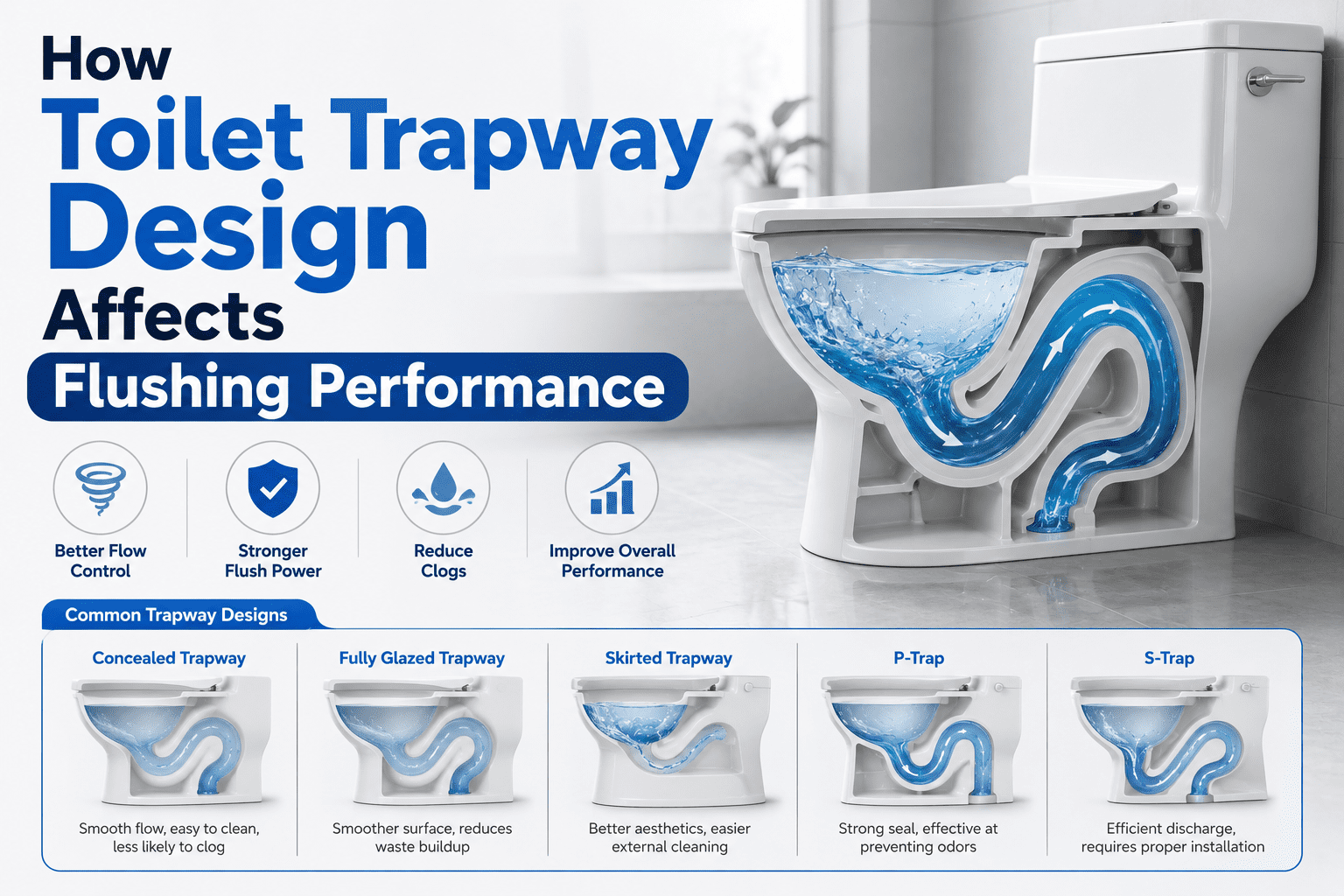
The trapway is the curved internal passage that carries waste from the bowl into the drainpipe. Its size, shape, surface finish, and engineering directly affect flushing power, clog resistance, noise levels, and cleaning performance.
A well-designed trapway can make a toilet flush smoothly and efficiently for years, while a poorly designed one can lead to weak flushing, frequent clogs, and constant maintenance.
Quick Answer
Toilet trapway design affects flushing performance by controlling water flow speed, suction strength, waste movement, clog resistance, and flushing noise. Larger, smoother, and properly curved trapways generally improve toilet efficiency and reliability.
What Is a Toilet Trapway?
The trapway is the hidden S-shaped or curved channel inside the toilet that connects the bowl to the drain outlet.
It performs several important functions:
- Moves waste into the plumbing system
- Creates a water seal against sewer gases
- Controls flushing speed
- Influences suction strength
- Helps prevent clogs
Trapway design is especially important in siphonic toilets because suction depends heavily on water flow dynamics.
For a technical explanation of siphonic systems, read How Does a Siphonic Toilet Create Strong Suction?.
Why Trapway Design Matters
Two toilets may look almost identical from the outside, but their internal trapway engineering can produce very different flushing results.
A high-quality trapway improves:
- Flush strength
- Waste removal speed
- Clog resistance
- Water efficiency
- Flush noise control
- Bowl cleanliness
This is why premium toilet brands invest heavily in hydraulic testing and internal flow optimization.
Main Trapway Features That Affect Performance
1. Trapway Diameter
Wider trapways generally reduce clogging risk.
Common trapway sizes include:
- 2-inch trapway
- 2⅛-inch trapway
- 2⅜-inch trapway
- 2½-inch trapway
Larger trapways allow waste and toilet paper to move more freely.
Modern high-performance toilets often use 2⅜-inch or larger fully glazed trapways.
2. Trapway Curvature
The shape of the internal curve directly affects water flow efficiency.
Smooth gradual curves:
- Improve suction
- Reduce turbulence
- Lower clogging risk
- Create quieter flushing
Sharp curves or poorly designed bends can slow waste movement and increase blockage risk.
3. Fully Glazed Trapways
A glazed trapway has a smooth ceramic coating inside the passage.
This helps:
- Reduce friction
- Prevent waste sticking
- Improve flow speed
- Minimize mineral buildup
Older or cheaper toilets may have partially unfinished trapways that create resistance during flushing.
Siphonic vs Washdown Trapway Design
| Feature | Siphonic Toilet | Washdown Toilet |
|---|---|---|
| Trapway Shape | Long curved design | Short direct path |
| Main Function | Create suction | Direct waste removal |
| Flush Noise | Quieter | Louder |
| Clog Resistance | Moderate to High | Very High |
| Water Flow Speed | Smooth | Aggressive |
| Maintenance Frequency | Low | Low to Moderate |
You can compare both flushing systems in What Is the Difference Between Siphonic and Washdown Toilets?.
How Trapway Design Affects Flush Strength
Flush strength depends on how efficiently water moves through the toilet.
A properly engineered trapway creates:
- Stable water velocity
- Consistent suction pressure
- Smooth waste acceleration
- Efficient air displacement
Even a powerful flush valve cannot fully compensate for poor trapway design.
Real-World Example
A homeowner replaced a budget toilet that clogged frequently despite using a modern low-flow system.
After upgrading to a model with:
- A 2⅜-inch glazed trapway
- Optimized siphonic design
- Improved rim jet configuration
They noticed:
- Fewer clogs
- Stronger waste removal
- Quieter flushing
- Less bowl residue
This demonstrates how internal engineering matters more than external appearance.
Does Trapway Size Always Improve Performance?
Not always.
A larger trapway helps reduce clogs, but overall performance still depends on:
- Water flow timing
- Bowl jet placement
- Flush valve design
- Trapway curvature
- Drain compatibility
A poorly engineered large trapway may still perform worse than a properly optimized medium-sized design.
Quiet Flushing and Trapway Engineering
Trapway geometry also affects flushing noise.
Smooth curved trapways reduce:
- Water turbulence
- Air vibration
- Pipe resonance
- Flush shockwaves
This is one reason siphonic toilets are usually quieter than washdown models.
For more details, read What Makes a Toilet Flush Quietly?.
Common Trapway Problems
Poor trapway design may cause:
- Frequent clogging
- Weak flushing
- Incomplete waste removal
- Slow bowl evacuation
- Excessive flushing noise
- Mineral buildup
These issues are especially common in low-quality budget toilets.
Modern Innovations in Trapway Design
Many modern toilets now include advanced hydraulic engineering features such as:
- Computer-optimized flow paths
- Rimless bowl systems
- Dual-jet flushing
- Fully glazed oversized trapways
- Water-saving flush optimization
These improvements increase performance while reducing water consumption.
Water Efficiency and Trapway Performance
Efficient trapway engineering allows modern toilets to use less water while maintaining strong flushing power.
According to the EPA WaterSense Program, high-efficiency toilets can significantly reduce household water usage without sacrificing performance when properly engineered.
Who Should Prioritize Trapway Design?
Trapway quality matters especially for:
- Large households
- Families with children
- Apartment bathrooms
- Commercial bathrooms
- Low-flow toilet users
- Homes with older plumbing systems
Choosing a toilet with optimized trapway engineering can reduce maintenance and improve long-term reliability.
Frequently Asked Questions
1. What is the purpose of a toilet trapway?
The trapway moves waste into the drain system while preventing sewer gases from entering the bathroom.
2. Does a larger trapway prevent clogs?
Usually yes, especially when combined with proper hydraulic design.
3. Why are siphonic trapways curved?
The curved shape helps create suction during flushing.
4. Are glazed trapways better?
Yes. Smooth glazed surfaces reduce friction and improve waste movement.
5. Can poor trapway design weaken flushing?
Absolutely. Internal flow restrictions can significantly reduce flushing efficiency.
Conclusion
Toilet trapway design plays a critical role in flushing performance, clog resistance, noise reduction, and long-term reliability. Factors like trapway diameter, curvature, glazing quality, and hydraulic engineering all influence how efficiently a toilet operates.
Modern high-performance toilets rely heavily on optimized trapway systems to deliver strong flushing while using less water. Whether choosing a siphonic or washdown model, homeowners who understand trapway design can make smarter decisions and avoid many common toilet performance problems.