Choosing the right sofa is one of the most important decisions when designing a living room. A sofa is not just a place to sit; it affects the room layout, comfort level, visual style, and even how your family uses the space every day.
One question many homeowners ask during a living room renovation is: Should I buy a sectional sofa or a traditional sofa?
Both options have their advantages. A sectional sofa can create a comfortable family gathering area, while a traditional sofa offers flexibility and a classic appearance. The best choice depends on your room size, lifestyle, budget, and design goals.
After years of home renovation experience, I have found that many sofa mistakes happen because homeowners choose based only on appearance. A beautiful sofa that does not fit the room size or daily habits can quickly become inconvenient.
Quick Conclusion: Sectional Sofa or Traditional Sofa?
If you have a large living room, enjoy movie nights, or need more seating for family members, a sectional sofa is usually the better choice.
If you have a small living room, frequently change your furniture arrangement, or prefer a timeless design, a traditional sofa provides more flexibility.
- Choose a sectional sofa: For large families, open-plan homes, and comfortable lounging.
- Choose a traditional sofa: For smaller spaces, flexible layouts, and classic interiors.
- Choose a sofa combination: For homeowners who want both comfort and design flexibility.
What Is a Sectional Sofa?
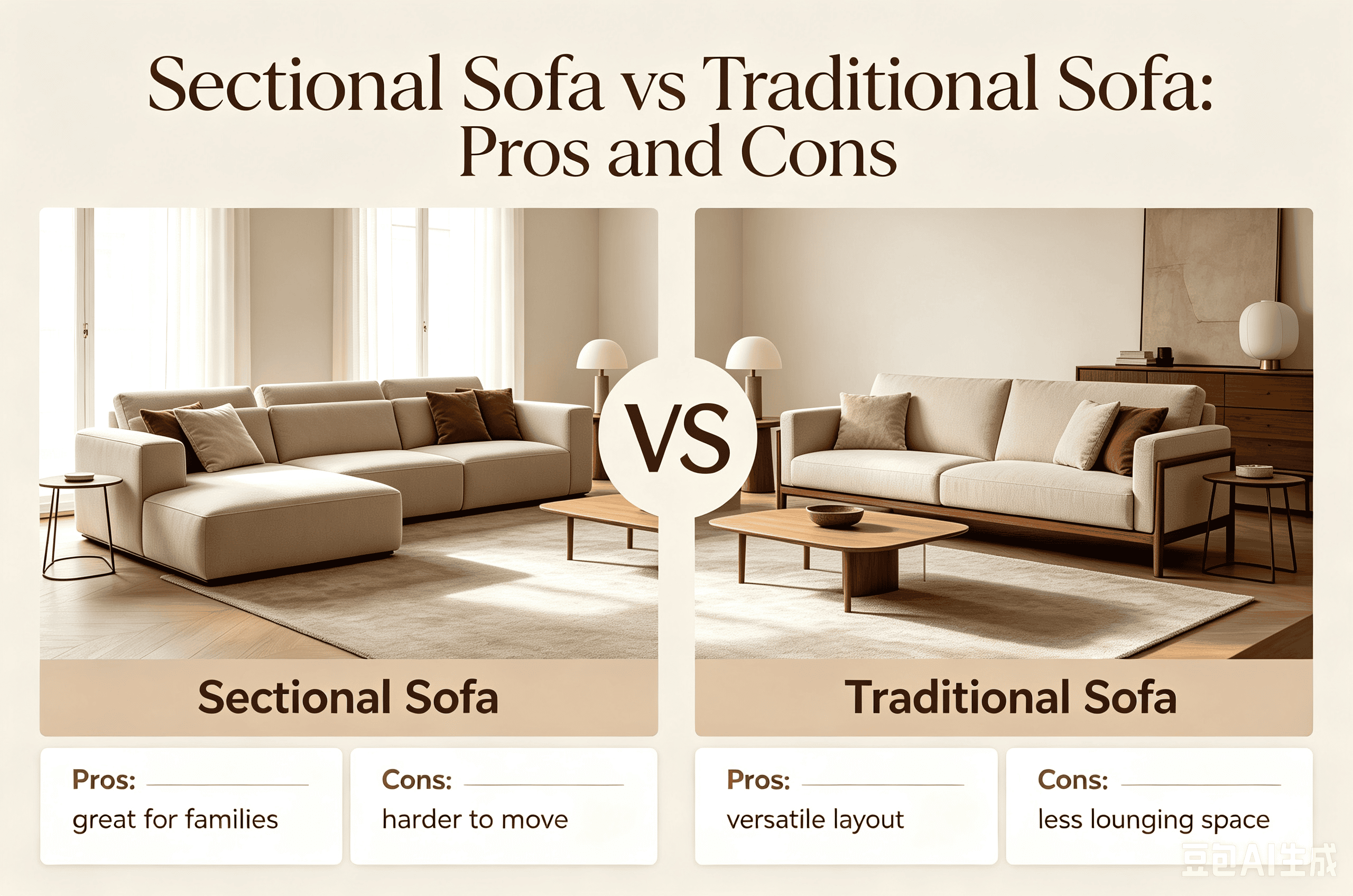
A sectional sofa is made of multiple connected seating sections that create one large seating arrangement. Common configurations include L-shaped, U-shaped, curved, and modular designs.
Unlike a standard sofa, sectional sofas are designed to maximize seating capacity while creating a relaxed atmosphere.
Popular sectional sofa styles include:
- L-shaped sectional sofas
- U-shaped sectional sofas
- Modular sectional sofas
- Reclining sectional sofas
- Sleeper sectional sofas
A sectional sofa is especially popular in modern homes because it works well with open living areas where the kitchen, dining room, and living room share one space.
What Is a Traditional Sofa?
A traditional sofa usually refers to a standalone couch with two or three seats. It is one of the most common living room furniture choices and works well with many interior styles.
Traditional sofas are available in many designs, including:
- Three-seat sofas
- Loveseats
- Mid-century modern sofas
- Classic fabric sofas
- Leather sofas
The biggest advantage of a traditional sofa is flexibility. You can easily move it, combine it with chairs, or change the room layout whenever your needs change.
Sectional Sofa vs Traditional Sofa Comparison
| Feature | Sectional Sofa | Traditional Sofa |
|---|---|---|
| Average Price | $800–$5,000+ depending on size and materials | $500–$3,500 depending on design and quality |
| Installation | May require assembly because of multiple sections | Usually simple delivery and placement |
| Maintenance | More cushions and sections require more cleaning | Easier to clean and maintain |
| Seating Capacity | Excellent for 4–8 people | Usually suitable for 2–4 people |
| Main Advantage | Maximum comfort and seating space | Flexible placement and timeless design |
| Main Disadvantage | Requires more floor space | Provides less lounging space |
Advantages of Sectional Sofas
1. More Comfortable for Families
One of the biggest reasons homeowners choose sectional sofas is comfort. The extended chaise or corner seating allows people to stretch out instead of sitting upright.
For families who enjoy watching movies together, playing games, or spending evenings in the living room, a sectional creates a more relaxed environment.
2. Better Use of Large Spaces
Large living rooms can sometimes feel empty with a small sofa. A sectional sofa helps define the seating area and creates a stronger visual center.
In open-concept homes, an L-shaped sectional can also act as a natural divider between the living room and kitchen area.
3. More Seating Without Extra Chairs
Instead of buying a sofa plus several chairs, a sectional combines multiple seats into one piece of furniture.
Disadvantages of Sectional Sofas
- Requires more space: Sectionals can overwhelm small living rooms.
- Harder to move: Multiple sections can make relocation more difficult.
- Higher cost: Larger sizes and premium materials increase the price.
- Limited layout changes: Some designs only work well in specific room arrangements.
Advantages of Traditional Sofas
1. Better for Small Living Rooms
Traditional sofas are usually the safer choice for apartments and compact homes. They provide comfortable seating without taking over the entire room.
For example, in a small 150-square-foot living room, a standard three-seat sofa often creates better walking space than a large sectional.
2. Easier Furniture Arrangement
Traditional sofas allow homeowners to create different layouts by adding accent chairs, ottomans, or coffee tables.
This flexibility is valuable for people who like changing their interior design over time.
3. Easier Maintenance and Replacement
If one part of a traditional sofa becomes damaged, replacing the entire sofa is often unnecessary. Many models also have removable covers that make cleaning easier.
Choosing the Right Sofa Based on Your Lifestyle
| Your Situation | Recommended Sofa | Reason |
|---|---|---|
| Large family with children | Sectional sofa | Provides more seating and comfortable family space |
| Small apartment | Traditional sofa | Saves floor space and keeps the room open |
| Frequent movie nights | Sectional sofa | Better lounging position |
| Frequent furniture changes | Traditional sofa | Easier to move and rearrange |
| Luxury living room design | Either option | Depends on room size and style preference |
Real Renovation Experience: Common Sofa Mistakes
During living room renovations, one mistake I often see is homeowners buying a sofa that is too large for the room.
A sectional sofa may look beautiful in a showroom, but showrooms usually have much larger spaces. Before purchasing, measure your room length, doorway width, and walking paths.
A good rule is to keep at least 30–36 inches of walking space around major furniture areas. This keeps the living room comfortable and functional.
Related Living Room Design Resources
Choosing a sofa is only one part of creating a comfortable living room. These related guides can help you plan the entire space:
For general furniture safety and home design considerations, homeowners can also refer to resources from
ASHRAE regarding indoor comfort and residential environments.
Frequently Asked Questions About Sectional and Traditional Sofas
1. Is a sectional sofa better than a traditional sofa?
A sectional sofa is better for large spaces and families who need more seating. A traditional sofa is better for smaller rooms and homeowners who want flexibility.
2. Do sectional sofas make a room look smaller?
A large sectional can make a small room feel crowded. However, the right-sized sectional can actually make a large open room feel more organized.
3. Which sofa type lasts longer?
Durability depends more on the frame, cushions, and fabric quality than the sofa style. A high-quality sectional and a high-quality traditional sofa can both last many years.
4. Are sectional sofas harder to clean?
Yes, because they usually have more cushions and sections. However, models with removable covers are easier to maintain.
5. What sofa is best for a small living room?
A compact traditional sofa is usually the best choice. A small apartment sectional can also work if the room layout allows enough walking space.
Conclusion: Which Sofa Should You Choose?
Both sectional sofas and traditional sofas have clear advantages. The right choice depends on your living room size, daily habits, and design goals.
Choose a sectional sofa if you want maximum comfort, more seating, and a cozy family gathering area. Choose a traditional sofa if you value flexibility, easier maintenance, and a classic appearance.
Before buying, always measure your room carefully and think about how your family actually uses the space. A sofa should not only look good on delivery day; it should make your home more comfortable for years.