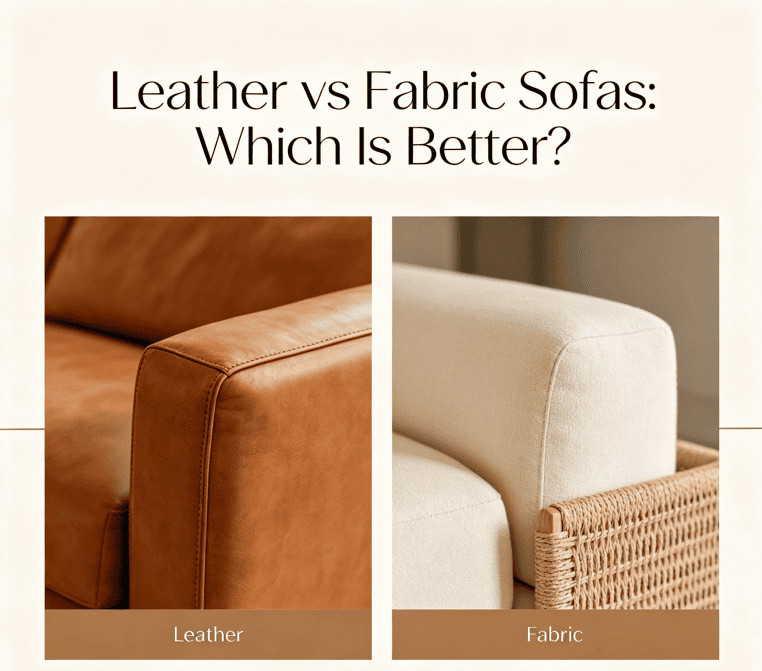
Choosing between a leather sofa and a fabric sofa is one of the most common decisions homeowners face when designing a living room. Both materials have loyal fans, but they offer very different experiences when it comes to comfort, durability, maintenance, appearance, and long-term value.
A leather sofa may create a luxurious and timeless atmosphere, while a fabric sofa often provides a softer, warmer, and more flexible living experience. The better choice depends on your lifestyle, budget, family situation, and how your living room is used every day.
After years of evaluating different furniture materials and helping homeowners choose practical living room solutions, I have found that the “best” sofa is not always the most expensive one. It is the one that matches your daily habits.
Quick Answer: Leather or Fabric Sofa?
Leather sofas are better for homeowners who want maximum durability, easy cleaning, and a premium appearance. Fabric sofas are better for families who prioritize comfort, affordability, color choices, and a softer feel.
For most households with children, pets, or frequent daily use, a high-quality performance fabric sofa provides the best balance. For homeowners looking for a long-term investment piece, genuine leather is often worth considering.
Leather vs Fabric Sofa: Quick Comparison
| Feature | Leather Sofa | Fabric Sofa |
|---|---|---|
| Average Price | $1,500–$5,000+ | $500–$3,000+ |
| Comfort | Firm, supportive, improves with age | Soft, warm, customizable |
| Maintenance | Easy daily cleaning, requires conditioning | Requires vacuuming and stain treatment |
| Durability | 15–25 years with proper care | 8–15 years depending on fabric quality |
| Pet Resistance | Good against stains, vulnerable to scratches | Depends on fabric type |
| Style Options | Classic and luxurious | Thousands of colors and textures |
| Best For | Luxury homes and long-term investment | Families and everyday living rooms |
Understanding Leather Sofas
Leather sofas have remained popular for decades because they combine durability with a timeless appearance. A quality leather sofa can become more attractive over time as the material develops a natural patina.
Unlike fabric upholstery, leather does not easily absorb liquid spills. A coffee spill or accidental food stain can often be wiped away within seconds, making leather attractive for busy households.
Advantages of Leather Sofas
- Extremely durable when properly maintained
- Easy to clean and resistant to liquid stains
- Creates a premium and elegant appearance
- Does not trap as much dust and pet hair
- Can last two decades or longer
Disadvantages of Leather Sofas
- Higher upfront cost
- Can feel cold in winter and warm in summer
- Can be damaged by sharp pet claws
- Requires occasional leather conditioning
- Limited texture and color options compared with fabric
Real-world example: I once evaluated a genuine leather sofa that had been used by a family for more than ten years. The owner rarely replaced furniture because the leather surface only required regular wiping and occasional conditioning. The sofa developed a richer color and remained structurally strong.
Understanding Fabric Sofas
Fabric sofas remain the most popular choice for many modern homes because they offer comfort, affordability, and almost unlimited design options.
Modern performance fabrics have improved significantly. Many are now engineered with stain-resistant coatings, making them much easier to maintain than traditional upholstery materials.
Advantages of Fabric Sofas
- Generally more affordable than leather
- Softer and warmer seating experience
- Available in many colors and patterns
- Better for casual family environments
- More comfortable for long periods of sitting
Disadvantages of Fabric Sofas
- Absorbs spills more easily
- May collect dust and allergens
- Requires regular vacuuming
- Lower-quality fabrics may wear faster
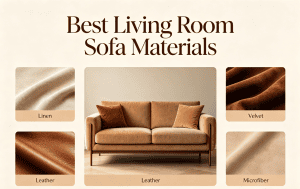
For homeowners comparing different sofa options, our guide Best Living Room Sofa Materials explains how materials such as microfiber, linen, velvet, and performance fabrics compare.
Which Sofa Is Better for Different Lifestyles?
| User Situation | Recommended Sofa | Reason |
|---|---|---|
| Family with young children | Fabric sofa | Softer, affordable, easier to replace |
| Pet owners | Performance fabric or leather | Better stain and odor control |
| Luxury interior design | Leather sofa | Premium appearance and longevity |
| Small apartment | Fabric sofa | More color choices and flexible designs |
| Heavy daily use | High-quality leather | Handles years of wear better |
| Budget renovation | Fabric sofa | Lower purchase cost |
Comfort Comparison: Which Feels Better?
Comfort is highly personal, but the difference between leather and fabric is noticeable.
- Leather: Offers a supportive, smooth feeling and adapts to body temperature over time.
- Fabric: Feels softer immediately and provides a warmer sitting experience.
If your family spends several hours every evening watching movies, reading, or relaxing on the sofa, fabric often feels more comfortable because it has a softer surface.
However, if your priority is a clean, sophisticated appearance with minimal daily cleaning, leather may be the better choice.
Maintenance Differences
| Maintenance Task | Leather Sofa | Fabric Sofa |
|---|---|---|
| Daily Cleaning | Simple wiping | Remove dust and crumbs |
| Deep Cleaning | Condition every 6–12 months | Professional cleaning every 1–2 years |
| Spill Handling | Very easy | Depends on fabric protection |
| Pet Hair Removal | Easy | Requires vacuuming |
Long-Term Cost: Leather vs Fabric Sofa
Many homeowners only compare the purchase price when choosing a sofa, but the real cost includes maintenance, repairs, replacement frequency, and daily usability.
| Cost Factor | Leather Sofa | Fabric Sofa |
|---|---|---|
| Initial Investment | Higher upfront cost | More budget-friendly |
| Maintenance Cost | Low to medium | Low to medium depending on fabric type |
| Repair Cost | Higher for professional leather repair | Usually easier and cheaper to repair |
| Replacement Frequency | Less frequent | May require replacement sooner |
| Long-Term Value | Excellent for premium models | Excellent for affordable family homes |
A $3,000 leather sofa may seem expensive compared with a $1,000 fabric sofa. However, if the leather model lasts twice as long, the yearly ownership cost can become surprisingly similar.
Leather vs Fabric Sofa for Homes With Pets
Pet owners often struggle with choosing the right sofa material because claws, fur, and accidents can quickly damage poor-quality upholstery.
Leather advantages for pet owners:
- Pet hair does not easily stick to the surface.
- Small spills can usually be cleaned immediately.
- Odors are less likely to become trapped.
Leather disadvantages:
- Sharp claws can leave permanent scratches.
- Some pets may damage softer leather finishes.
Fabric advantages for pet owners:
- Performance fabrics resist stains better than traditional fabrics.
- More affordable if replacement becomes necessary.
- Available in darker colors that hide everyday marks.
For households with large dogs or cats, a tightly woven performance fabric or microfiber sofa is often the safest choice.
Which Sofa Material Is Better for Families With Children?
Families with young children usually need a sofa that can handle daily accidents, snacks, toys, and frequent use.
In this situation, practicality often matters more than luxury appearance.
- Best overall: Performance fabric sofa
- Best for easy cleaning: Leather sofa
- Best budget option: Microfiber fabric sofa
A removable fabric cover can also be a major advantage because it allows easier cleaning compared with fixed upholstery.
Which Sofa Looks Better in Modern Homes?
Both materials can work beautifully in contemporary interiors, but they create different visual effects.
| Interior Style | Recommended Material |
|---|---|
| Modern minimalist | Leather or neutral performance fabric |
| Scandinavian style | Linen or soft fabric |
| Industrial design | Brown leather |
| Luxury interior | Premium leather or velvet fabric |
| Family living room | Performance fabric |
The right sofa material should complement your lifestyle as well as your interior design. A beautiful sofa that requires constant maintenance may eventually become frustrating.
Common Mistakes When Choosing Sofa Material
- Choosing based only on appearance in a showroom.
- Ignoring cleaning requirements.
- Buying delicate materials for high-traffic areas.
- Not considering pets or children.
- Choosing the cheapest option without checking durability.
A sofa is one of the most frequently used pieces of furniture in your home. Spending more time evaluating the material before buying can prevent expensive replacements later.
Frequently Asked Questions
1. Is leather better than fabric for a sofa?
Neither material is universally better. Leather is better for durability and easy cleaning, while fabric is better for comfort, affordability, and design flexibility.
2. Which sofa material lasts the longest?
High-quality genuine leather usually lasts the longest and can remain functional for 15–25 years with proper care. Premium performance fabrics can also last more than a decade.
3. Are fabric sofas harder to clean than leather sofas?
Traditional fabric is usually harder to clean because it absorbs liquids. However, modern performance fabrics with stain-resistant technology are much easier to maintain.
4. Is a leather sofa worth the extra money?
A leather sofa can be worth the investment if you want long-term durability, a premium appearance, and minimal daily cleaning. It may not be the best choice for homes with pets that scratch furniture.
5. What is the best sofa material for a small apartment?
Performance fabric is often the best choice because it provides comfort, affordability, and many color options that help small spaces feel larger and more personalized.
Expert Recommendation: Which One Should You Choose?
After comparing both materials, the best choice depends on your priorities:
- Choose leather if: you want luxury, durability, easy cleaning, and a sofa that can last decades.
- Choose fabric if: you want comfort, affordability, more design choices, and family-friendly performance.
- Choose performance fabric if: you need the most balanced option for everyday living.
For homeowners comparing sofa sizes and layouts before purchasing, our guide Best Living Room Sofas for Small Spaces explains how to choose furniture that fits different room dimensions.
Conclusion
When comparing leather vs fabric sofas, there is no single winner for every home. Leather offers unmatched durability, easy cleaning, and timeless elegance, while fabric provides superior comfort, affordability, and design flexibility.
For busy families, pet owners, and everyday living rooms, a high-quality performance fabric sofa is often the most practical choice. For homeowners looking for a long-term investment piece with a luxury appearance, genuine leather remains an excellent option.
The best sofa material is the one that matches your lifestyle, maintenance expectations, and budget. By considering how your household actually uses the living room, you can choose a sofa that stays comfortable, attractive, and functional for many years.
For additional information about furniture durability standards and upholstery testing, you can refer to the Furniture Industry Research Association (FIRA): Furniture Industry Research Association.