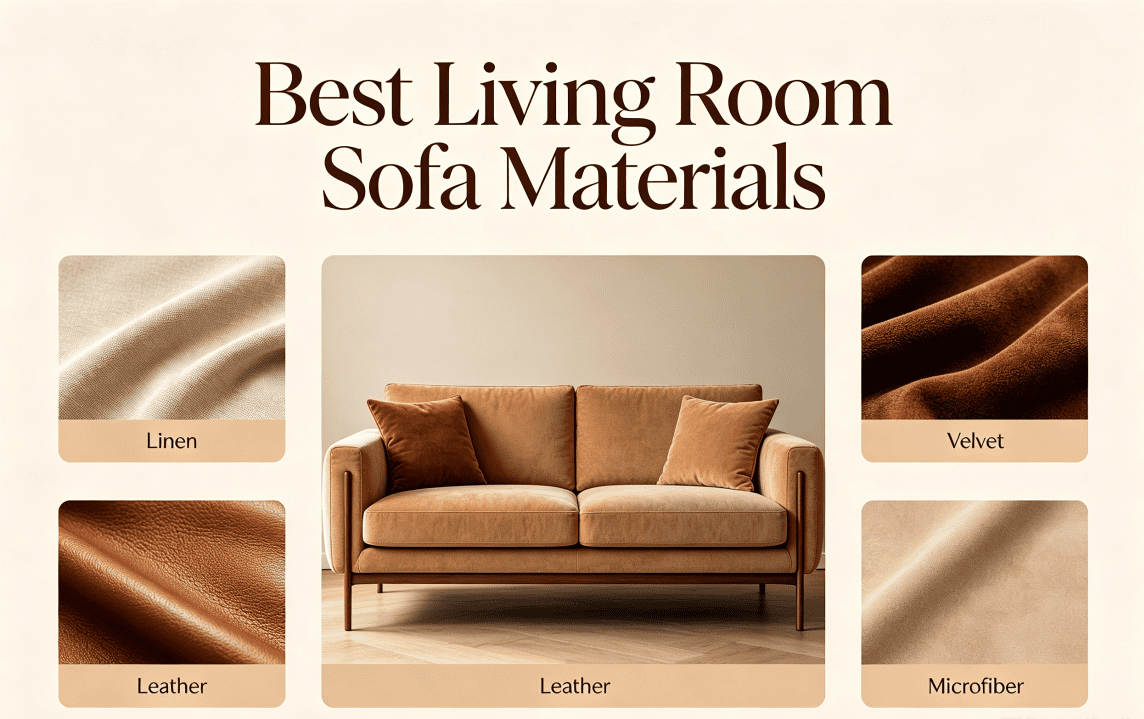
Choosing a new sofa is about much more than style or color. One of the biggest decisions you’ll make is selecting the right upholstery material. The material affects comfort, durability, maintenance, appearance, pet friendliness, and even how long your sofa will last.
After comparing dozens of sofas over the years—from affordable fabric sectionals to premium leather models—I’ve learned that there isn’t a single “best” sofa material. Instead, the right choice depends on your family, lifestyle, budget, and maintenance expectations.
This guide explains the most popular sofa materials, compares their strengths and weaknesses, and helps you determine which option best fits your living room.
Quick Answer
For most homeowners, high-performance fabric offers the best balance of comfort, durability, affordability, and easy maintenance. Genuine leather is ideal for long-term durability and timeless style, while microfiber is perfect for families with children or pets. Linen and velvet create luxurious interiors but require more regular care.
Why Sofa Material Matters
People usually notice a sofa’s shape first, but after several months of daily use, the upholstery becomes far more important than the design.
The right material determines:
- Daily comfort
- Ease of cleaning
- Resistance to stains
- Pet scratch resistance
- Fade resistance
- Overall lifespan
- Long-term maintenance costs
For example, a beautiful velvet sofa may look stunning in a formal living room but become difficult to maintain in a busy household with children.
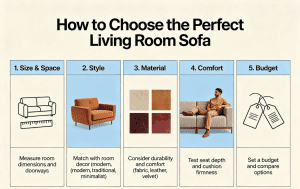
If you’re still deciding what type of sofa fits your space, our guide How to Choose the Perfect Living Room Sofa explains how room size, seating capacity, and lifestyle influence your purchase.
Comparison of Popular Sofa Materials
| Material | Average Price | Maintenance | Comfort | Durability | Best For |
|---|---|---|---|---|---|
| Performance Fabric | $$ | Easy | ★★★★★ | ★★★★★ | Most families |
| Microfiber | $ | Very Easy | ★★★★☆ | ★★★★★ | Kids & pets |
| Genuine Leather | $$$$ | Moderate | ★★★★★ | ★★★★★ | Luxury homes |
| Faux Leather | $$ | Easy | ★★★★☆ | ★★★☆☆ | Budget buyers |
| Linen | $$$ | Moderate | ★★★★★ | ★★★☆☆ | Minimalist interiors |
| Velvet | $$$$ | High | ★★★★★ | ★★★★☆ | Luxury décor |
1. Performance Fabric — The Best Overall Choice
If I had to recommend one material for the average homeowner, performance fabric would easily take the top position.
Modern performance fabrics are engineered to resist moisture, stains, fading, and everyday wear without sacrificing softness.
Advantages
- Excellent stain resistance
- Soft and comfortable
- Large selection of colors
- Easy spot cleaning
- Long lifespan
- Suitable for families
Disadvantages
- Premium versions cost more
- Not as luxurious as real leather
Recommended for: Families, apartments, everyday living rooms, busy households.
2. Genuine Leather — Timeless Luxury
Leather sofas have remained popular for decades because they age beautifully. High-quality full-grain leather develops a natural patina that many homeowners actually prefer over time.
Although the upfront investment is higher, leather often lasts 15–25 years with proper care.
Advantages
- Extremely durable
- Elegant appearance
- Easy to wipe clean
- Improves with age
- Excellent resale value
Disadvantages
- Higher purchase price
- Requires leather conditioner
- Can feel cold during winter
- Susceptible to pet claws
Real-life experience: One leather sofa I evaluated in a family home was over 12 years old. Aside from a richer color and softer texture, it still looked remarkably well maintained.
3. Microfiber — Perfect for Busy Families
Microfiber remains one of the most practical sofa materials available today.
Its tightly woven fibers naturally repel dirt and liquids, making cleanup surprisingly simple.
Advantages
- Affordable
- Very durable
- Pet-friendly
- Comfortable
- Easy maintenance
Disadvantages
- Can attract lint
- May develop shiny areas over time
For homes with toddlers, dogs, or cats, microfiber consistently ranks among the easiest upholstery materials to maintain.
4. Linen — Natural Beauty
Linen offers a relaxed, airy appearance that’s especially popular in Scandinavian, coastal, and minimalist interiors.
The breathable texture feels wonderful during warmer months, although it wrinkles more easily than synthetic fabrics.
Advantages
- Natural fibers
- Elegant appearance
- Excellent breathability
- Eco-friendly
Disadvantages
- Wrinkles easily
- More difficult to clean
- Can stain quickly
Linen works best in adult households where the sofa receives moderate daily use rather than constant activity.
If you’re furnishing a compact apartment, you may also enjoy our guide Best Living Room Sofas for Small Spaces, which explains how sofa dimensions and upholstery choices affect smaller living rooms.
5. Velvet — Luxurious and Elegant
If your goal is to create a sophisticated living room, velvet is hard to beat. Its soft texture reflects light beautifully, adding depth and warmth to modern, classic, or Art Deco interiors.
Today’s performance velvet is far more durable than traditional velvet, but it still requires more care than microfiber or performance fabric.
Advantages
- Luxurious appearance
- Exceptionally soft texture
- Adds warmth and visual depth
- Available in rich colors
- Comfortable year-round
Disadvantages
- Shows dust and pet hair
- Requires regular brushing or vacuuming
- Higher price than standard fabrics
Best for: Formal living rooms, luxury interiors, homeowners without young children or heavy-shedding pets.
6. Faux Leather — Affordable Leather Look
Faux leather has improved significantly in recent years. Premium polyurethane (PU) leather closely resembles genuine leather while costing much less.
It is easy to clean and works well for homeowners who want a modern appearance without the higher maintenance of natural leather.
Advantages
- Budget friendly
- Easy to wipe clean
- Modern appearance
- No leather conditioning required
Disadvantages
- Shorter lifespan than genuine leather
- Can peel after years of heavy use
- Less breathable
Which Sofa Material Fits Your Lifestyle?
| Your Situation | Best Material | Why It Works |
|---|---|---|
| Family with children | Performance Fabric | Excellent stain resistance and durability |
| Pet owners | Microfiber | Easy to clean and resistant to everyday wear |
| Luxury home | Genuine Leather | Premium appearance and long lifespan |
| Small apartment | Performance Fabric | Light colors and easy maintenance |
| Minimalist interior | Linen | Natural texture complements simple décor |
| Elegant formal living room | Velvet | Rich texture and luxurious finish |
Real-World Buying Experience
One mistake many homeowners make is choosing a sofa material based only on appearance in the showroom.
For example, a cream-colored linen sofa may look stunning under showroom lighting. However, after several months of daily use with children, food spills, and pets, maintenance quickly becomes challenging.
By contrast, I’ve seen performance fabric sofas maintain their appearance remarkably well after years of family use with only routine vacuuming and occasional spot cleaning.
If your living room is used every day, practicality usually matters more than luxury.
How Long Does Each Material Last?
| Material | Typical Lifespan | Maintenance Level |
|---|---|---|
| Performance Fabric | 10–15 years | Low |
| Microfiber | 8–12 years | Low |
| Genuine Leather | 15–25 years | Medium |
| Faux Leather | 5–10 years | Low |
| Linen | 8–12 years | Medium |
| Velvet | 10–15 years | Medium to High |
Maintenance Tips
- Vacuum upholstery weekly to remove dust and allergens.
- Clean spills immediately to prevent permanent stains.
- Rotate seat cushions every few months for even wear.
- Avoid prolonged direct sunlight to reduce fading.
- Use appropriate cleaners recommended for each material.
- Condition genuine leather once or twice a year.
Simple maintenance can significantly extend a sofa’s lifespan and help preserve both comfort and appearance.
Frequently Asked Questions
Which sofa material lasts the longest?
High-quality genuine leather typically offers the longest lifespan, often lasting over 20 years with proper care.
What is the easiest sofa material to clean?
Performance fabric and microfiber are generally the easiest to maintain because they resist stains and clean easily with mild household cleaners.
Which sofa material is best for pets?
Microfiber is an excellent choice because its tightly woven fibers resist scratches better than loosely woven fabrics and are easy to vacuum.
Is velvet suitable for everyday use?
Yes, especially modern performance velvet. However, it still requires more regular cleaning than microfiber or performance fabric.
Should I choose leather or fabric?
If you prioritize durability and timeless style, leather is an excellent investment. If comfort, affordability, and family-friendly maintenance are more important, performance fabric is often the better option.
Conclusion
The best living room sofa material depends on how you actually use your home. Families with children usually benefit most from performance fabric or microfiber, while homeowners seeking timeless elegance often prefer genuine leather. Linen and velvet offer exceptional style but require a bit more attention to stay looking their best.
Rather than focusing only on appearance, consider durability, cleaning requirements, household habits, and long-term value. A sofa is one of the most frequently used pieces of furniture in your home, and selecting the right material will improve comfort, simplify maintenance, and extend its lifespan for many years.
For additional guidance on upholstery care and fabric performance standards, refer to the Furniture Industry Research Association (FIRA): https://www.fira.co.uk/.