When homeowners shop for a new toilet, most focus on flushing power, comfort, or water efficiency. However, long-term maintenance costs can be just as important. A toilet that constantly clogs, leaks, or requires replacement parts can quickly become expensive over time.
Different toilet systems have very different maintenance requirements. Some are simple and durable, while others include more advanced flushing technologies that may require specialized repairs.
If you are comparing siphonic toilets, washdown toilets, pressure-assisted systems, or dual-flush models, understanding long-term maintenance costs can help you make a smarter investment.
Quick Answer
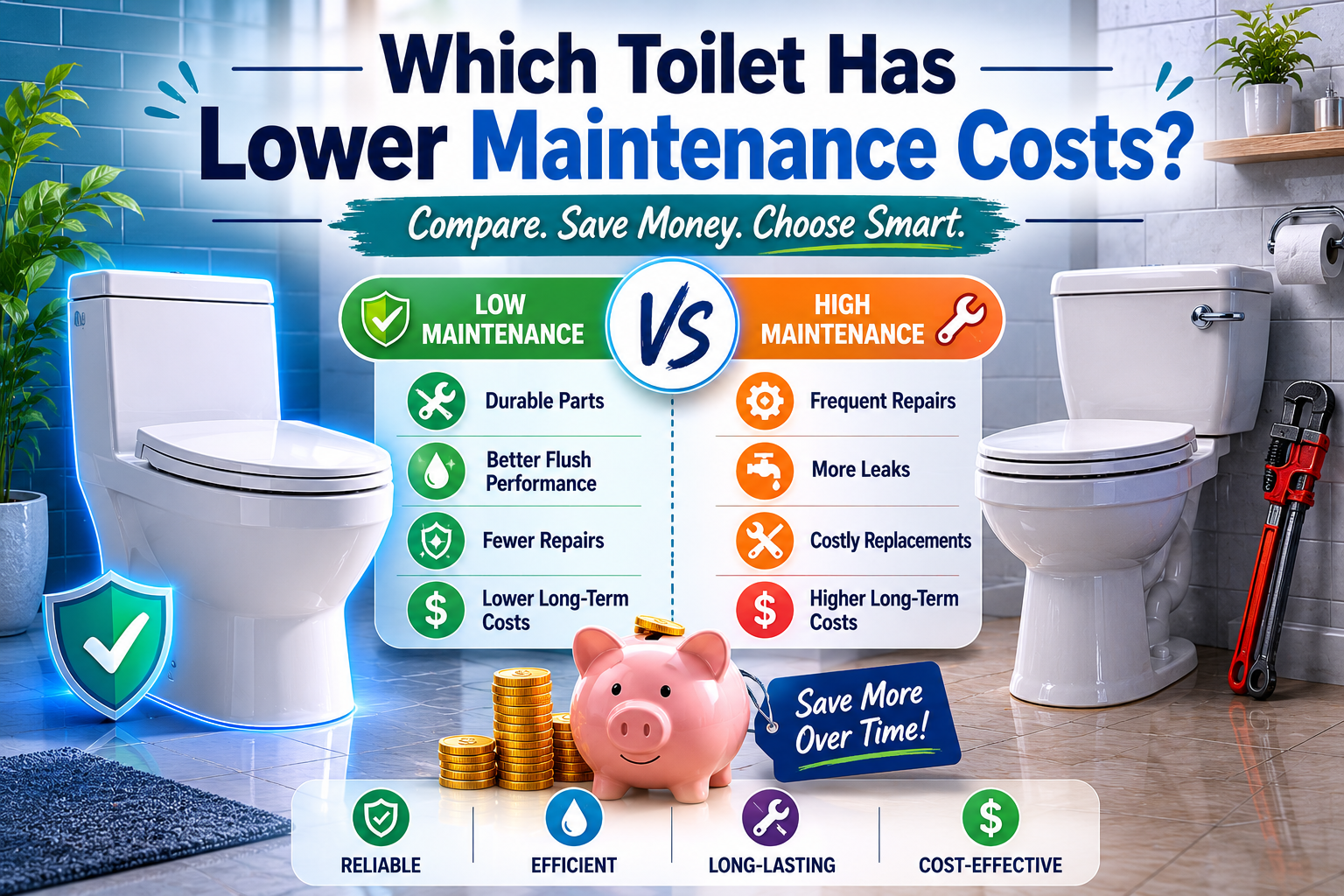
Washdown toilets generally have the lowest maintenance costs because they use simpler flushing systems, shorter trapways, and fewer moving parts. Modern siphonic toilets are also relatively low-maintenance, while pressure-assisted and dual-flush systems may require more specialized repairs over time.
Why Toilet Maintenance Costs Matter
A toilet is one of the most frequently used fixtures in any home. Even small repair issues can become expensive over the years.
Maintenance costs may include:
- Clog removal
- Flush valve replacement
- Fill valve repairs
- Leak repairs
- Tank component replacement
- Professional plumbing service calls
- Water waste from running toilets
Choosing a reliable toilet can reduce both repair frequency and long-term household expenses.
Siphonic vs Washdown Maintenance Comparison
| Feature | Siphonic Toilet | Washdown Toilet |
|---|---|---|
| Maintenance Frequency | Low | Very Low |
| Clogging Risk | Moderate | Low |
| Repair Complexity | Moderate | Simple |
| Water Efficiency | Good | Excellent |
| Noise Level | Quiet | Moderate |
| Long-Term Costs | Low to Moderate | Lowest |
For a complete comparison between both systems, read Siphonic vs Washdown Toilets: Which One Is Better for Your Bathroom?.
Why Washdown Toilets Usually Cost Less to Maintain
Washdown toilets use a simple gravity-based flushing system with a shorter trapway.
This design helps reduce:
- Mechanical complexity
- Clogging frequency
- Internal blockage risk
- Repair labor costs
Because there are fewer components involved in the flushing process, repairs are often faster and less expensive.
Many plumbers consider washdown toilets among the easiest systems to service.
How Siphonic Toilets Compare
Siphonic toilets use suction-based flushing systems with longer curved trapways.
Modern siphonic toilets are generally reliable, especially premium models with:
- Fully glazed trapways
- Optimized flush valves
- Improved bowl hydraulics
- Advanced rim jet systems
However, because siphonic systems depend heavily on internal water flow dynamics, poorly designed models may occasionally experience:
- Partial clogs
- Weak suction
- Double flushing
Still, high-quality siphonic toilets can remain dependable for many years with proper maintenance.
You can also read How Does a Siphonic Toilet Create Strong Suction?.
Pressure-Assisted Toilets: Powerful but More Complex
Pressure-assisted toilets are extremely powerful and clog-resistant, but they contain sealed pressure tanks and specialized flushing components.
Advantages include:
- Strong flushing performance
- Excellent waste removal
- Low clog frequency
However, disadvantages include:
- Higher replacement part costs
- More complex repairs
- Louder flushing
- Higher installation costs
These systems are common in commercial buildings but may not be ideal for homeowners seeking low maintenance expenses.
Dual-Flush Toilets and Maintenance
Dual-flush toilets are highly water-efficient, but their flush mechanisms are more complicated than traditional gravity systems.
Potential maintenance issues include:
- Button mechanism wear
- Seal deterioration
- Incorrect flush calibration
- Specialized replacement parts
That said, many modern dual-flush systems are far more durable than early designs.
Real-World Example
A homeowner replaced an older pressure-assisted toilet after repeated repair visits and expensive replacement components.
They switched to a modern washdown toilet featuring:
- A large glazed trapway
- Gravity flushing
- Simple internal tank components
Over the next three years, maintenance costs dropped significantly, and clogging became rare.
In another case, a family installed a premium siphonic toilet and experienced quieter operation with only minimal routine cleaning requirements.
How Trapway Design Reduces Maintenance
Trapway engineering plays a major role in long-term toilet reliability.
Modern trapways reduce maintenance by improving:
- Waste flow speed
- Clog resistance
- Water efficiency
- Flush consistency
Fully glazed trapways also help reduce mineral buildup and internal residue accumulation.
You can explore this topic further in How Toilet Trapway Design Affects Flushing Performance.
Average Long-Term Maintenance Costs
| Toilet Type | Estimated Maintenance Cost | Typical Repairs | Best For |
|---|---|---|---|
| Washdown Toilet | Low | Basic flapper or fill valve | Low-maintenance homes |
| Siphonic Toilet | Low to Moderate | Occasional clog removal | Quiet residential bathrooms |
| Dual-Flush Toilet | Moderate | Flush button & seal replacement | Water-saving homes |
| Pressure-Assisted Toilet | Higher | Pressure tank components | Commercial applications |
Signs Your Toilet May Become Expensive to Maintain
- Frequent clogging
- Weak flushing performance
- Constant running water
- Rare or proprietary replacement parts
- Repeated professional repairs
- Leaks around the base or tank
Older toilets often become more expensive to maintain as replacement parts become harder to find.
Best Toilet Choice for Different Households
Best for Low Maintenance
Washdown toilets with simple gravity flushing.
Best for Quiet Bathrooms
Modern siphonic toilets.
Best for Commercial Use
Pressure-assisted toilets.
Best for Water Savings
Dual-flush toilets.
How Water Quality Affects Maintenance
Hard water can increase toilet maintenance costs by causing:
- Mineral buildup
- Flush valve wear
- Reduced flushing performance
- Trapway deposits
According to the EPA water information resources, mineral content and water quality can influence plumbing system performance over time.
Frequently Asked Questions
1. Which toilet type needs the fewest repairs?
Washdown toilets generally require the least maintenance due to their simple design.
2. Are siphonic toilets expensive to maintain?
Modern high-quality siphonic toilets are usually affordable to maintain.
3. Why do pressure-assisted toilets cost more to repair?
They use specialized pressure tanks and internal components.
4. Do dual-flush toilets break more often?
Not necessarily, but their mechanisms are more complex than standard gravity toilets.
5. How can I reduce toilet maintenance costs?
Choose a high-quality toilet with a glazed trapway, avoid flushing non-flushable items, and maintain clean water flow components.
Conclusion
The toilet with the lowest maintenance costs is usually a well-designed washdown toilet because of its simple gravity-based flushing system and reduced clogging risk. Modern siphonic toilets also offer reliable long-term performance while providing quieter operation and greater comfort.
Although pressure-assisted and dual-flush toilets offer specific advantages, they may involve more specialized repairs over time. By understanding flushing systems, trapway design, and household usage needs, homeowners can choose a toilet that balances performance, reliability, and long-term operating costs.