Few bathroom problems are more frustrating than persistent toilet odors. Even in a clean bathroom, unpleasant smells can make the entire space feel unhygienic and uncomfortable.
Many homeowners assume toilet odors only come from poor cleaning habits, but the truth is that toilet design, flushing technology, trapway structure, and ventilation all play important roles.
Some toilet types naturally control odors better than others by improving waste removal, maintaining stronger water seals, and reducing residue buildup inside the bowl and trapway.
If you are choosing between siphonic toilets, washdown toilets, or modern low-flow systems, understanding how each design affects odor prevention can help you create a fresher and easier-to-maintain bathroom.
Quick Answer
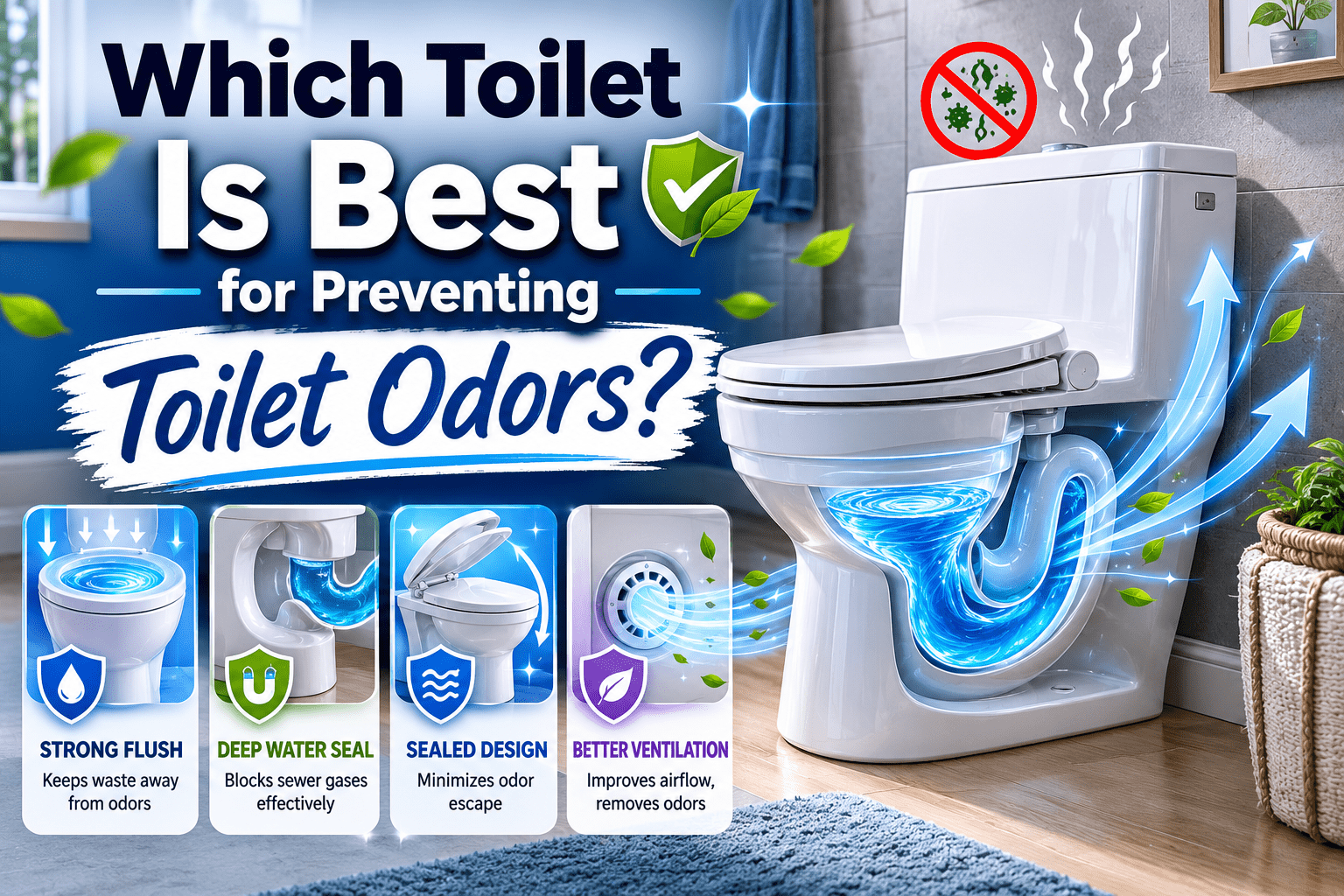
Siphonic toilets are generally the best for preventing toilet odors because they maintain a larger water surface area inside the bowl, create stronger trap seals, and provide more complete bowl rinsing. Modern washdown toilets can also perform well when properly designed and maintained.
Why Toilet Odors Happen
Toilet odors usually develop because of:
- Waste residue inside the bowl
- Weak trapway water seals
- Dry drain traps
- Bacteria buildup
- Poor flushing performance
- Inadequate bathroom ventilation
- Mineral buildup inside the toilet
A properly designed toilet helps minimize these issues by removing waste efficiently and maintaining an effective barrier between sewer gases and the bathroom.
Siphonic vs Washdown Toilets for Odor Prevention
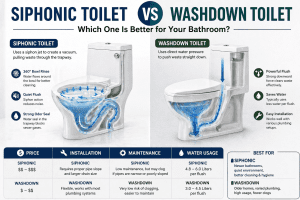
| Feature | Siphonic Toilet | Washdown Toilet |
|---|---|---|
| Water Surface Area | Large | Smaller |
| Odor Prevention | Excellent | Good |
| Bowl Cleaning | Very Good | Good |
| Trap Seal Strength | Strong | Moderate |
| Noise Level | Quiet | Moderate |
| Water Efficiency | Moderate | Excellent |
For a full comparison, read Siphonic vs Washdown Toilets: Which One Is Better for Your Bathroom?.
Why Siphonic Toilets Control Odors Better
Siphonic toilets are designed with a larger standing water surface inside the bowl.
This larger water seal helps:
- Block sewer gases more effectively
- Reduce exposed waste residue
- Improve odor containment
- Maintain cleaner bowl surfaces
The suction-based flush also creates smoother waste movement through the trapway, helping remove waste more completely.
Many homeowners notice that siphonic toilets feel fresher between cleanings compared to older washdown systems.
How Washdown Toilets Compare
Washdown toilets use direct gravity flushing with shorter trapways.
Advantages include:
- Fast waste evacuation
- Lower clogging risk
- Simple flushing mechanics
- Lower water usage
However, because many washdown toilets have smaller water spots inside the bowl, some residue may remain more visible after flushing.
Modern washdown toilets have improved significantly with:
- Rimless bowl designs
- Enhanced bowl glazing
- Improved flush distribution
- Optimized water flow
You can learn more in What Is a Washdown Toilet and How Does It Work?.
How Toilet Trapway Design Affects Odors
The trapway is critical for odor prevention because it holds water that blocks sewer gases from entering the bathroom.
A properly engineered trapway helps:
- Maintain stable water seals
- Improve waste removal
- Reduce buildup inside the pipe
- Prevent odor leakage
Modern glazed trapways also reduce bacterial growth and mineral accumulation.
You can explore this further in How Toilet Trapway Design Affects Flushing Performance.
Real-World Example
A homeowner living in a humid apartment experienced recurring bathroom odors despite regular cleaning.
After replacing an older low-water washdown toilet with a modern siphonic model featuring:
- A larger bowl water surface
- Fully glazed trapway
- Improved bowl rinse system
The bathroom remained noticeably fresher, especially during warmer months.
Another family reduced odor issues simply by upgrading to a toilet with stronger flushing consistency and improved trapway geometry.
Does Water Efficiency Affect Toilet Odors?
Sometimes.
Early low-flow toilets occasionally struggled with incomplete waste removal, leading to lingering odors.
Modern high-efficiency toilets now use:
- Optimized bowl hydraulics
- Advanced flush valves
- Pressure-assisted systems
- Computer-designed trapways
As a result, today’s efficient toilets often perform much better than older designs.
Which Toilet Features Help Prevent Odors?
| Feature | Benefit |
|---|---|
| Large Water Surface | Improves odor blocking |
| Glazed Trapway | Reduces buildup |
| Strong Bowl Rinse | Removes residue effectively |
| Rimless Bowl | Reduces bacteria accumulation |
| Efficient Flushing | Improves waste removal |
Signs Your Toilet Is Causing Odor Problems
- Persistent sewer smell
- Frequent residue buildup
- Weak flushing performance
- Low standing water level
- Visible staining inside the bowl
- Odors returning shortly after cleaning
If cleaning alone does not solve the issue, the toilet design itself may be contributing to the problem.
Best Toilet Types for Different Homes
Best for Odor Prevention
Modern siphonic toilets with large water spots.
Best for Small Bathrooms
Compact washdown toilets with efficient direct flushing.
Best for Quiet Bathrooms
Siphonic toilets because of their quieter flushing operation.
Best for Commercial Spaces
Pressure-assisted toilets with strong waste evacuation.
Cleaning Habits Still Matter
Even the best toilet design cannot fully prevent odors without proper maintenance.
Good bathroom habits include:
- Regular bowl cleaning
- Using proper toilet cleaners
- Checking ventilation systems
- Cleaning under the rim
- Preventing hard water buildup
According to the CDC cleaning and sanitation guidance, regular cleaning and moisture control are essential for reducing bacteria and odor buildup indoors.
Frequently Asked Questions
1. Which toilet type prevents odors best?
Siphonic toilets generally offer the best odor prevention because of their larger water seal.
2. Why do some toilets smell even after cleaning?
Weak trap seals, poor flushing, hidden residue, or ventilation problems may be responsible.
3. Are washdown toilets bad for odors?
No. Modern washdown toilets can perform well when properly designed and maintained.
4. Does a larger water spot help reduce smells?
Yes. Larger standing water surfaces improve odor blocking and reduce exposed waste residue.
5. Can upgrading my toilet reduce bathroom odors?
Yes. Modern toilets with improved flushing systems and trapway designs can significantly reduce odor problems.
Conclusion
Siphonic toilets are usually the best option for preventing toilet odors because they maintain stronger water seals, larger bowl water surfaces, and smoother waste removal. Modern washdown toilets also perform well, especially newer models with improved flushing and bowl-cleaning technologies.
Choosing the right toilet involves more than just flushing power. Trapway engineering, bowl design, water efficiency, and maintenance all influence long-term bathroom freshness. By selecting a well-designed toilet and maintaining proper cleaning habits, homeowners can create a cleaner, more comfortable, and odor-free bathroom environment.