Introduction
Few toilet problems are as frustrating as a siphonic toilet that suddenly loses flushing power. One day it flushes perfectly, and the next day waste doesn’t clear completely, the bowl drains slowly, or multiple flushes become necessary.
In many cases, the problem isn’t the toilet itself—it’s a low water level somewhere in the system. Because siphonic toilets rely on a precise volume of water to create suction, even a small reduction in water level can noticeably weaken flushing performance.
After more than a decade of observing residential bathroom installations and maintenance issues, one of the most common causes of weak flushing is improper water volume. Fortunately, most low-water-level problems can be diagnosed and fixed without replacing the toilet.
If you’re comparing different flushing technologies and performance characteristics, our comprehensive guide Siphonic vs Washdown Toilets: Which One Is Better for Your Bathroom? explains how water volume affects flushing performance across various toilet designs.
Quick Answer
To fix low water levels in a siphonic toilet, first check the tank water level, inspect the fill valve, adjust the flush mechanism, clean any blockages inside the rim jets and trapway, and verify that the toilet flange seal is not allowing air leaks. In most cases, restoring proper water volume immediately improves flushing power.
Why Water Level Matters in a Siphonic Toilet
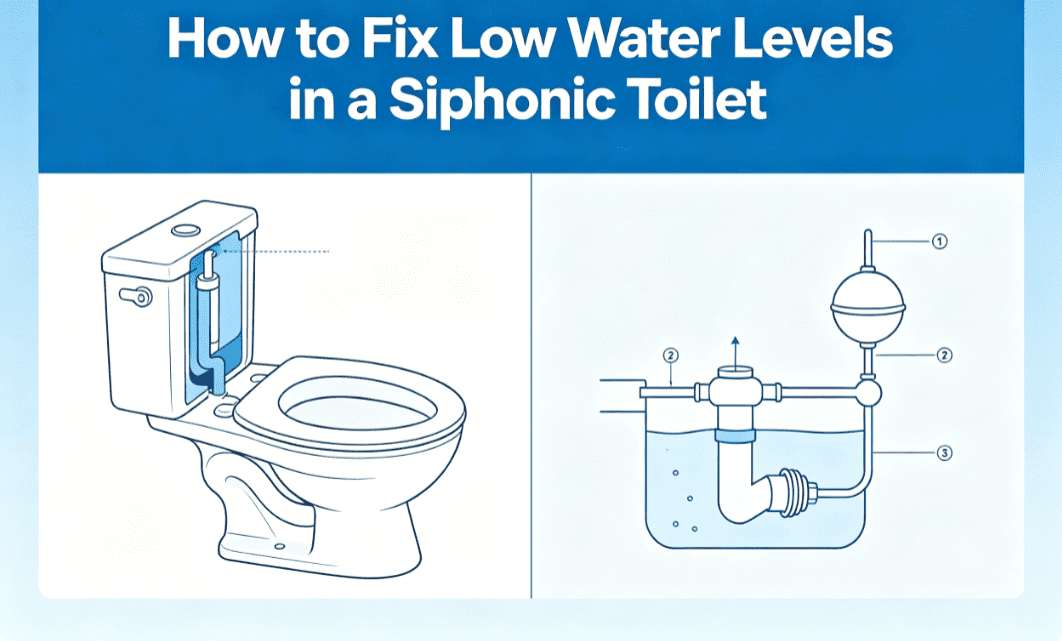
Unlike some direct-flush systems, a siphonic toilet depends on a rapid release of water from the tank to create a siphon effect inside the trapway.
When water levels are too low:
- Suction becomes weaker
- Waste removal becomes less efficient
- Multiple flushes may be required
- Clogging becomes more frequent
- Drainage speed decreases
Even a reduction of a few inches inside the tank can significantly affect flushing performance.
Common Causes of Low Water Levels
| Cause | Difficulty to Fix | Typical Cost | Impact on Flushing |
|---|---|---|---|
| Incorrect Tank Water Level | Easy | $0 | High |
| Faulty Fill Valve | Easy | $15-$40 | High |
| Loose Flush Rod Adjustment | Easy | $0 | Medium |
| Blocked Rim Jets | Moderate | $5-$20 | High |
| Worn Toilet Flange Seal | Moderate | $15-$50 | High |
| Partial Drainpipe Blockage | Moderate | $10-$80 | High |
Fix #1: Adjust the Tank Water Level
The first thing to inspect is the water level inside the tank.
Most manufacturers include a fill line marked on the tank wall. The water should typically sit about 1 inch below the overflow tube opening.
If the water level is lower:
- Remove the tank lid
- Locate the fill valve adjustment screw
- Raise the float gradually
- Allow the tank to refill
- Perform several test flushes
This simple adjustment often restores full flushing performance immediately.
Fix #2: Replace a Faulty Fill Valve
Fill valves naturally wear out over time.
If the tank fills slowly, stops prematurely, or fails to reach the proper water level, replacing the fill valve may solve the issue.
Signs of fill valve failure include:
- Slow tank refill
- Continuous running water
- Fluctuating water levels
- Hissing sounds
Modern replacement fill valves are inexpensive and typically install in less than 30 minutes.
Fix #3: Check Flush Rod Adjustment
Many homeowners overlook the flush rod mechanism inside the tank.
Over time, the rod can loosen or shift, reducing the amount of water released during a flush.
In many siphonic toilets:
- Clockwise adjustment shortens the rod
- Counterclockwise adjustment lengthens the rod
- A longer rod often increases water release volume
After adjustment, tighten all lock nuts securely before testing.
Fix #4: Clean Rim Jets and Internal Passages
Mineral deposits gradually restrict water flow through the rim jets.
Even if the tank contains sufficient water, blocked rim jets reduce the force entering the bowl.
Regular cleaning helps maintain proper flow and preserves siphon strength.
Homeowners dealing with recurring performance issues should also review How to Prevent Mineral Buildup in a Siphonic Toilet for long-term maintenance strategies.
Fix #5: Inspect the Toilet Flange Seal
This issue is less common but can be difficult to diagnose.
The wax ring or rubber flange seal beneath the toilet prevents air leaks between the toilet and drain system.
If the seal becomes damaged:
- Siphon performance may weaken
- Drainage may slow
- Odors may appear
- Water removal efficiency decreases
Because the seal is located beneath the toilet, inspection typically requires removing the toilet from the floor.
Fix #6: Remove Drainpipe Buildup
Years of use can allow mineral deposits, paper residue, and debris to accumulate inside drain passages.
When this happens, water exits more slowly and siphon formation becomes less effective.
Possible cleaning methods include:
- Toilet augers
- Drain cleaning tools
- Approved descaling products
- Professional drain cleaning services
Persistent slow drainage often indicates that buildup exists beyond the toilet itself.
Real-World Homeowner Scenario
A homeowner in an older apartment building noticed that their siphonic toilet gradually lost flushing power over several months. Initially, they assumed the toilet was aging and considered replacement.
After inspection, the actual problem turned out to be a combination of a low tank water level and partially clogged rim jets. Once the fill valve was adjusted and the jets were cleaned, flushing performance returned to near-original levels.
This situation highlights an important lesson: weak flushing often has a simple maintenance-related cause rather than requiring a complete toilet replacement.
Recommended Solution Based on Symptoms
| Symptom | Most Likely Cause | Recommended Fix |
|---|---|---|
| Weak flush every time | Low tank water level | Adjust fill valve |
| Slow refill | Faulty fill valve | Replace fill valve |
| Partial bowl evacuation | Blocked rim jets | Clean jets |
| Weak flush plus odor | Damaged flange seal | Replace seal |
| Slow drainage | Drainpipe buildup | Clean drain line |
Pros and Cons of DIY Repairs
| Pros | Cons |
|---|---|
| Low repair costs | Some issues require toilet removal |
| Most repairs take less than an hour | Incorrect adjustments may worsen performance |
| Improves flushing efficiency | Requires basic troubleshooting skills |
| Extends toilet lifespan | Complex issues may need professional help |
Expert Recommendations
Based on common service calls and homeowner experiences, the majority of weak-flush complaints are caused by water level issues rather than toilet design flaws.
- Check water level before replacing parts
- Inspect fill valves annually
- Clean rim jets every few months
- Address slow drainage early
- Investigate persistent odors immediately
According to guidance from the International Association of Plumbing and Mechanical Officials (IAPMO), maintaining proper fixture operation and water flow is essential for long-term plumbing performance and efficiency.
Frequently Asked Questions
Why is the water level in my toilet bowl low?
Common causes include improper tank water level, blocked venting, partial clogs, or a damaged toilet seal.
Can low water levels cause weak flushing?
Yes. Siphonic toilets depend on sufficient water volume to create the suction needed for effective waste removal.
How do I know if my fill valve is bad?
Symptoms include slow refill times, inconsistent water levels, running water, and weak flushing performance.
Can mineral buildup reduce flushing power?
Yes. Mineral deposits can restrict rim jets and trapways, reducing water flow and weakening the siphon effect.
Should I replace my toilet if flushing power decreases?
Not necessarily. Most low-water-level issues can be repaired without replacing the toilet.
Conclusion
Low water levels are one of the most common causes of weak flushing in siphonic toilets. Fortunately, the problem is often easy to diagnose and affordable to fix.
By checking tank water levels, maintaining fill valves, cleaning internal passages, and inspecting seals when necessary, homeowners can restore flushing performance and extend the lifespan of their toilet. In many cases, a few simple adjustments can make an aging siphonic toilet perform almost like new again.