Introduction
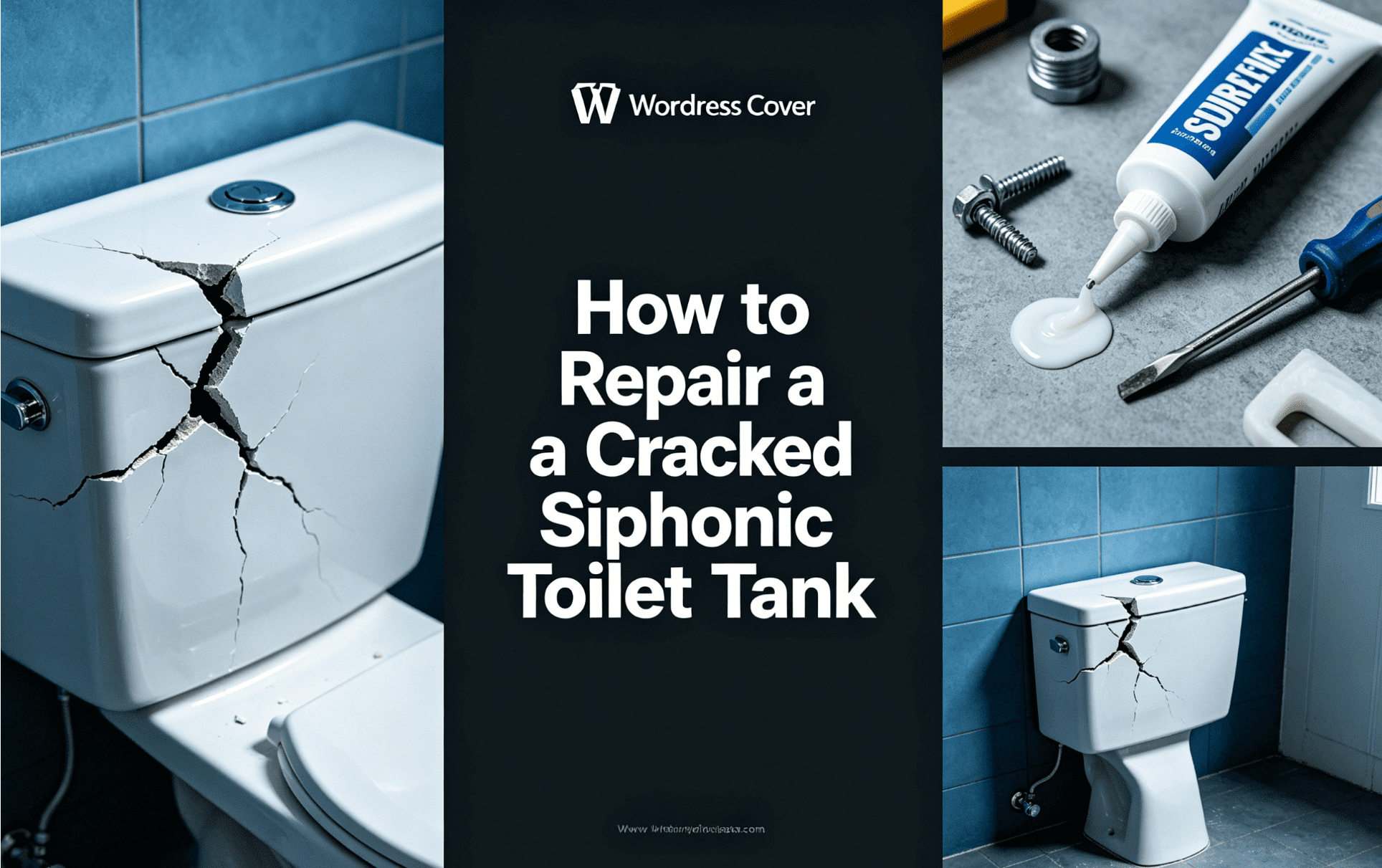
Discovering a crack in your siphonic toilet tank can be alarming. One day everything seems normal, and the next you notice a small puddle forming behind the toilet, accompanied by the constant sound of dripping water. Many homeowners immediately assume the entire toilet needs replacement, but that’s not always the case.
In reality, small cracks in a ceramic toilet tank can often be repaired successfully if they are identified early and located in low-stress areas. The key is understanding the severity of the damage and choosing the right repair method.
In this guide, we’ll explain how to repair a cracked siphonic toilet tank, when repairs are safe, when replacement is necessary, and how to prevent future tank damage.
If you’re evaluating the long-term durability of different toilet designs, our comprehensive Siphonic vs Washdown Toilets: Which One Is Better for Your Bathroom? guide compares flushing systems, maintenance requirements, and lifespan expectations.
Quick Answer
Small hairline cracks in a siphonic toilet tank can often be repaired using waterproof ceramic epoxy or porcelain repair compounds. However, large cracks, structural damage, or cracks located near mounting bolts usually require tank replacement for safety reasons.
How Serious Is a Cracked Toilet Tank?
Not every crack presents the same level of risk.
Some hairline cracks may leak only a few drops per day, while larger fractures can suddenly expand and release several gallons of water onto the bathroom floor.
The severity depends on:
- Crack length
- Crack depth
- Tank water pressure
- Tank age
- Location of the crack
As a general rule, cosmetic surface cracks are repairable, while structural cracks affecting tank integrity often require replacement.
Common Causes of Tank Cracks
- Age-related ceramic fatigue
- Accidental impacts during cleaning
- Overtightened tank bolts
- Improper installation
- Manufacturing defects
- Temperature-related expansion and contraction
Many homeowners are surprised to learn that small installation mistakes can create stress points that eventually develop into visible cracks years later.
Repair vs Replacement Comparison
| Option | Estimated Cost | Difficulty | Maintenance | Advantages | Disadvantages |
|---|---|---|---|---|---|
| Epoxy Repair | $10-$30 | Easy | Low | Affordable and quick | Only suitable for minor cracks |
| Porcelain Repair Kit | $15-$50 | Easy | Low | Good appearance after repair | May require multiple applications |
| Replace Tank Only | $80-$250 | Moderate | Low | Permanent solution | Finding matching tank can be difficult |
| Replace Entire Toilet | $200-$800+ | Professional Recommended | Very Low | Brand-new fixture | Highest cost |
Step-by-Step Repair Process
Step 1: Turn Off the Water Supply
Shut off the water valve behind the toilet and flush to empty the tank.
Use a sponge or towel to remove any remaining water. The repair area must be completely dry before applying any repair compound.
Step 2: Clean the Crack Thoroughly
Remove dirt, mineral deposits, and moisture from the damaged area.
A clean surface significantly improves adhesion and long-term repair durability.
Step 3: Apply Ceramic Epoxy or Repair Compound
Many homeowners have successfully repaired small tank cracks using leftover porcelain or tile repair compounds.
Because toilet tanks are ceramic-based, quality porcelain repair materials bond surprisingly well to the surface.
- Mix the repair compound according to instructions
- Press the material deep into the crack
- Smooth the surface evenly
- Apply a second layer if necessary
For best results, slightly extend the repair area beyond the visible crack line.
Step 4: Allow Proper Curing Time
This is where many DIY repairs fail.
Even if the surface appears dry, the material may not be fully cured internally. Follow manufacturer curing recommendations carefully.
Most high-quality repair compounds require between 12 and 24 hours before exposure to water pressure.
Step 5: Refill and Test
Slowly reopen the water supply and allow the tank to refill.
Observe the repaired area for at least 15 to 30 minutes.
If no moisture appears, perform multiple test flushes to confirm the repair remains watertight.
Real-World Homeowner Experience
One homeowner living in an older house discovered a thin crack on the side of a ceramic toilet tank. The leak was small but persistent, producing an annoying dripping sound throughout the day.
Rather than replacing the entire toilet immediately, they used a high-quality porcelain repair compound originally purchased for tile repairs. After carefully cleaning the crack, applying two layers, and allowing full curing time, the repair held successfully.
The most surprising part was the strength of the repaired section. Once cured, the material felt almost as hard as the surrounding ceramic and showed no signs of leaking even after months of use.
While not every repair achieves identical results, this demonstrates that minor cracks can often be resolved without major expense.
When You Should Replace Instead of Repair
Repair is not always the safest choice.
You should strongly consider replacement if:
- The crack is growing
- Water is actively spraying out
- The crack extends through mounting holes
- Multiple cracks are present
- The tank wobbles during flushing
Structural cracks can fail suddenly and release a large volume of water, potentially causing flooring damage.
Preventing Future Toilet Tank Cracks
Preventive maintenance reduces the likelihood of future tank damage.
- Avoid overtightening tank bolts
- Inspect for leaks regularly
- Use manufacturer-approved replacement parts
- Avoid striking the tank with heavy objects
- Repair minor leaks promptly
Many toilet tank failures begin as small problems that go unnoticed for months or years.
If you’re already addressing toilet maintenance issues, our guide on How to Maintain a Siphonic Toilet for Long-Term Performance provides additional preventive maintenance strategies.
Pros and Cons of DIY Tank Repair
| Pros | Cons |
|---|---|
| Low repair cost | Not suitable for major cracks |
| Can be completed in one day | Requires proper curing time |
| Avoids immediate replacement | Cosmetic marks may remain visible |
| Minimal tools required | Not always a permanent solution |
Expert Recommendations
Based on common residential repair scenarios, minor hairline cracks are often worth repairing, especially when the toilet is otherwise functioning properly.
However, homeowners should always prioritize safety over cost savings.
- Repair cosmetic cracks early
- Monitor repaired areas regularly
- Replace structurally damaged tanks
- Use waterproof ceramic repair products
- Allow complete curing before testing
According to guidance from the International Code Council (ICC), plumbing fixtures should remain structurally sound and leak-free to maintain safe operation and prevent water damage.
Frequently Asked Questions
Can a cracked toilet tank be repaired permanently?
Small hairline cracks can often remain leak-free for years when repaired correctly, although replacement is still recommended for major structural damage.
What is the best material for repairing a toilet tank crack?
High-quality waterproof ceramic epoxy or porcelain repair compounds generally provide the strongest and most durable results.
Can I continue using the toilet if the tank has a small crack?
If the crack is minor and not actively leaking, temporary use may be possible, but repairs should be completed as soon as possible.
How do I know if the crack is structural?
Cracks near mounting bolts, large visible fractures, or cracks that continue growing usually indicate structural damage.
Is replacing the tank cheaper than replacing the entire toilet?
In many cases, yes. However, finding a matching replacement tank can sometimes be difficult, especially for older models.
Conclusion
A cracked siphonic toilet tank does not automatically mean you need a new toilet. Small hairline cracks can often be repaired successfully using ceramic epoxy or porcelain repair compounds, saving both time and money.
The key is accurately assessing the severity of the damage. Minor cosmetic cracks are typically good candidates for repair, while structural cracks should be addressed through replacement. With proper materials, careful preparation, and adequate curing time, many homeowners can restore a leaking toilet tank and extend its service life for years to come.