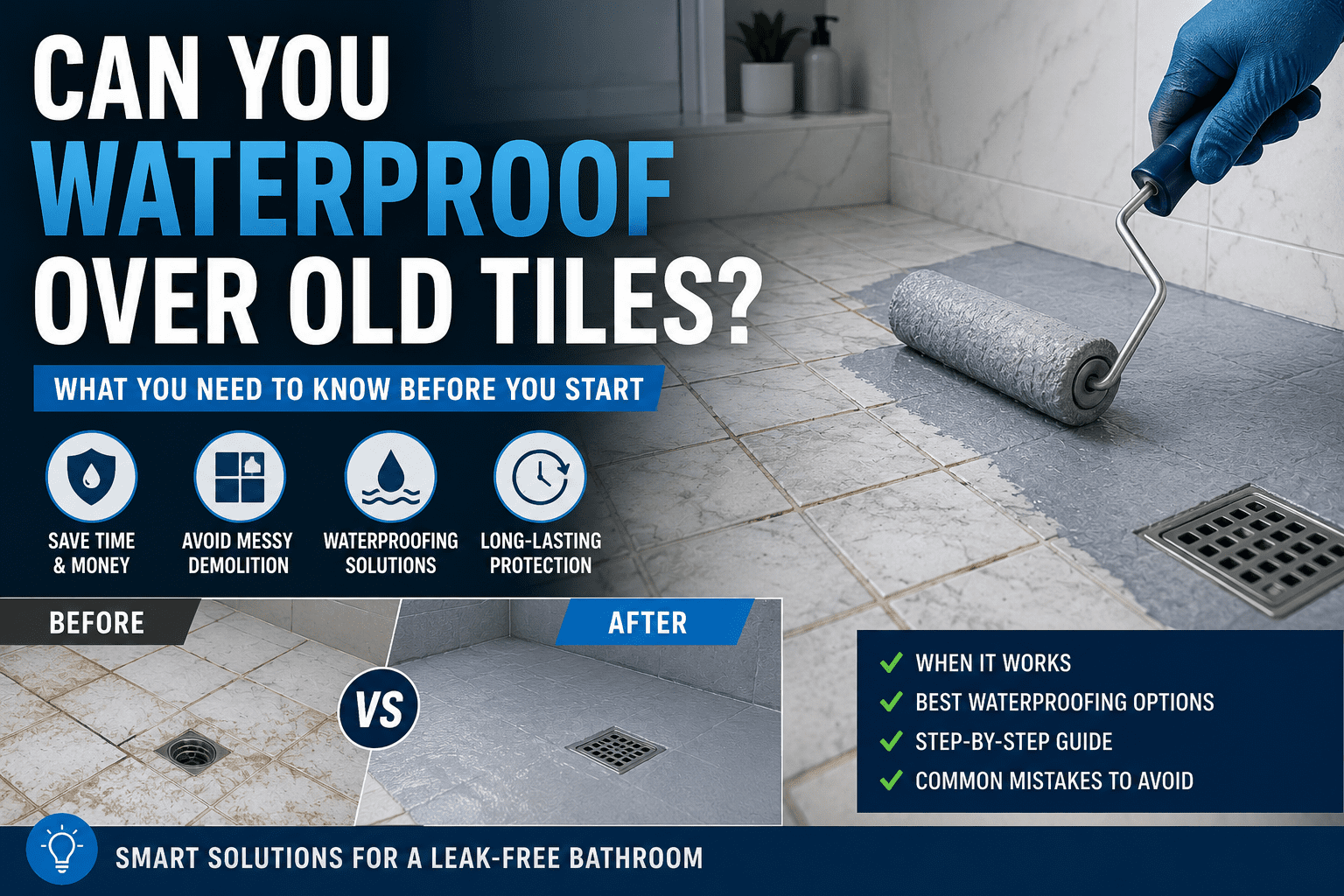
Yes, you can waterproof over old tiles in certain situations, but whether it is the right solution depends entirely on the condition of the existing tile installation. If the tiles are firmly bonded, free of movement, and the substrate underneath is structurally sound, applying a new waterproof coating over the surface can be an effective way to stop minor leaks without a full demolition.
However, if tiles are loose, grout is deteriorated, or water has already damaged the subfloor, waterproofing over tiles is only a temporary fix. In those cases, removing the tiles and rebuilding the waterproofing system is the only reliable long-term solution.
After more than 15 years working on bathroom renovations and leak investigations, I have used both approaches. In some bathrooms, a high-quality liquid membrane applied over properly prepared tiles has extended the life of the space by 5 to 10 years. In others, hidden structural damage made full replacement unavoidable.
For a complete overview of waterproofing systems and repair strategies, visit our Bathroom Waterproofing category.
Quick Answer: Is Waterproofing Over Old Tiles a Good Idea?
Yes, but only when the existing tiles are stable and there is no significant structural damage underneath.
- Good Candidate: Solid tiles, intact substrate, minor seepage.
- Bad Candidate: Loose tiles, hollow sounds, mold, swollen floors, recurring leaks.
- Best Materials: Transparent sealers, polyurethane coatings, or tile-over waterproofing systems.
- Expected Lifespan: 3–10 years depending on the system and bathroom condition.
When Waterproofing Over Tiles Works Well
This method can be highly effective in the following scenarios:
- Rental properties where demolition is not practical
- Bathrooms with isolated grout or joint leaks
- Older bathrooms that need a temporary extension of service life
- Situations where tiles are still structurally secure
In one project, a homeowner wanted to avoid removing expensive imported porcelain tiles. We cleaned the surface, repaired grout, and applied a polyurethane coating around the shower floor and corners. The repair remained leak-free for over seven years.
When You Should Not Waterproof Over Existing Tiles
Surface waterproofing is not a miracle solution. It cannot repair structural failures beneath the tile layer.
- Tiles move when stepped on
- Subfloor feels soft or swollen
- Mold odors are persistent
- Ceiling stains appear below the bathroom
- Cracks continue to widen
If these symptoms are present, our guide on What Happens If Bathroom Waterproofing Fails? explains the likely consequences and repair options.
Best Waterproofing Materials for Old Tiles
| Material | Typical Cost | Installation Difficulty | Maintenance | Advantages | Disadvantages |
|---|---|---|---|---|---|
| Transparent Tile Sealer | Low | Easy | High | No visual change, fast application | Shorter lifespan, limited protection |
| Liquid Waterproof Membrane | Medium | Moderate | Low | Seamless and flexible | Usually requires re-tiling if opaque |
| Polyurethane Coating | High | Moderate | Low | Excellent crack resistance | Higher material cost |
| Epoxy Grout Sealer | Medium | Moderate | Medium | Strengthens joints and reduces seepage | Does not address substrate damage |
Step-by-Step Process
1. Inspect the Existing Tile Installation
Tap tiles with a rubber mallet. Hollow sounds often indicate poor adhesion.
2. Deep Clean the Surface
Remove soap residue, mold, and mineral buildup using a suitable tile cleaner.
3. Repair Cracked Grout and Silicone
All damaged joints must be restored before waterproofing.
4. Apply Primer if Required
Some systems need a bonding primer to adhere to glazed tile surfaces.
5. Apply the Waterproofing Product
Use a roller or brush and follow the manufacturer’s recommended coverage and curing times.
6. Perform a Water Test
Monitor the repaired area for several days to confirm the leak has stopped.
Real-World Performance Expectations
Based on my renovation experience:
- Transparent sealers typically last 1–3 years
- Polyurethane tile-over systems often last 5–10 years
- Full membrane replacement can provide 20+ years of service life
For a deeper discussion of longevity, see How Long Does Bathroom Waterproofing Last?.
Common Mistakes to Avoid
- Applying waterproofing over dirty tiles
- Ignoring loose or hollow tiles
- Skipping grout and silicone repairs
- Using paint instead of true waterproofing products
- Expecting a surface treatment to fix structural failures
Many of these issues are discussed in Most Common Bathroom Waterproofing Mistakes.
Who Should Consider This Method?
| Situation | Recommended Approach |
|---|---|
| Minor grout seepage | Waterproof over existing tiles |
| Rental property | Non-demolition repair |
| Loose tiles or soft floor | Complete renovation |
| Luxury bathroom with expensive tile | Professional tile-over waterproofing assessment |
Industry Reference
About Our Renovation Experience
Frequently Asked Questions
1. Can I waterproof a shower without removing tiles?
Yes. If the tiles are stable and the leak is limited to joints or grout, specialized systems can often solve the problem.
2. How long does waterproofing over tiles last?
Depending on the product and substrate condition, repairs typically last between 3 and 10 years.
3. What is the best product for waterproofing over tiles?
Polyurethane-based systems generally provide the most durable and flexible protection.
4. Will this method fix major structural leaks?
No. Significant substrate damage usually requires removing tiles and rebuilding the waterproofing system.
5. Is waterproof paint enough for old tiles?
No. Waterproof paint is not a substitute for dedicated tile-over waterproofing products.
Conclusion
Yes, you can waterproof over old tiles, and in the right circumstances it can be an effective and economical alternative to demolition. When the existing tile installation is stable and the leak is minor, high-quality tile-over waterproofing systems can provide several additional years of reliable performance.
From my professional experience, this method works best as a targeted repair strategy rather than a universal solution. If the bathroom shows signs of structural damage, loose tiles, or chronic leaks, a complete waterproofing rebuild remains the most dependable long-term investment.