Introduction
Many homeowners regularly clean the visible parts of their toilet but rarely think about the trapway hidden inside the fixture. While the bowl receives most of the attention, the trapway plays a critical role in flushing performance, clog prevention, and long-term reliability.
In a siphonic toilet, the trapway is specifically designed to create the suction effect that removes waste efficiently. Over time, mineral deposits, hard water scale, organic residue, and small debris can accumulate inside the trapway, gradually reducing performance.
The question many homeowners ask is simple: how often should the trapway be cleaned? The answer depends on water quality, household size, and usage patterns. Establishing the right cleaning schedule can help maintain strong flushing performance and avoid unnecessary repairs.
If you’re evaluating different flushing systems, our comprehensive Siphonic vs Washdown Toilets: Which One Is Better for Your Bathroom? guide explains how trapway design affects maintenance requirements and flushing efficiency.
Quick Answer
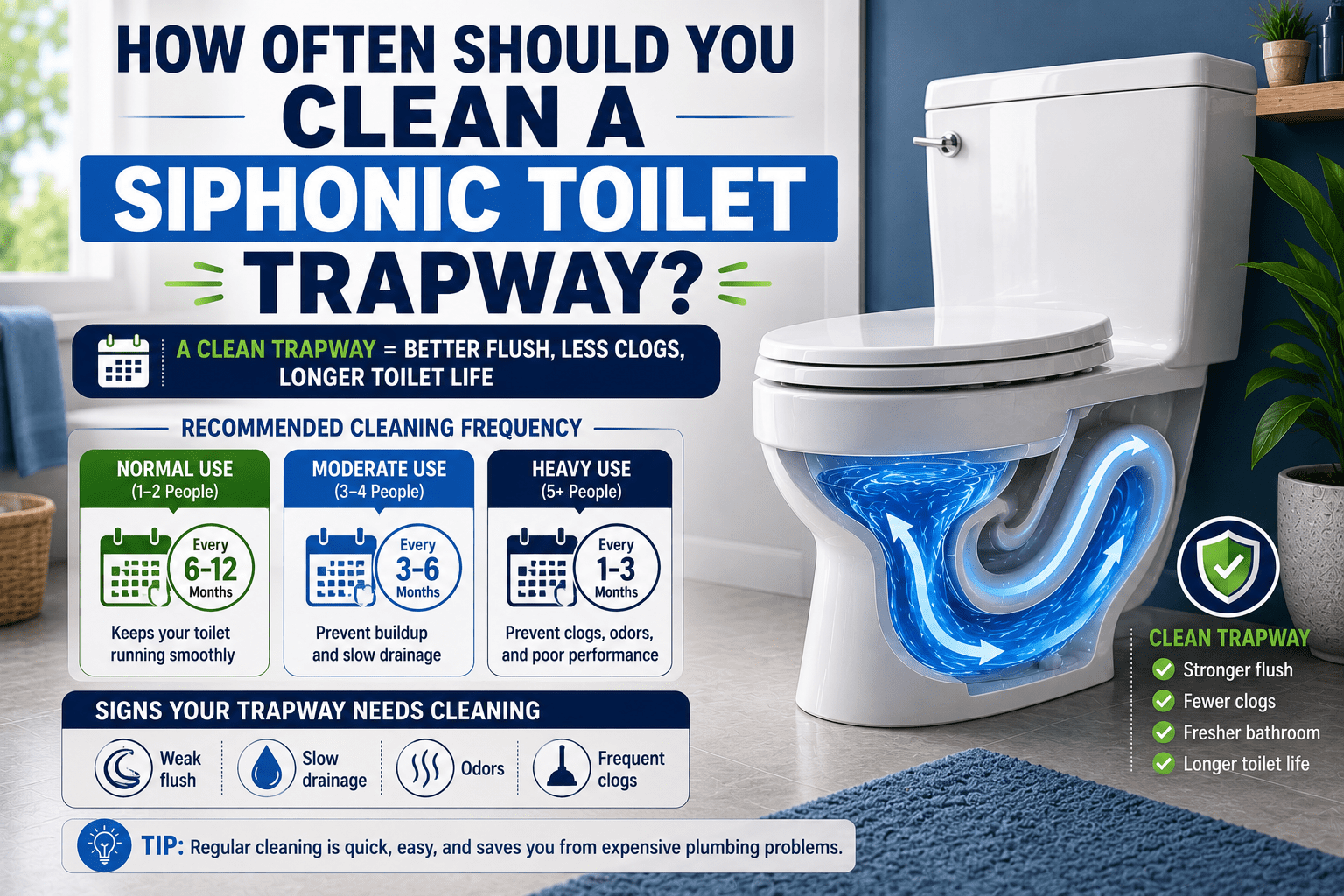
Most homeowners should clean a siphonic toilet trapway every 3 to 6 months. Homes with hard water, large families, or high bathroom usage may benefit from cleaning every 2 to 3 months, while households with soft water and lighter usage can often extend cleaning intervals to 6 months or longer.
Regular trapway maintenance helps preserve flushing power, reduce clogging risks, and extend the lifespan of the toilet.
Why the Trapway Matters in a Siphonic Toilet
The trapway is the curved passage inside the toilet that carries waste from the bowl into the drain system. In a siphonic toilet, the shape and diameter of the trapway are engineered to create a siphon effect during flushing.
When the trapway remains clean and unobstructed, water flows smoothly and creates the strong suction that siphonic toilets are known for.
However, when buildup develops inside the trapway, homeowners may notice:
- Weaker flushing performance
- Frequent partial clogs
- Multiple flushes required
- Slow bowl evacuation
- Unusual gurgling sounds
- Persistent odors
Understanding how the siphon effect works can help explain why trapway maintenance is important. Our article on How Does a Siphonic Toilet Create Strong Suction? provides a detailed explanation of the flushing process.
Recommended Trapway Cleaning Schedule
| Household Type | Cleaning Frequency | Estimated Annual Cost | Maintenance Effort | Advantages | Potential Drawbacks |
|---|---|---|---|---|---|
| Single Occupant | Every 6 Months | $5-$20 | Low | Minimal buildup risk | Problems may go unnoticed |
| Couple | Every 4-6 Months | $10-$25 | Low | Consistent performance | Requires routine scheduling |
| Family of 4+ | Every 3 Months | $15-$40 | Moderate | Reduces clogging risk | More frequent maintenance |
| Hard Water Areas | Every 2-3 Months | $20-$50 | Moderate | Controls mineral buildup | Additional cleaning required |
| Rental Properties | Every 3 Months | $15-$40 | Moderate | Prevents tenant complaints | Regular inspections needed |
Signs Your Trapway Needs Cleaning
You don’t always need to wait for a scheduled cleaning. In many cases, your toilet will provide warning signs that maintenance is needed.
- Flushes seem weaker than before
- Waste takes longer to clear
- Water swirls slowly during flushing
- The bowl drains more slowly than normal
- Minor clogs become more frequent
- Odors remain despite regular bowl cleaning
Many homeowners mistakenly assume these symptoms indicate a failing toilet, when the actual cause is often a partially restricted trapway.
What Causes Trapway Buildup?
Several factors contribute to trapway contamination over time.
- Hard water mineral deposits
- Excessive toilet paper usage
- Flushing non-flushable products
- Soap residue from bathroom cleaning
- Organic waste accumulation
- Rust particles from older plumbing systems
Homes with hard water typically experience the fastest buildup. Calcium and lime deposits gradually narrow the internal diameter of the trapway, reducing flow efficiency.
How to Clean a Siphonic Toilet Trapway Safely
For routine maintenance, most homeowners can clean the trapway without professional assistance.
- Apply a toilet-safe descaling cleaner.
- Allow the solution to sit according to manufacturer instructions.
- Use a toilet brush to scrub accessible areas.
- Flush multiple times to remove loosened deposits.
- Repeat if heavy mineral buildup is present.
Avoid using overly aggressive chemical drain cleaners, as they may damage toilet components or plumbing connections.
According to the EPA WaterSense program, maintaining plumbing fixtures properly can improve long-term water efficiency and system performance.
Real-World Homeowner Scenario
A homeowner in Arizona noticed that their eight-year-old siphonic toilet no longer cleared waste as effectively as it once had. Because the toilet still flushed, they assumed the issue was simply age-related.
After removing heavy mineral deposits from the trapway using a descaling treatment, flushing performance improved dramatically. The toilet continued operating reliably without requiring replacement.
This situation is particularly common in regions with hard water, where trapway buildup often develops gradually over several years.
Cleaning Frequency Based on Water Quality
| Water Condition | Recommended Trapway Cleaning Frequency |
|---|---|
| Soft Water | Every 6 Months |
| Moderately Hard Water | Every 4 Months |
| Hard Water | Every 2-3 Months |
| Very Hard Water | Every 2 Months |
Homeowners interested in a broader maintenance strategy should also review Siphonic Toilet Maintenance Checklist for Homeowners, which covers routine inspections and preventive care beyond trapway cleaning.
Pros and Cons of Regular Trapway Cleaning
| Pros | Cons |
|---|---|
| Maintains flushing power | Requires ongoing maintenance |
| Reduces clogging risk | Can be overlooked easily |
| Improves odor control | Takes time to perform properly |
| Extends toilet lifespan | Hard water may require frequent cleaning |
| Reduces repair costs | Severe buildup may need multiple treatments |
Expert Recommendations
For most households, cleaning the trapway every 3 to 6 months provides the best balance between maintenance effort and performance benefits.
Homeowners should increase cleaning frequency if they:
- Live in a hard water region
- Have a large family
- Experience recurring clogs
- Notice reduced flushing performance
- Own an older siphonic toilet
Preventive maintenance is typically far less expensive than emergency repairs or premature toilet replacement.
Frequently Asked Questions
How often should I clean a siphonic toilet trapway?
Most homes benefit from trapway cleaning every 3 to 6 months. Hard water areas may require cleaning every 2 to 3 months.
Can a dirty trapway cause weak flushing?
Yes. Mineral deposits and residue can restrict water flow, reducing the siphon effect and weakening flush performance.
What is the safest cleaner for a toilet trapway?
A toilet-safe descaling cleaner or white vinegar solution is generally effective for routine maintenance and mineral removal.
Does trapway cleaning prevent clogs?
Regular cleaning can significantly reduce clogging risks by removing buildup before it restricts water flow.
How do I know if my trapway is partially blocked?
Common symptoms include slow flushing, recurring minor clogs, weak bowl evacuation, and unusual flushing sounds.
Conclusion
Cleaning a siphonic toilet trapway is one of the most overlooked yet valuable maintenance tasks homeowners can perform. While the ideal cleaning frequency varies depending on water quality and usage patterns, most households should inspect and clean the trapway every 3 to 6 months.
By maintaining a clean trapway, homeowners can preserve strong flushing performance, reduce clogging risks, improve odor control, and extend the lifespan of their toilet. A simple preventive maintenance routine often delivers far greater value than waiting until performance problems become noticeable.