
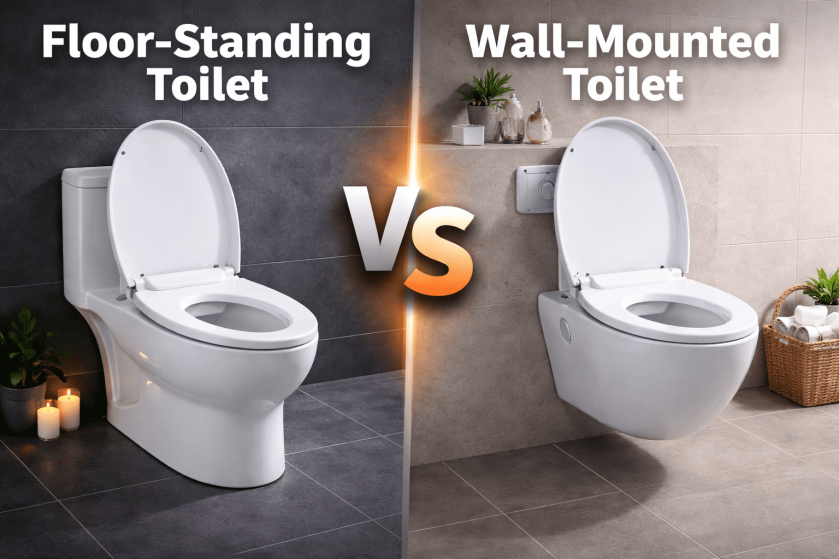
If you’re planning a bathroom upgrade, one of the most overlooked—but important—decisions is choosing between a floor-standing toilet and a wall-mounted toilet.
After working in home renovation for over 15 years, I can tell you this: the choice isn’t just about looks. It directly impacts installation cost, maintenance, space efficiency, and even long-term usability.
Let’s break it down in a practical, no-nonsense way so you can choose what actually fits your home—not just what looks good on Pinterest.
What Is a Floor-Standing Toilet?
A floor-standing toilet is the most common type in the U.S. It sits directly on the floor and connects to a visible drain outlet.
- Easy to install and replace
- Compatible with standard plumbing systems
- Lower upfront cost
If you’ve ever replaced a toilet before, chances are it was this type.
What Is a Wall-Mounted Toilet?
A wall-mounted toilet is installed on the wall, with the tank hidden inside the wall (called an in-wall carrier system).
- Sleek, modern appearance
- Saves floor space
- Height can be customized
However, it requires a reinforced wall structure and more complex installation.
Key Differences at a Glance
| Feature | Floor-Standing Toilet | Wall-Mounted Toilet |
|---|---|---|
| Installation | Simple, standard | Complex, requires in-wall system |
| Cost | Lower | Higher (toilet + carrier + labor) |
| Space Saving | Moderate | Excellent |
| Maintenance | Easy access | Harder (hidden tank) |
| Design | Traditional | Modern / Minimalist |
Pros and Cons of Floor-Standing Toilets
Pros:
- Affordable and widely available
- Easy to install or replace
- Simple maintenance and repairs
Cons:
- Bulkier appearance
- Harder to clean around the base
- Limited design flexibility
Pros and Cons of Wall-Mounted Toilets
Pros:
- Clean, modern aesthetic
- More floor space (great for small bathrooms)
- Easier to clean underneath
Cons:
- Higher installation cost
- Requires wall modification
- Repairs can be more complicated
Which One Should You Choose?
Here’s the honest answer based on real-world use:
- If you want easy installation, lower cost, and reliability → go with a floor-standing toilet.
- If you care about modern design and saving space → a wall-mounted toilet is worth considering.
In most standard U.S. homes, floor-standing toilets still make more practical sense. But for high-end renovations or small bathrooms, wall-mounted options can be a smart upgrade.
Frequently Asked Questions
1. Are wall-mounted toilets strong enough?
Yes. When properly installed, most wall-mounted toilets can support 400–500 lbs. The strength comes from the in-wall carrier system, not the wall itself.
2. Is it more expensive to install a wall-mounted toilet?
Absolutely. Besides the toilet itself, you’ll need a carrier frame, wall modification, and professional installation, which significantly increases the total cost.
3. Are wall-mounted toilets harder to repair?
In some cases, yes. While access panels exist, repairs involving the tank can be more complicated than standard floor-mounted systems.
Conclusion
Both options have their place, but the best choice depends on your priorities.
If you value simplicity, affordability, and easy maintenance, a floor-standing toilet is still the most practical solution.
If you’re aiming for a modern, space-saving bathroom design and are willing to invest more upfront, a wall-mounted toilet can deliver a cleaner and more premium look.
Still unsure which toilet fits your space? Check out our Smart Toilet vs Light Smart Toilet Guide for more insights.
For technical installation standards and plumbing considerations, you can also refer to the EPA WaterSense Program, which provides guidelines on water-efficient fixtures.
“`