Water efficiency has become one of the biggest priorities for homeowners upgrading their bathrooms. Modern toilets now use significantly less water than older models, but not every toilet performs the same way.
Some toilets focus on strong flushing power, while others prioritize maximum water savings. Choosing the right toilet means balancing efficiency, flushing performance, maintenance, and long-term operating costs.
If you are comparing siphonic toilets, washdown toilets, dual-flush systems, or pressure-assisted models, understanding real-world water usage can help you avoid expensive mistakes.
Quick Answer
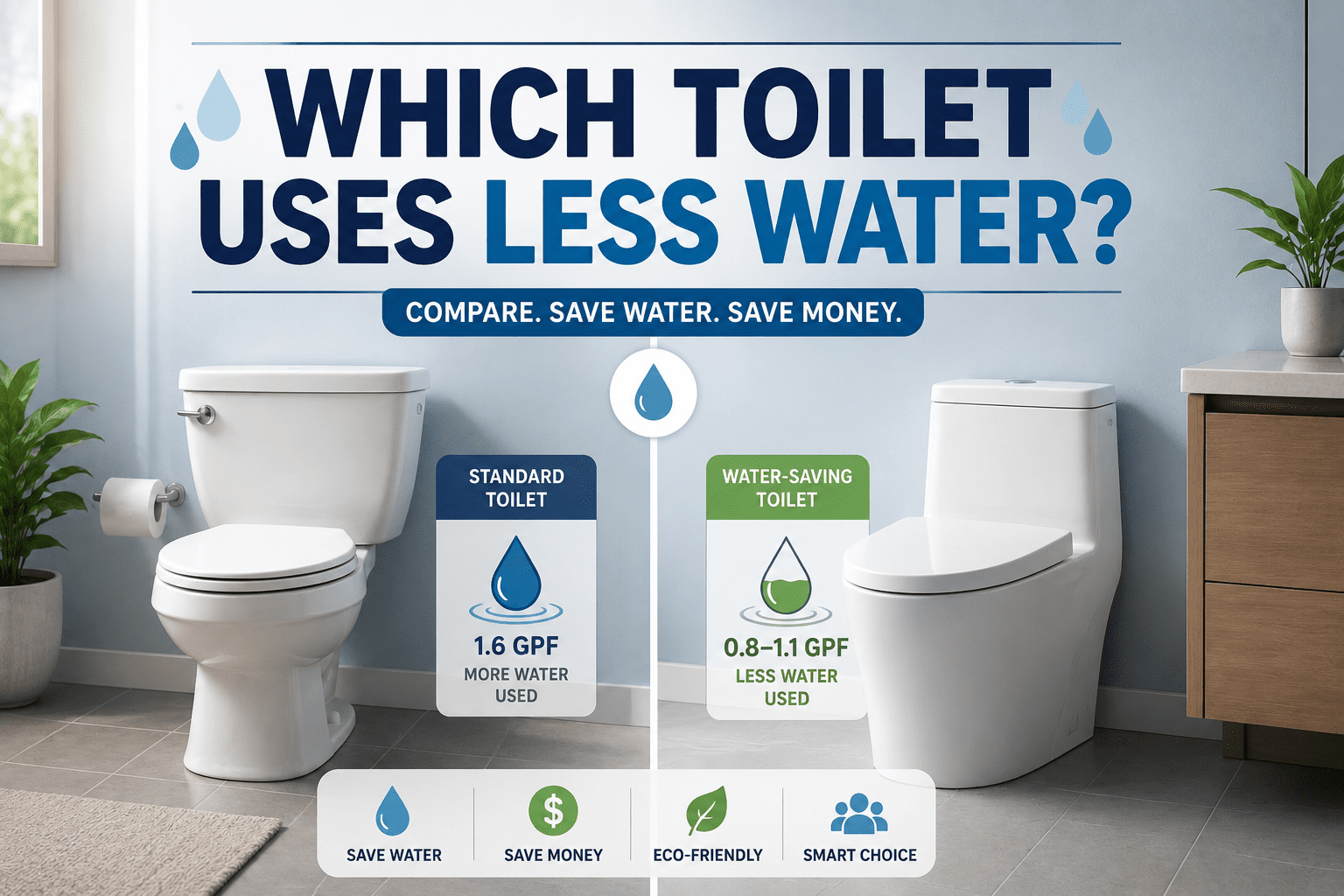
Dual-flush toilets and modern washdown toilets generally use the least water. Most high-efficiency toilets (HETs) use between 1.0 and 1.28 gallons per flush (GPF), while older toilets may use 3.5 to 7 gallons per flush.
Why Toilet Water Usage Matters
Toilets account for a major portion of indoor household water consumption.
According to the EPA WaterSense Program, toilets can represent nearly 30% of indoor residential water use in the United States.
Replacing an older inefficient toilet can reduce:
- Monthly water bills
- Environmental impact
- Water waste
- Long-term plumbing costs
How Much Water Do Different Toilets Use?
| Toilet Type | Average Water Usage | Flush Performance | Best For |
|---|---|---|---|
| Older Traditional Toilets | 3.5–7 GPF | Strong but wasteful | Older homes |
| Modern Siphonic Toilets | 1.28–1.6 GPF | Balanced & quiet | Residential homes |
| Washdown Toilets | 1.0–1.28 GPF | Efficient & direct | Europe & compact bathrooms |
| Dual-Flush Toilets | 0.8–1.28 GPF | Highly efficient | Eco-conscious users |
| Pressure-Assisted Toilets | 1.1–1.6 GPF | Very powerful | Commercial settings |
Do Washdown Toilets Use Less Water?
In many cases, yes.
Washdown toilets use direct gravity flushing with shorter trapways, allowing waste to exit quickly using less water.
This is one reason washdown toilets are extremely popular in Europe and many modern compact apartments.
You can learn more in Why Are Washdown Toilets Common in Europe?.
How Siphonic Toilets Balance Water Efficiency
Siphonic toilets typically use slightly more water than washdown systems because they rely on suction to move waste through a curved trapway.
However, modern siphonic toilets have become far more efficient than older designs.
Many premium siphonic toilets now flush effectively using only 1.28 gallons per flush.
For homeowners prioritizing quiet operation and comfort, siphonic systems often provide the best balance between water savings and user experience.
Read more in Siphonic vs Washdown Toilets: Which One Is Better for Your Bathroom?.
What Is a High-Efficiency Toilet (HET)?
A High-Efficiency Toilet (HET) is designed to use 1.28 GPF or less.
Most modern HETs include:
- Optimized trapway engineering
- Improved bowl rinsing
- Larger flush valves
- Advanced siphonic systems
- Dual-flush functionality
These toilets maintain strong flushing while minimizing water usage.
Dual-Flush Toilets: The Most Efficient Option?
Dual-flush toilets are among the most water-efficient systems available.
They offer two flushing modes:
- Light flush for liquid waste
- Full flush for solid waste
This allows households to reduce unnecessary water consumption throughout the day.
In real-world use, dual-flush toilets can save thousands of gallons annually compared to older toilets.
Real-World Water Savings Example
A family of four replaced two older 3.5 GPF toilets with modern 1.28 GPF dual-flush models.
After one year, they noticed:
- Lower water bills
- Reduced bathroom maintenance
- Fewer refill noises
- Better flushing consistency
In regions with expensive water utilities, these savings become even more noticeable over time.
Does Lower Water Usage Mean Weak Flushing?
Not necessarily.
Early low-flow toilets from the 1990s often struggled with weak flushing performance. However, modern engineering has greatly improved efficiency.
Today’s high-efficiency toilets use:
- Computer-optimized trapways
- Larger flush valves
- Rimless bowl systems
- Pressure-assisted flushing
- Advanced siphonic technology
As a result, many low-water toilets now outperform older high-water models.
Water Usage vs Maintenance Comparison
| Toilet Type | Water Use | Maintenance | Pros | Cons |
|---|---|---|---|---|
| Siphonic Toilet | Moderate | Low | Quiet & comfortable | Slightly higher water use |
| Washdown Toilet | Very Low | Low | Efficient & simple | Can be louder |
| Dual-Flush Toilet | Lowest | Moderate | Maximum savings | More complex components |
| Pressure-Assisted Toilet | Low | Moderate | Strong flush power | Noisy operation |
Which Toilet Is Best for Different Homes?
Best for Apartments
Modern siphonic or dual-flush toilets because they are quieter and efficient.
Best for Large Families
Pressure-assisted or optimized washdown toilets for reliable waste removal.
Best for Water Savings
Dual-flush high-efficiency toilets.
Best for Small Bathrooms
Compact washdown toilets with low water usage.
How Toilet Trapway Design Influences Water Usage
Trapway design strongly affects how efficiently water moves waste.
Modern toilets use carefully engineered trapways to maximize flushing performance with minimal water.
You can explore this in How Toilet Trapway Design Affects Flushing Performance.
Signs Your Toilet Wastes Too Much Water
- Multiple flushes needed
- Constant running water
- Older pre-1994 model
- High monthly water bills
- Weak flushing performance
Replacing outdated toilets can significantly improve efficiency.
Frequently Asked Questions
1. Which toilet type uses the least water?
Dual-flush toilets generally use the least water overall.
2. Are washdown toilets more efficient than siphonic toilets?
Usually yes, because they use direct gravity flushing with shorter trapways.
3. What is considered a high-efficiency toilet?
A toilet using 1.28 gallons per flush or less.
4. Can low-water toilets still flush effectively?
Yes. Modern toilet engineering has greatly improved low-flow performance.
5. How much water can a modern toilet save?
A modern efficient toilet may save thousands of gallons annually compared to older models.
Conclusion
Modern toilets use far less water than older designs while still providing strong flushing performance. Washdown toilets and dual-flush systems are typically the most water-efficient options, while modern siphonic toilets offer an excellent balance between comfort, quiet operation, and efficiency.
Choosing the right toilet depends on your bathroom size, household needs, plumbing system, and long-term water-saving goals. By understanding how different flushing systems work, homeowners can reduce water usage without sacrificing reliability or comfort.