Siphonic toilets are popular for their quiet operation, smooth flushing action, and cleaner bowl performance. However, some homeowners eventually notice weaker flushing power, incomplete waste removal, or frequent double flushing.
The good news is that a weak siphonic flush does not always mean the toilet needs replacement. In many cases, improving flushing power is surprisingly simple and affordable.
This guide explains why siphonic toilets lose performance, how to increase flushing strength effectively, and which upgrades actually make a noticeable difference.
Quick Answer
The best ways to improve siphonic toilet flushing power include adjusting tank water levels, cleaning clogged rim jets, upgrading the flush valve, improving venting, and removing mineral buildup inside the trapway.
How a Siphonic Toilet Creates Flushing Power
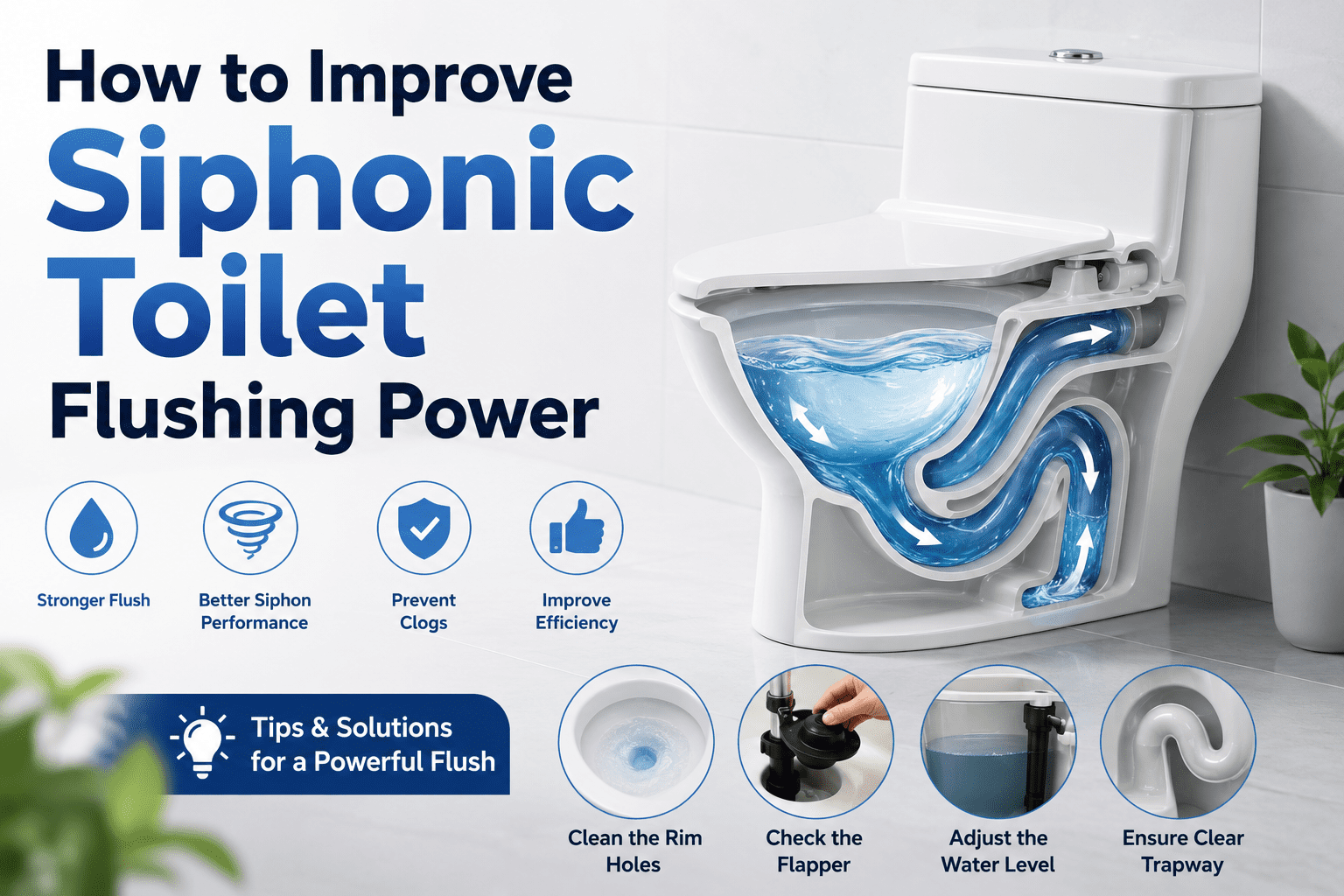
Siphonic toilets rely on a siphon effect created by rapid water movement through a curved trapway. Once enough water enters the bowl quickly, suction forms and pulls waste through the drain.
If water flow slows down or airflow becomes restricted, flushing power drops significantly.
For a complete explanation of the mechanism, read What Is a Siphonic Toilet and How Does It Work?.
Common Reasons Siphonic Toilets Lose Flushing Power
| Problem | Effect on Flush | Difficulty to Fix |
|---|---|---|
| Low tank water level | Weak siphon action | Easy |
| Clogged rim jets | Poor bowl rinse | Easy |
| Mineral buildup | Restricted water flow | Moderate |
| Blocked vent pipe | Weak suction force | Moderate |
| Old flush valve | Reduced water release speed | Easy |
| Partial drain blockage | Slow waste removal | Moderate |
1. Raise the Tank Water Level
One of the easiest fixes is adjusting the tank float so the water level sits closer to the manufacturer’s fill line.
Siphonic toilets depend heavily on rapid water volume. If the tank does not hold enough water, the siphon effect becomes weak.
In many homes, improperly adjusted fill valves reduce flushing strength without homeowners realizing it.
2. Clean the Rim Jets
Mineral deposits often clog the tiny rim holes underneath the toilet bowl edge. When this happens, water cannot enter the bowl fast enough to create a strong siphon.
A small wire brush and white vinegar usually work well for cleaning these openings.
Many plumbers recommend soaking the rim area overnight with vinegar to dissolve calcium buildup naturally.
3. Upgrade the Flush Valve
Modern larger-diameter flush valves release water much faster than older systems.
| Flush Valve Type | Typical Cost | Performance Improvement |
|---|---|---|
| 2-inch standard valve | $15–$30 | Basic |
| 3-inch performance valve | $30–$60 | High |
| Tower flush valve | $40–$90 | Very High |
Upgrading the valve is often one of the most effective ways to improve flushing performance without replacing the toilet itself.
4. Remove Mineral Deposits Inside the Trapway
Hard water minerals can slowly narrow the trapway diameter over time, weakening siphonic action.
This issue is especially common in older homes and areas with hard water.
Professional descaling products or diluted vinegar treatments can help restore internal flow efficiency.
According to the EPA WaterSense Program, mineral buildup is a major contributor to reduced fixture efficiency in residential plumbing systems.
5. Check the Plumbing Vent
Siphonic toilets rely partly on balanced air pressure inside the drain system. A blocked roof vent can weaken suction and create slow flushing behavior.
Common signs of vent issues include:
- Gurgling sounds
- Slow draining fixtures
- Weak flushes
- Water level fluctuations
If multiple bathroom fixtures are affected, a vent blockage may be the real problem rather than the toilet itself.
Real-World Experience
During a bathroom service call in a hard-water region, a homeowner complained that their siphonic toilet suddenly required two flushes every morning.
After removing heavy calcium deposits from the rim jets and replacing the aging flush valve, the toilet regained nearly all of its original flushing performance. The entire repair cost less than replacing the toilet.
Should You Replace the Toilet?
If your toilet is more than 15–20 years old, replacement may be more practical than repeated repairs.
Modern siphonic toilets use:
- Improved trapway engineering
- Larger flush valves
- Better glazing
- Optimized bowl hydraulics
- Water-saving pressure-assisted designs
Many new models now provide stronger flushing while using less water than older toilets.
Siphonic vs Washdown Flushing Strength
Some homeowners wonder whether switching to a washdown toilet solves flushing performance issues entirely.
Washdown toilets generally produce more direct flushing force, while siphonic toilets prioritize quieter operation and cleaner bowl performance.
If you are comparing both systems, Siphonic vs Washdown Toilets: Which One Is Better for Your Bathroom? explains the differences in detail.
How Cleaning Affects Flushing Performance
Dirty bowls, mineral deposits, and blocked rim jets directly reduce flush efficiency over time.
Regular maintenance matters more than many homeowners realize.
For easier maintenance strategies, Which Toilet Type Is Easier to Clean? compares cleaning requirements across modern toilet styles.
Best Solutions Based on Your Situation
| Situation | Best Solution |
|---|---|
| Weak but consistent flushing | Adjust tank water level |
| Old toilet with slow flush | Upgrade flush valve |
| Hard water buildup | Descale rim jets and trapway |
| Gurgling sounds present | Inspect plumbing vent |
| Frequent double flushing | Replace aging internal components |
Frequently Asked Questions
1. Why is my siphonic toilet flushing weakly?
Common causes include low tank water levels, clogged rim jets, mineral buildup, or a worn flush valve.
2. Can I improve flushing power without replacing the toilet?
Yes. Cleaning, valve upgrades, and proper water level adjustments often restore strong flushing performance.
3. Do siphonic toilets naturally flush weaker than washdown toilets?
Siphonic toilets prioritize suction efficiency and quiet operation, while washdown toilets use more direct force.
4. Does hard water affect toilet flushing power?
Absolutely. Mineral buildup can restrict water flow and weaken siphonic action over time.
5. Is upgrading the flush valve worth it?
In many cases, yes. A larger modern flush valve can noticeably improve flush speed and bowl clearing performance.
Conclusion
Siphonic toilets can lose flushing power gradually due to mineral buildup, worn components, poor venting, or improper tank adjustments. Fortunately, most performance issues are repairable without replacing the entire toilet.
Simple maintenance steps like cleaning rim jets, raising water levels, and upgrading flush valves often produce dramatic improvements. For homeowners who value quieter operation and cleaner bowl performance, maintaining a properly functioning siphonic toilet remains one of the best long-term bathroom solutions.