Washdown toilets are known for their strong flushing performance and simple trapway design. They are widely used in commercial buildings, apartments, and modern bathrooms because they clear waste quickly and resist clogging better than many traditional toilet designs.
However, some homeowners notice an annoying problem after installation: water splashing during flushing or use. In some cases, the splash is minor. In others, it can become uncomfortable and messy.
If your washdown toilet splashes water frequently, the issue is usually related to bowl design, water pressure, flushing velocity, or water level positioning. Fortunately, most causes are manageable without replacing the entire toilet.
Quick Answer
Washdown toilets usually splash water because of aggressive flush force, shallow water spots, high water pressure, improper bowl geometry, or excessive water levels. Adjusting the fill system and upgrading certain components often reduces splashing significantly.
Why Washdown Toilets Splash More Than Siphonic Toilets
Washdown toilets use direct gravity force to push waste through a short trapway. Unlike siphonic toilets, they do not rely heavily on slow suction action.
This direct flush creates a stronger and faster water movement inside the bowl, which can increase splash potential.
| Feature | Washdown Toilet | Siphonic Toilet |
|---|---|---|
| Flush Style | Direct downward force | Suction-based flow |
| Water Velocity | Higher | Lower |
| Typical Splash Risk | Moderate to High | Low |
| Noise Level | Higher | Lower |
| Clog Resistance | Excellent | Moderate |
For a full comparison of both systems, read Siphonic vs Washdown Toilets: Which One Is Better for Your Bathroom?.
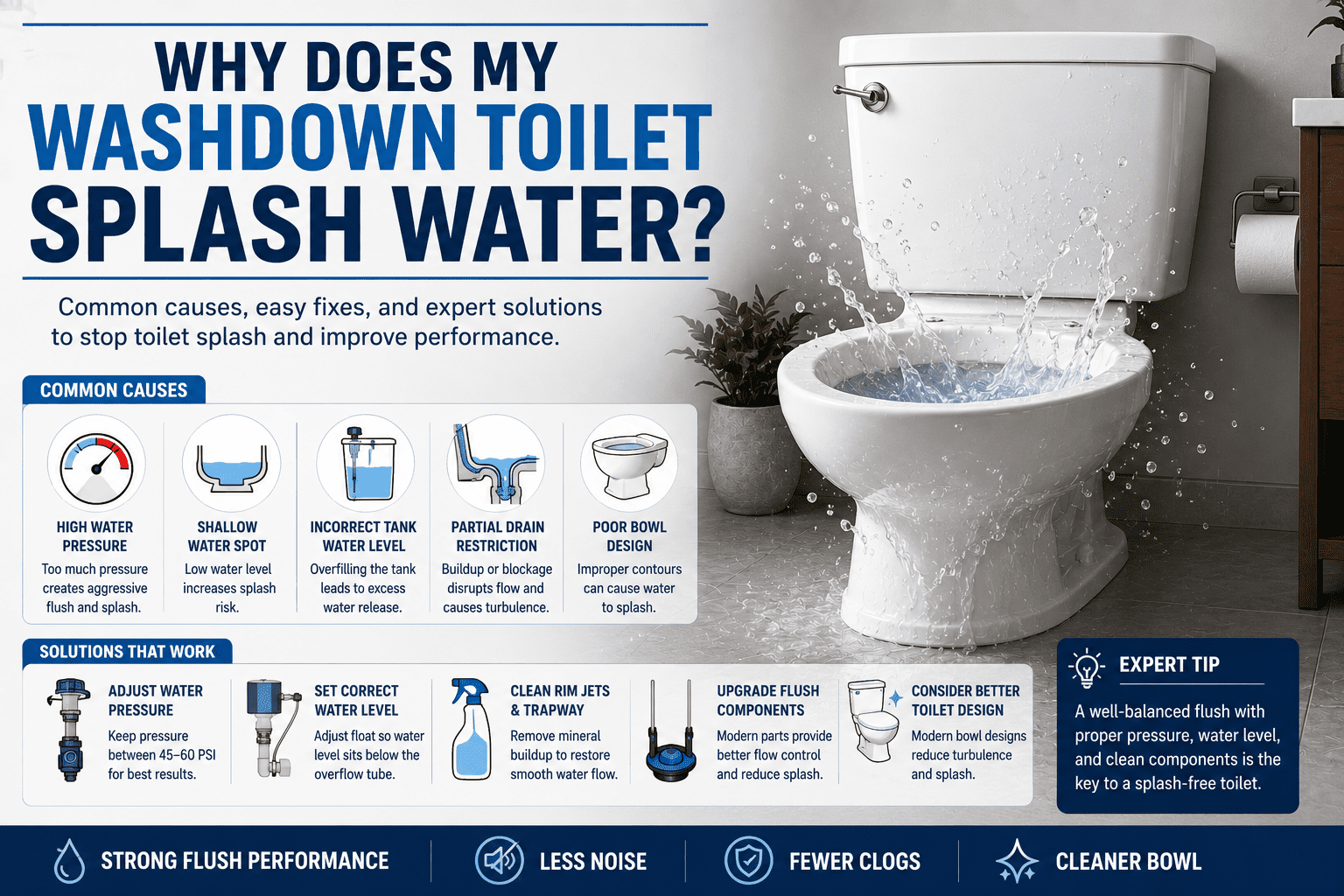
Common Causes of Toilet Splashing
1. High Water Pressure
If household water pressure is too high, the toilet may flush more aggressively than intended.
This increases turbulence inside the bowl and often causes upward splashing.
In many residential systems, pressure above 80 PSI creates unnecessary plumbing stress and louder flushing behavior.
2. Shallow Water Spot Design
Many washdown toilets have smaller water surface areas inside the bowl compared to siphonic models.
This shallow water spot increases the chance of splashback during use.
Compact European-style washdown toilets are especially known for this characteristic.
3. Incorrect Tank Water Level
If the tank fills above the recommended level, the flush releases too much water too quickly.
Adjusting the float mechanism can sometimes reduce splashing immediately.
4. Partial Drain Restriction
Small clogs or buildup inside the trapway may redirect water flow unpredictably during flushing.
This creates irregular turbulence and splash patterns.
5. Poor Bowl Design
Lower-quality toilet models sometimes have inefficient bowl geometry that fails to control water movement properly.
Premium toilets usually include optimized bowl channels that reduce splash and improve rinsing performance.
How to Reduce Washdown Toilet Splashing
| Solution | Difficulty | Typical Cost | Effectiveness |
|---|---|---|---|
| Lower tank water level | Easy | $0 | Moderate |
| Adjust household pressure | Moderate | $50–$200 | High |
| Clean trapway buildup | Easy | $10–$30 | Moderate |
| Upgrade flush components | Moderate | $40–$120 | High |
| Replace toilet model | Difficult | $250–$900 | Very High |
Real-World Experience
A homeowner in a newly renovated apartment noticed strong splashback every time the toilet flushed. The issue became worse after installing a high-pressure booster pump.
After adjusting the pressure regulator and slightly lowering the tank fill level, the flush became noticeably smoother and splashback decreased significantly.
In this situation, the toilet itself was functioning correctly, but excessive water pressure amplified the bowl turbulence.
Can Toilet Shape Affect Splashing?
Yes. Bowl depth and water spot size directly affect splash behavior.
Generally:
- Deeper bowls reduce splash risk
- Larger water surfaces absorb impact better
- Compact bowls tend to splash more
- Steeper bowl angles increase turbulence
Modern rimless toilet designs sometimes reduce splashing because water distribution becomes more controlled.
Should You Switch to a Siphonic Toilet?
If splash prevention and quieter flushing are your top priorities, a siphonic toilet may provide a better experience.
Siphonic systems create smoother water movement and usually maintain a larger water spot inside the bowl.
For homeowners considering this upgrade, What Is a Siphonic Toilet and How Does It Work? explains why siphonic designs operate differently.
How Cleaning and Maintenance Affect Splashing
Mineral deposits and partial obstructions inside rim jets or trapways can alter water flow direction.
Regular cleaning helps maintain predictable flushing behavior and reduces uneven turbulence.
If maintenance convenience matters to you, Which Toilet Type Is Easier to Clean? compares cleaning requirements across different toilet systems.
Best Solutions Based on Your Situation
| Situation | Recommended Solution |
|---|---|
| Minor occasional splash | Lower tank water level |
| Strong flush turbulence | Reduce water pressure |
| Old toilet with buildup | Clean trapway and rim jets |
| Persistent splash issues | Upgrade to modern bowl design |
| Noise and splash problems together | Consider siphonic toilet replacement |
External Plumbing Reference
According to the EPA WaterSense Program, efficient toilet performance depends heavily on proper water pressure, fixture design, and maintenance quality.
Frequently Asked Questions
1. Why do washdown toilets splash more?
Washdown toilets use faster direct flushing force, which creates stronger bowl turbulence and increases splash potential.
2. Can high water pressure cause toilet splashback?
Yes. Excessive water pressure often creates aggressive flushing and more turbulent water movement.
3. Are siphonic toilets less likely to splash?
Generally yes. Siphonic toilets use smoother suction-based flushing that reduces splashback.
4. Does bowl shape matter?
Absolutely. Shallow bowls and small water spots usually increase splash risk.
5. Should I replace my washdown toilet?
Only if adjustments and maintenance fail to improve the issue. Many splash problems can be solved without full replacement.
Conclusion
Washdown toilets provide excellent flushing performance and strong clog resistance, but their aggressive water movement can sometimes create unwanted splashback.
Fortunately, most causes are manageable through simple adjustments such as lowering tank water levels, reducing water pressure, and cleaning internal components. In cases where bowl design is the main issue, upgrading to a better-engineered toilet may provide the most effective long-term solution.
Understanding how flush dynamics, pressure, and bowl geometry work together helps homeowners create a cleaner, quieter, and more comfortable bathroom experience.