Keeping a toilet clean is one of those household tasks nobody enjoys, but the right toilet design can make the job dramatically easier. Many homeowners focus on flushing performance or water efficiency when buying a toilet, yet cleaning and maintenance often become the bigger long-term concern.
After comparing dozens of modern toilet designs and reviewing real homeowner experiences, one thing becomes clear: some toilet types stay cleaner longer and require significantly less scrubbing.
In this guide, we’ll compare the most common toilet types, explain which ones are easiest to maintain, and help you choose the best option for a cleaner and more hygienic bathroom.
Quick Answer
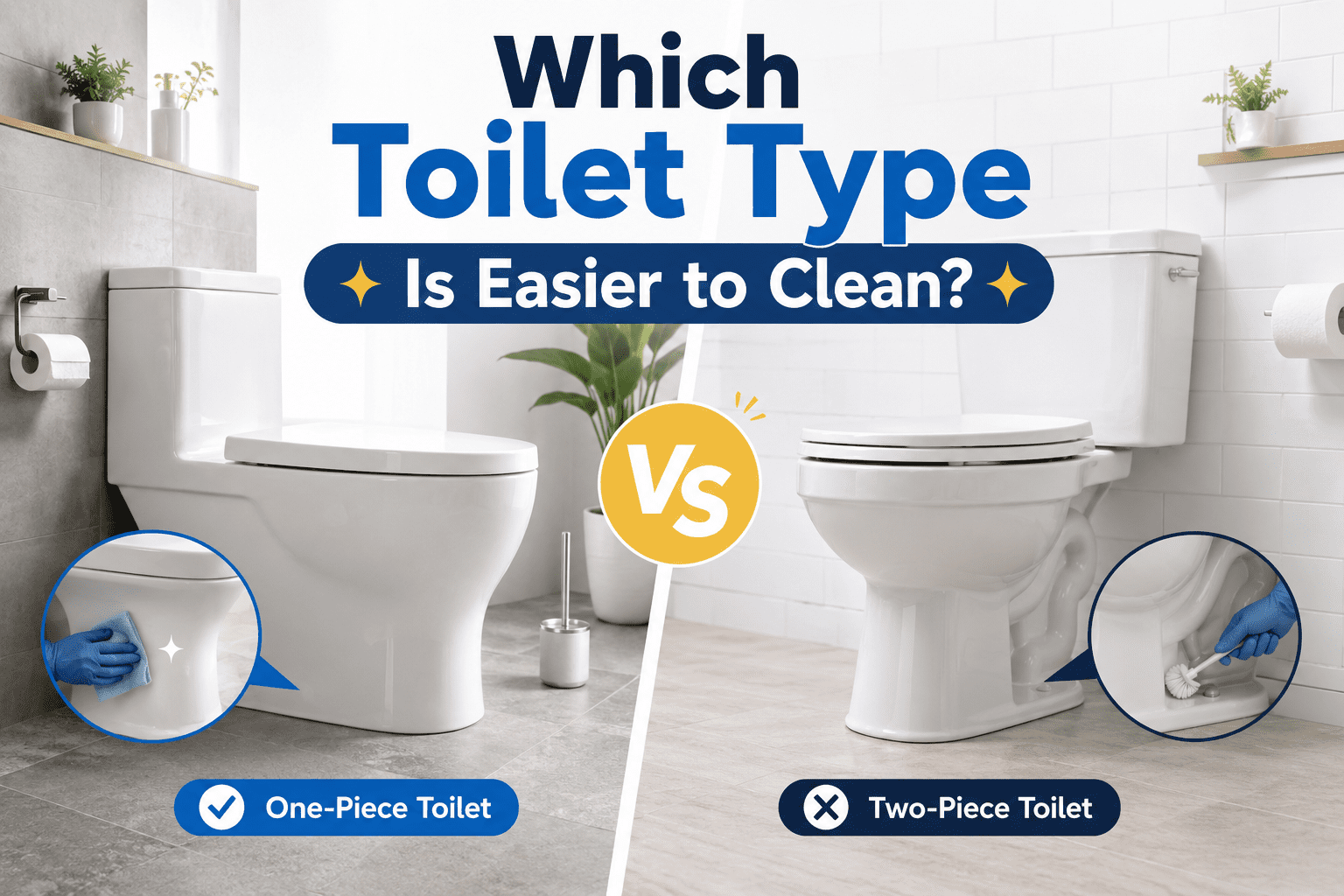
One-piece siphonic toilets with skirted trapways are generally the easiest toilets to clean. They have fewer seams, smoother surfaces, better bowl rinsing, and fewer hidden areas where dirt and bacteria can collect.
Why Some Toilets Are Harder to Clean
Not all toilets are designed with maintenance in mind. Certain features can make cleaning much more difficult over time.
- Exposed trapways collect dust and grime
- Low-quality glazing attracts stains
- Two-piece seams trap bacteria
- Weak bowl rinsing leaves residue behind
- Sharp corners and bolts create hard-to-reach areas
Modern toilet manufacturers now prioritize smoother surfaces and easier maintenance, especially in premium bathroom designs.
Which Toilet Types Are Easiest to Clean?
| Toilet Type | Cleaning Difficulty | Maintenance Level | Main Advantage | Main Drawback |
|---|---|---|---|---|
| One-Piece Siphonic Toilet | Very Easy | Low | Minimal seams and smooth design | Higher upfront cost |
| Skirted Toilet | Very Easy | Very Low | Hidden trapway prevents dust buildup | Installation can be harder |
| Two-Piece Toilet | Moderate | Moderate | Affordable and common | Tank seam traps dirt |
| Washdown Toilet | Easy | Low | Simple trapway design | Lower water spot may leave marks |
| Wall-Hung Toilet | Very Easy | Low | Easy floor cleaning underneath | Higher installation cost |
| Smart Toilet | Easy | Moderate | Self-cleaning features available | More electronic maintenance |
Why Siphonic Toilets Often Stay Cleaner
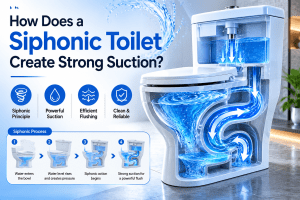
Siphonic toilets typically maintain a higher bowl water level, which helps reduce visible staining and odors. Their flushing action also creates a more complete bowl rinse compared with many basic gravity toilets.
If you want to understand the flushing system in detail, read What Is a Siphonic Toilet and How Does It Work?.
Are Washdown Toilets Easier to Maintain?
Washdown toilets are mechanically simple and usually very reliable. Their larger trapways resist clogging well, but the lower bowl water level can sometimes allow visible skid marks or mineral staining to appear faster.
For homeowners comparing both systems, Siphonic vs Washdown Toilets: Which One Is Better for Your Bathroom? explains the major performance differences.
Real-World Cleaning Experience
During a recent bathroom renovation project, a homeowner replaced an older exposed-trapway toilet with a skirted one-piece siphonic model. The difference in weekly cleaning time was immediately noticeable.
Dust no longer accumulated around pipe curves, wiping the exterior became much easier, and the bowl required fewer deep cleans. For busy households, this type of design can save significant maintenance effort over time.
Features That Make Toilets Easier to Clean
- Skirted trapway designs
- One-piece construction
- High-quality ceramic glazing
- Rimless flushing systems
- Anti-bacterial coatings
- Powerful bowl rinse coverage
Average Cleaning and Maintenance Costs
| Toilet Type | Typical Price | Annual Maintenance | Cleaning Frequency |
|---|---|---|---|
| Basic Two-Piece Toilet | $150–$350 | $40–$80 | Frequent |
| One-Piece Siphonic Toilet | $400–$1,200 | $20–$50 | Lower |
| Wall-Hung Toilet | $600–$2,000 | $20–$60 | Low |
| Smart Toilet | $1,500–$5,000 | $50–$150 | Very Low |
Best Toilet Type for Different Households
| Situation | Recommended Toilet Type |
|---|---|
| Busy family bathroom | One-piece siphonic toilet |
| Luxury modern bathroom | Wall-hung smart toilet |
| Rental property | Washdown toilet |
| Small bathroom | Compact skirted toilet |
| Easy floor cleaning | Wall-hung toilet |
Professional Cleaning Recommendation
The EPA Safer Choice Program recommends using non-abrasive cleaners for ceramic bathroom fixtures to preserve glazing and reduce long-term surface damage.
Related Toilet Guides
If you are exploring premium bathroom options, Best Siphonic Toilets for Modern Bathrooms highlights several easy-to-maintain models.
Homeowners considering simpler flushing systems may also want to read What Is a Washdown Toilet and How Does It Work?.
Frequently Asked Questions
1. What toilet type requires the least cleaning?
Skirted one-piece siphonic toilets are generally the easiest to clean because they have smooth exterior surfaces and fewer hidden areas.
2. Are wall-hung toilets easier to clean?
Yes. They allow easy floor access underneath and often feature minimalist designs with fewer crevices.
3. Why do some toilets stain faster?
Lower bowl water levels, hard water minerals, and weak glazing can all contribute to faster staining.
4. Do expensive toilets stay cleaner longer?
In many cases, yes. Premium toilets often include better glazing, stronger bowl rinse systems, and anti-bacterial coatings.
5. Are washdown toilets harder to clean?
Not necessarily. Their simpler design helps exterior cleaning, but lower water levels may require more frequent bowl brushing.
Conclusion
The easiest toilet to clean is usually a one-piece siphonic toilet with a skirted trapway and high-quality ceramic finish. These models minimize grime buildup, simplify exterior wiping, and often keep the bowl cleaner between uses.
While every toilet requires regular maintenance, choosing the right design can significantly reduce cleaning time and improve long-term hygiene. For most modern bathrooms, investing in an easy-to-clean toilet pays off through better appearance, improved sanitation, and less daily effort.