In the world of bathroom upgrades, smart toilets are quickly gaining popularity, but with a variety of options, how do you know which one is right for your needs? Today, we’re diving into the differences between a fully-featured smart toilet and a more basic light smart toilet, so you can make an informed decision based on your budget, preferences, and comfort needs.
What is a Smart Toilet?
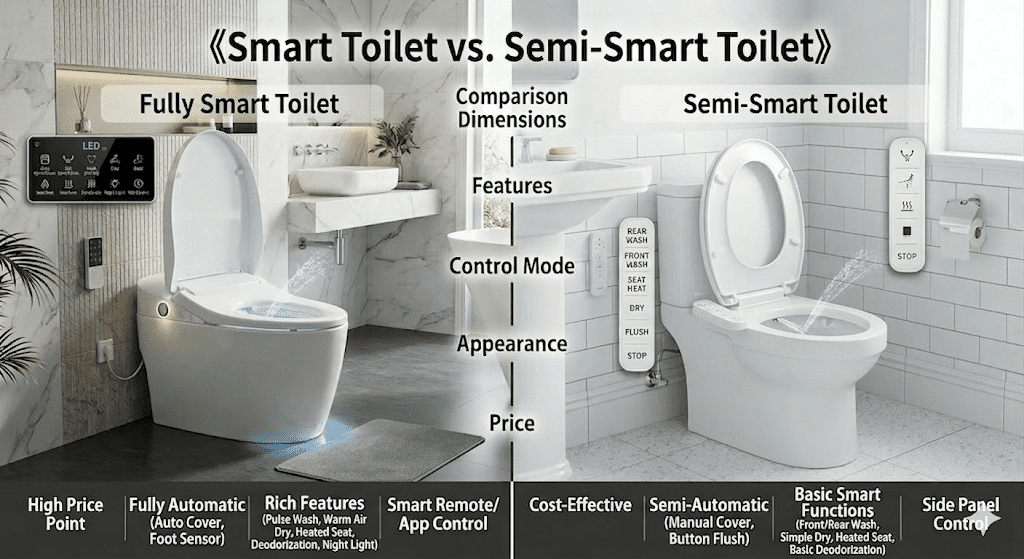
A smart toilet is a high-tech toilet that offers a range of advanced features designed to improve comfort, hygiene, and convenience. These toilets often come with:
- Bidet functionality – Automatic washing features for a cleaner and more hygienic experience.
- Heated seats – For ultimate comfort during cold months.
- Automatic flushing – Hands-free operation for better hygiene.
- Air dryer – For a complete, hands-free experience.
These features make smart toilets more expensive but ideal for those looking for luxury and advanced functionality.
What is a Light Smart Toilet?
On the other hand, a light smart toilet provides some basic smart features, but at a more affordable price. It may include:
- Heated seats – A feature common in smart toilets but offered in a simplified form.
- Soft-close lid – Eliminates the slamming noise of the toilet seat.
However, light smart toilets lack more advanced features like bidets, air dryers, and automatic flushing. They are a good option for those who want to experience some smart features without breaking the bank.
Key Differences Between Smart Toilets and Light Smart Toilets
| Feature | Smart Toilet | Light Smart Toilet |
|---|---|---|
| Bidet Functionality | Yes | No |
| Heated Seat | Yes | Yes |
| Automatic Flushing | Yes | No |
| Air Dryer | Yes | No |
| Price | $$$ (Higher) | $$ (Lower) |
Pros and Cons of Smart Toilets
Pros:
- Advanced features such as bidets and automatic flushing.
- Improved comfort with heated seats and air dryers.
- Hands-free operation for better hygiene.
Cons:
- Higher cost compared to regular toilets.
- More complex installation process, may require a professional plumber.
Pros and Cons of Light Smart Toilets
Pros:
- Affordable price compared to fully-featured smart toilets.
- Easy to install with basic features like heated seats and soft-close lid.
Cons:
- Lacks advanced features such as bidet functionality and air dryers.
- Limited hygiene and comfort benefits compared to a smart toilet.
Frequently Asked Questions
1. Are Smart Toilets Hard to Install?
Smart toilets can be more challenging to install than regular toilets due to the added features and electrical requirements. It’s often recommended to have a professional handle the installation to ensure everything works properly.
2. Do Light Smart Toilets Have Bidet Functions?
No, light smart toilets typically do not include bidet functionality, which is one of the most sought-after features in fully-featured smart toilets.
3. How Much Do Smart Toilets Cost Compared to Light Smart Toilets?
Smart toilets are generally more expensive, ranging from $800 to $2,000 or more, while light smart toilets can be found for around $400 to $600. The price difference comes down to the advanced features offered by smart toilets, such as bidets, automatic flushing, and air dryers.
Conclusion
Choosing between a smart toilet and a light smart toilet ultimately depends on your needs, preferences, and budget. If you’re looking for a fully-featured, high-tech experience with advanced functionalities like bidets, heated seats, and air dryers, a smart toilet is the best option. However, if you’re looking for something more affordable that still offers some smart features like heated seats and a soft-close lid, a light smart toilet might be the perfect choice for you.
Both options offer a step toward a more comfortable, modern bathroom, so it’s important to assess what features matter most to you before making a decision.