Waterproofing a small bathroom may seem easier because there is less floor area to cover, but in reality, compact bathrooms are often more vulnerable to moisture problems. When the shower, toilet, vanity, and floor drain are packed into a tight space, water splashes farther, humidity builds up faster, and even a minor waterproofing mistake can affect the entire room.
After working on bathroom renovations and leak repairs for more than 15 years, I have found that small bathrooms require even greater attention to detail than larger ones. In a 40-square-foot bathroom, a failed corner joint or poorly sealed pipe penetration can quickly lead to mold, swollen baseboards, and water stains in the room below.
For more technical guidance and renovation strategies, explore our Bathroom Waterproofing category.
Quick Answer: How Do You Waterproof a Small Bathroom Properly?
The best approach is to treat the entire floor as a wet zone, waterproof all wall-to-floor junctions, reinforce corners and pipe penetrations, and ensure proper ventilation.
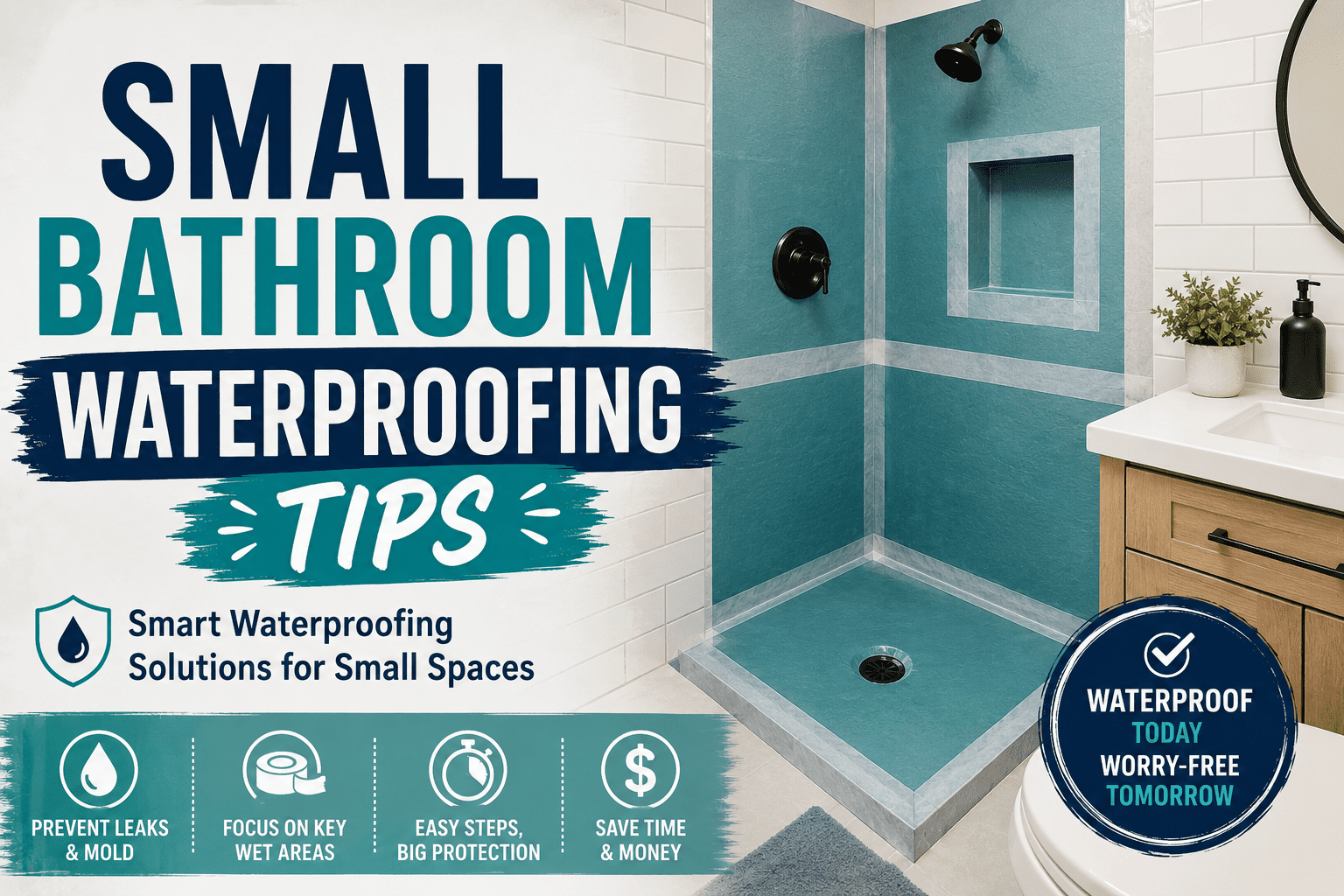
- Waterproof the entire floor, not just the shower.
- Extend membrane 6–12 inches up surrounding walls.
- Seal all corners with reinforcing tape.
- Pay extra attention to toilet and vanity plumbing penetrations.
- Use a powerful exhaust fan to control humidity.
Why Small Bathrooms Are More Prone to Water Damage
Compact bathrooms concentrate moisture in a limited area. Steam has fewer places to dissipate, and surfaces stay wet longer. In many apartments and older homes, the shower is located only a few feet from the toilet and vanity, so every shower exposes the entire room to water.
In one condominium renovation, a bathroom measuring just 5 x 8 feet developed mold behind the vanity because the waterproof membrane stopped at the shower curb instead of covering the whole floor. Once we waterproofed the entire floor area, the problem disappeared permanently.
Comparison Table: Best Waterproofing Systems for Small Bathrooms
| Waterproofing System | Typical Cost | Installation Difficulty | Maintenance | Advantages | Disadvantages |
|---|---|---|---|---|---|
| Liquid Waterproof Membrane | $$ | Moderate | Low | Seamless, ideal for tight spaces and corners | Requires proper curing time |
| Sheet Membrane | $$$ | Advanced | Very Low | Consistent thickness and excellent reliability | Higher material and labor cost |
| Cementitious Waterproofing | $ | Moderate | Low | Affordable and easy to apply | Less flexible for movement cracks |
| Polyurethane Waterproofing | $$$$ | Moderate | Very Low | Highly flexible and durable | More expensive |
1. Waterproof the Entire Floor
In small bathrooms, water rarely stays confined to the shower. Splashing, condensation, and minor plumbing leaks can affect every square foot. For this reason, I recommend treating the whole floor as a wet area.
This principle is also discussed in How to Waterproof a Bathroom Floor Properly.
2. Extend the Membrane Up the Walls
A common professional practice is to run the waterproof membrane at least 6 to 12 inches up all walls, and full height in shower areas. This creates a basin effect that prevents water from escaping through corners and base joints.
3. Reinforce Corners and Movement Joints
Corners are the most common failure points. Small bathrooms often experience greater temperature and humidity swings, which cause expansion and contraction.
Always embed reinforcing tape in:
- Wall-to-floor transitions
- Inside shower corners
- Door thresholds
- Around floor drains
- Pipe penetrations
4. Pay Special Attention to Plumbing Penetrations
Toilet flanges, shower mixers, and vanity supply lines are frequent leak points. Even a tiny gap around a pipe can allow moisture to migrate behind tiles and drywall.
If your bathroom already shows moisture symptoms, read Why Is My Bathroom Floor Leaking?.
5. Choose the Right Waterproofing Material
Because small bathrooms contain many corners, penetrations, and irregular shapes, liquid-applied membranes are often the easiest and most practical solution. They create a seamless coating that adapts well to tight layouts.
For a detailed explanation, see Bathroom Waterproofing Membrane Explained.
6. Ensure Proper Floor Slope
Waterproofing is only part of the system. The substrate should slope approximately 1/4 inch per foot toward the floor drain to prevent standing water.
In small bathrooms, poor slope causes water to collect near toilets and vanities, leading to mildew and grout deterioration.
7. Upgrade Ventilation
Small bathrooms accumulate humidity rapidly. A properly sized exhaust fan is essential for reducing condensation and preventing mold.
As a rule of thumb, choose a fan rated for at least one air change every 8 minutes. Running the fan for 20 to 30 minutes after showering dramatically lowers moisture levels.
Real-World Experience: Tiny Bathroom, Big Leak
One homeowner contacted me after noticing peeling paint on the ceiling below a small upstairs bathroom. The room measured only 42 square feet, but the leak had caused more than $4,000 in damage.
The culprit was a cracked grout line near the toilet where no waterproof membrane had been installed beneath the tile. After removing the floor, installing a liquid membrane with reinforcing tape, and retileing, the bathroom has remained dry for over six years.
Typical Costs for Small Bathroom Waterproofing
| Bathroom Size | DIY Material Cost | Professional Installation | Expected Lifespan |
|---|---|---|---|
| 30–50 sq ft | $150–$400 | $800–$2,500 | 10–20+ years |
| 50–70 sq ft | $250–$600 | $1,200–$3,500 | 10–25 years |
Common Waterproofing Mistakes in Small Bathrooms
- Only waterproofing the shower pan
- Skipping reinforcement tape
- Ignoring plumbing penetrations
- Using waterproof paint as a substitute
- Failing to maintain proper floor slope
- Not testing the system before tiling
These errors are discussed further in Most Common Bathroom Waterproofing Mistakes.
Which Waterproofing Method Is Best for Your Bathroom?
| Your Situation | Recommended Solution |
|---|---|
| DIY renovation | Liquid waterproof membrane |
| Premium remodel | Sheet membrane system |
| Concrete substrate | Cementitious waterproofing |
| High-movement structure | Polyurethane waterproofing |
| Budget-conscious project | Liquid membrane or cementitious coating |
Industry Reference
About Our Expertise
Frequently Asked Questions
1. Do small bathrooms need full-floor waterproofing?
Yes. Because water can reach every part of a compact bathroom, full-floor waterproofing is strongly recommended.
2. What is the best waterproofing material for a small bathroom?
Liquid membranes are often the most practical due to their seamless coverage and ease of application around tight corners.
3. How long does small bathroom waterproofing last?
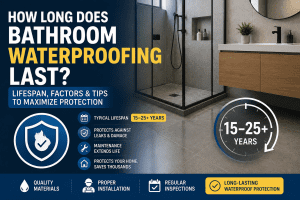
Properly installed systems generally last 10 to 25 years or more.
4. Can I waterproof over existing tiles?
In some cases, yes. Stable tile surfaces can sometimes be treated with specialized overlay systems.
5. Is ventilation as important as waterproofing?
Absolutely. Waterproofing stops leaks, while ventilation controls humidity and reduces mold growth.
Conclusion
Small bathrooms may be compact, but they demand meticulous waterproofing because every inch is exposed to moisture. Waterproofing the entire floor, sealing all corners and penetrations, maintaining proper slope, and ensuring adequate ventilation are the keys to long-term protection.
In my professional experience, the bathrooms that remain leak-free for decades are not necessarily the most expensive—they are the ones where every detail, especially the small ones, was handled correctly from the start.