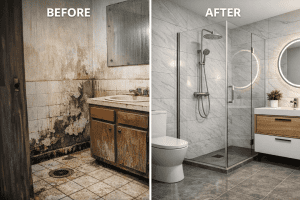
Waterproofing an apartment bathroom is one of the most important steps in protecting your property and avoiding disputes with neighbors or building management. In a standalone house, a small leak might only damage your own flooring. In an apartment, that same leak can travel through concrete slabs, stain the ceiling below, damage electrical fixtures, and result in costly repairs that may involve multiple units.
After more than 15 years working on bathroom renovations and leak investigations, I’ve found that apartment bathrooms demand a higher standard of waterproofing than most homeowners realize. Limited ventilation, shared plumbing systems, and strict building regulations mean that every detail—from floor drains to pipe penetrations—must be executed correctly.
For more technical resources and in-depth renovation advice, visit our Bathroom Waterproofingcategory.
Quick Answer: How Should You Waterproof an Apartment Bathroom?
The best approach is to waterproof the entire floor, extend the membrane up all walls, reinforce corners and plumbing penetrations, flood-test the system, and comply with your apartment building’s renovation requirements.</p >
- Waterproof the entire floor, not only the shower.
- Extend membrane 6–12 inches up walls.
- Seal all floor drains, toilet flanges, and pipe openings.
- Use proven materials such as liquid or sheet membranes.
- Conduct a 24-hour flood test before tiling.
- Follow HOA, strata, or condo association rules.
Why Apartment Bathrooms Require Extra Protection
Apartment bathrooms are structurally different from bathrooms in detached homes. Because multiple units share the same concrete slab and plumbing infrastructure, water leakage can spread vertically and horizontally.
Common apartment-specific risks include:
- Damage to ceilings in the unit below
- Mold growth inside shared walls
- Insurance claims and liability disputes
- HOA or building management penalties
- Expensive demolition if leaks are not caught early
In one condominium project I inspected, a failed shower corner in a 55-square-foot bathroom caused over $9,000 in repairs to the apartment below. The original installer skipped reinforcing tape in the wall-to-floor transition—a small oversight with major consequences.
Comparison Table: Best Waterproofing Systems for Apartment Bathrooms
| System | Typical Cost | Installation Difficulty | Maintenance | Advantages | Disadvantages |
|---|---|---|---|---|---|
| Liquid Waterproof Membrane | $$ | Moderate | Low | Seamless and ideal for complex layouts | Requires accurate thickness and curing |
| Sheet Membrane | $$$ | Advanced | Very Low | Consistent thickness and highly reliable | Higher material and labor cost |
| Cementitious Waterproofing | $ | Moderate | Low | Affordable and easy to source | Less flexible under structural movement |
| Polyurethane Waterproofing | $$$$ | Moderate | Very Low | Excellent crack-bridging ability | Premium cost |
1. Understand Your Building’s Rules Before Renovating
Many apartments and condominiums require approval before any bathroom renovation begins. Building management may specify approved materials, licensed contractors, inspection procedures, and acoustic underlayment requirements.
Before purchasing materials, confirm:
- Whether permits are required
- If licensed waterproofing contractors are mandatory
- Required flood testing documentation
- Insurance obligations
- Noise and work-hour restrictions
2. Waterproof the Entire Bathroom Floor
In apartment bathrooms, the whole floor should be treated as a wet area. Water can escape from shower doors, overflowing sinks, washing machines, or leaking toilets.
This strategy is discussed in detail in How to Waterproof a Bathroom Floor Properly.
3. Extend Waterproofing Up the Walls
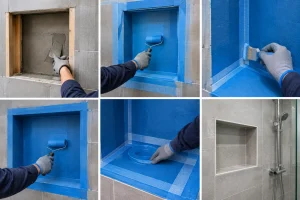
Professional installations typically extend waterproof membranes 6 to 12 inches up all perimeter walls, and full height in shower enclosures. This creates a watertight basin that prevents moisture from escaping through edges and corners.
4. Reinforce High-Risk Areas
The most common apartment leaks occur in transition zones and plumbing penetrations.
- Wall-to-floor corners
- Inside shower corners
- Toilet flanges
- Vanity supply lines
- Floor drains
- Door thresholds
These areas should always receive reinforcing tape or preformed corner accessories.
5. Use Proven Waterproofing Materials
For most apartment renovations, liquid-applied membranes offer the best balance of cost, flexibility, and ease of installation. Premium remodels often use sheet membranes for superior consistency.
If you are comparing products, our Bathroom Waterproofing Membrane Explained article provides a detailed technical overview.
6. Conduct a Flood Test Before Tiling
A flood test is one of the most important quality-control steps. The floor drain is temporarily plugged and the waterproofed area is filled with water for 24 hours.
If the water level remains stable and no moisture appears below, the system is ready for tile installation.
7. Ensure Proper Floor Slope
The substrate should slope approximately 1/4 inch per foot toward the floor drain. Without adequate slope, standing water can lead to grout deterioration, mold growth, and long-term moisture intrusion.
8. Improve Ventilation to Reduce Mold Risk
Waterproofing protects the structure, but ventilation controls humidity. A high-quality exhaust fan significantly reduces condensation and helps prevent mold.
If mold has already become an issue, read Why Bathroom Mold Keeps Coming Back.
Real-World Experience: Condo Leak That Impacted Two Units
I was once called to inspect a newly renovated condo bathroom where the owner noticed loose grout after only six months. Moisture testing revealed that the waterproof membrane had not been sealed around the toilet flange.
Water slowly seeped into the slab and stained the neighbor’s ceiling below. Total remediation costs exceeded $12,000, while the missing flange seal would have cost less than $20 in materials.
Typical Costs for Apartment Bathroom Waterproofing
| Bathroom Size | DIY Materials | Professional Installation | Expected Lifespan |
|---|---|---|---|
| 40–60 sq ft | $200–$500 | $1,000–$3,000 | 10–25+ years |
| 60–90 sq ft | $300–$700 | $1,500–$4,500 | 10–30 years |
Most Common Apartment Waterproofing Mistakes
- Ignoring building regulations
- Waterproofing only the shower area
- Skipping reinforcement tape
- Failing to flood-test the membrane
- Not sealing around toilet flanges
- Using waterproof paint as a substitute
Additional technical examples are covered in Most Common Bathroom Waterproofing Mistakes.
Which Waterproofing System Is Best for Your Apartment?
| Your Situation | Recommended Solution |
|---|---|
| DIY apartment renovation | Liquid waterproof membrane |
| Luxury remodel | Sheet membrane system |
| Concrete substrate | Cementitious waterproofing |
| High-movement building structure | Polyurethane waterproofing |
| Strict HOA documentation requirements | Certified sheet or liquid membrane systems |
Industry Reference
About Our Expertise
Frequently Asked Questions
1. Do apartment bathrooms need full-floor waterproofing?
Yes. Because leaks can affect neighboring units, waterproofing the entire floor is strongly recommended.
2. Is waterproofing required by building codes?
In many jurisdictions and apartment buildings, waterproofing and flood testing are mandatory for bathroom renovations.
3. How long does apartment bathroom waterproofing last?
When professionally installed, most systems last 10 to 25 years or more.
4. Can I renovate without building approval?
Often no. Many HOAs and strata associations require permits, inspections, and licensed contractors.
5. What is the best waterproofing material for apartments?
Liquid membranes are cost-effective and versatile, while sheet membranes provide premium long-term reliability.
Conclusion
Apartment bathroom waterproofing is more than a renovation detail—it is a critical safeguard against structural damage, mold, and liability. Waterproofing the entire floor, reinforcing every transition, conducting flood tests, and following building regulations are the best ways to ensure long-term protection.
In my professional experience, the most successful apartment renovations are the ones where hidden waterproofing receives as much attention as visible finishes. When done correctly, a properly waterproofed bathroom can remain leak-free for decades.