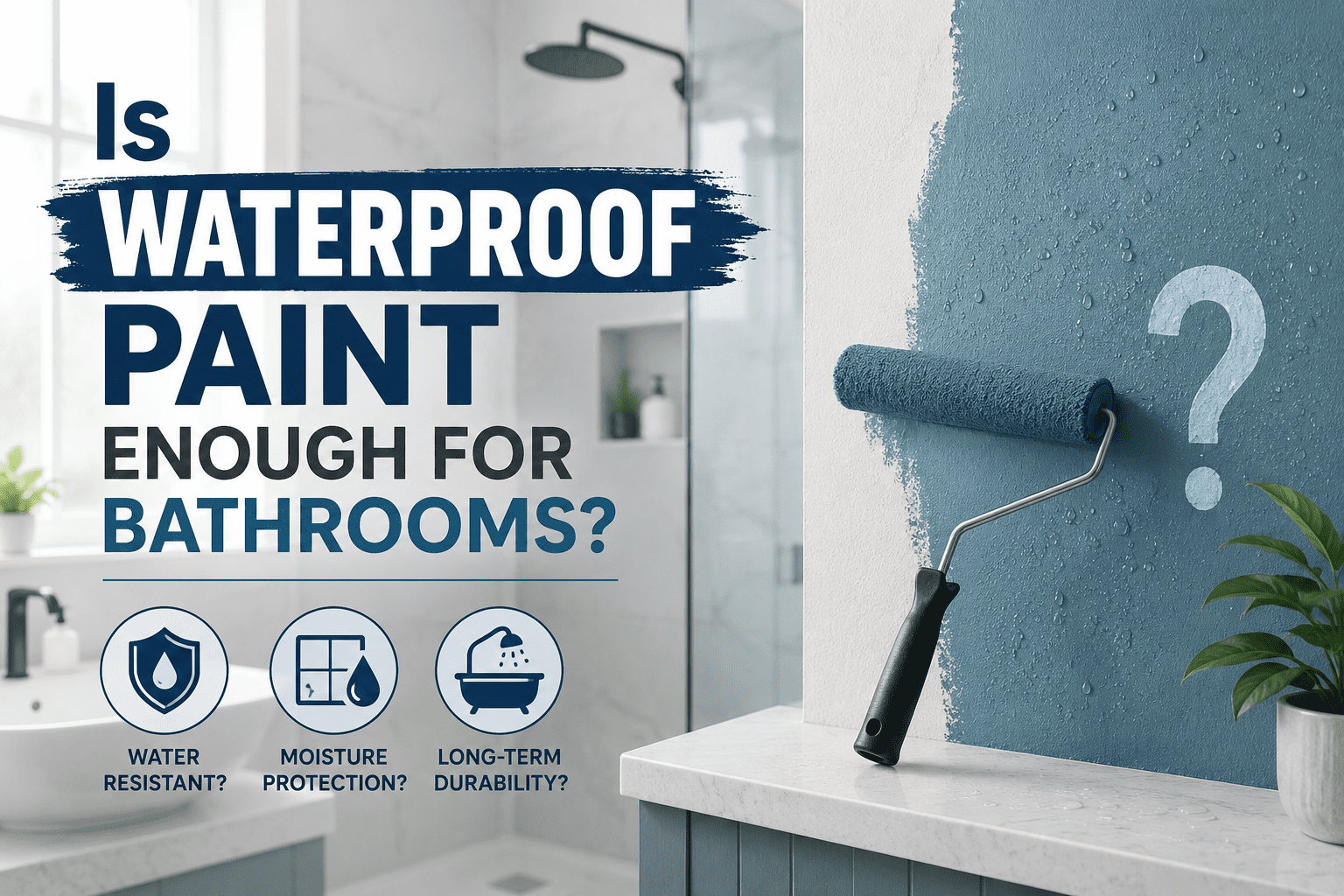
Many homeowners assume that applying waterproof paint is all they need to protect a bathroom from moisture damage. After all, if the label says “waterproof,” it should stop leaks and prevent mold—right?
In reality, waterproof paint and true bathroom waterproofing serve two very different purposes. Paint helps protect visible wall surfaces from humidity and minor splashes, but it does not replace a proper waterproof membrane installed beneath tiles and flooring.
After more than 15 years working on bathroom renovations and leak repairs, I have seen countless cases where homeowners relied on waterproof paint alone, only to discover hidden water damage behind tiles, under shower bases, and in adjacent rooms.
For a complete overview of how bathroom waterproofing works, visit our Bathroom Waterproofing category.
Quick Answer: Is Waterproof Paint Enough?
No, waterproof paint is not enough for areas exposed to direct water, such as shower walls, bathroom floors, wet-room zones, and around tubs.
Waterproof paint is useful for:
- Ceilings
- Dry walls outside shower areas
- Bathrooms with high humidity
- Mold prevention on painted surfaces
However, it cannot replace:
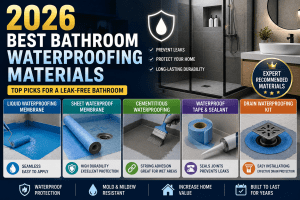
- Liquid waterproof membranes
- Sheet membranes
- Polyurethane waterproofing systems
- Drain and joint waterproof detailing
What Is Waterproof Paint?
Waterproof paint is a specially formulated coating that resists moisture penetration and helps reduce mold growth. Most products contain acrylic or epoxy resins that create a moisture-resistant surface film.
Its main purpose is to protect painted surfaces from condensation and occasional splashes—not continuous water exposure.
What Waterproof Paint Can and Cannot Do
| Capability | Waterproof Paint |
|---|---|
| Resists humidity | Yes |
| Reduces mold growth | Yes |
| Protects painted drywall | Yes |
| Stops tile leaks | No |
| Waterproofs shower floors | No |
| Seals drain connections | No |
| Replaces waterproof membrane | No |
What Is a Real Waterproof Membrane?
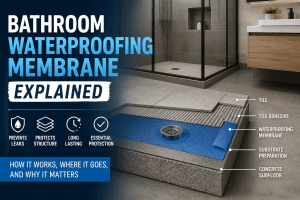
A waterproof membrane is a dedicated barrier installed beneath tile and flooring to prevent water from reaching the building structure.
Common membrane types include:
- Liquid-applied membranes
- Sheet membranes
- Polyurethane coatings
- Cementitious waterproofing
These systems are specifically designed to withstand continuous water exposure and structural movement.
For a technical explanation, read Bathroom Waterproofing Membrane Explained.
Waterproof Paint vs Waterproof Membrane
| Feature | Waterproof Paint | Waterproof Membrane |
|---|---|---|
| Typical Cost | Low | Medium to High |
| Installation Difficulty | Easy | Moderate to Advanced |
| Maintenance | Medium | Low |
| Main Advantages | Affordable and easy to apply | True structural water protection |
| Main Disadvantages | Cannot stop leaks | Higher cost and more labor |
| Best Use | Ceilings and dry walls | Showers, floors, and wet areas |
| Expected Lifespan | 3–7 years | 10–30+ years |
Real-World Experience: When Waterproof Paint Failed
I once inspected a bathroom where the owner used premium waterproof paint behind newly installed shower tiles. Within 18 months, moisture had penetrated the grout, soaked the drywall, and caused mold to spread into the adjoining bedroom.
The paint itself remained intact, but because there was no actual membrane beneath the tile, the structure had no real waterproof protection.
Where Waterproof Paint Works Well
- Bathroom ceilings with poor ventilation
- Powder rooms with no shower
- Walls outside wet zones
- Touch-up projects to reduce mildew
Where Waterproof Paint Is Not Enough
- Shower floors
- Shower walls
- Wet rooms
- Bathroom floors
- Tub surrounds
- Drain penetrations
If you suspect water damage, our guide on Why Is My Bathroom Floor Leaking?explains the most common causes.
Performance Data and Lifespan
Based on manufacturer specifications and field experience:
- Waterproof paint usually performs for 3–7 years before repainting is needed.
- Cementitious waterproofing typically lasts 10–15 years.
- Polyurethane membranes can last 20–30+ years.
For a deeper durability comparison, see How Long Does Bathroom Waterproofing Last?.
Best Waterproofing Strategy for Bathrooms
The most reliable approach combines both systems:
- Waterproof membrane beneath tile and flooring
- Waterproof paint on ceilings and dry walls
- Quality ventilation to reduce humidity
- Regular maintenance of grout and silicone joints
Common Mistakes Homeowners Make
- Using waterproof paint under shower tiles
- Skipping waterproof membranes to save money
- Ignoring drain and corner sealing
- Assuming mold-resistant paint prevents leaks
- Confusing “water-resistant” with “waterproof” products
External Industry Guidance
About Our Renovation Experience
Frequently Asked Questions
1. Can I use waterproof paint instead of tile waterproofing?
No. Waterproof paint protects surface finishes but does not stop structural water penetration.
2. Is waterproof paint useful in bathrooms?
Yes. It is excellent for ceilings and dry walls where condensation and mildew are common.
3. How long does waterproof paint last?
Most products perform well for 3–7 years depending on humidity and ventilation.
4. What is the best waterproofing for shower walls?
Liquid membranes, sheet membranes, and polyurethane waterproofing are the most reliable options.
5. Can waterproof paint prevent mold?
It can reduce mold growth on painted surfaces, but it cannot stop hidden leaks that cause mold behind walls.
Conclusion
Waterproof paint is a useful finishing product, but it is not a substitute for true bathroom waterproofing. It performs well on ceilings and non-wet walls by resisting humidity and helping control mildew. However, it cannot protect shower floors, tile walls, drains, or structural surfaces from water intrusion.
In my professional experience, the best approach is to use a high-quality waterproof membrane beneath tiles and waterproof paint only as a supplemental protective coating. When used correctly, both products work together to keep your bathroom dry, durable, and mold-free for many years.