Bathroom waterproofing is the foundation of a durable and leak-free bathroom. While homeowners often focus on tiles, fixtures, and vanities, the real protection lies beneath the surface in the waterproofing layer. But a common question arises: how long does bathroom waterproofing actually last?
Having managed hundreds of bathroom renovations over the past 15 years, I’ve seen a wide range of waterproofing lifespans — from membranes that failed within 2–3 years to professionally installed systems that lasted over two decades. The difference usually comes down to the type of membrane used, the quality of installation, bathroom usage patterns, and ongoing maintenance.
If you want a comprehensive overview of bathroom waterproofing practices, our Bathroom Waterproofing categoryhas detailed guides.
Quick Answer: Lifespan of Bathroom Waterproofing
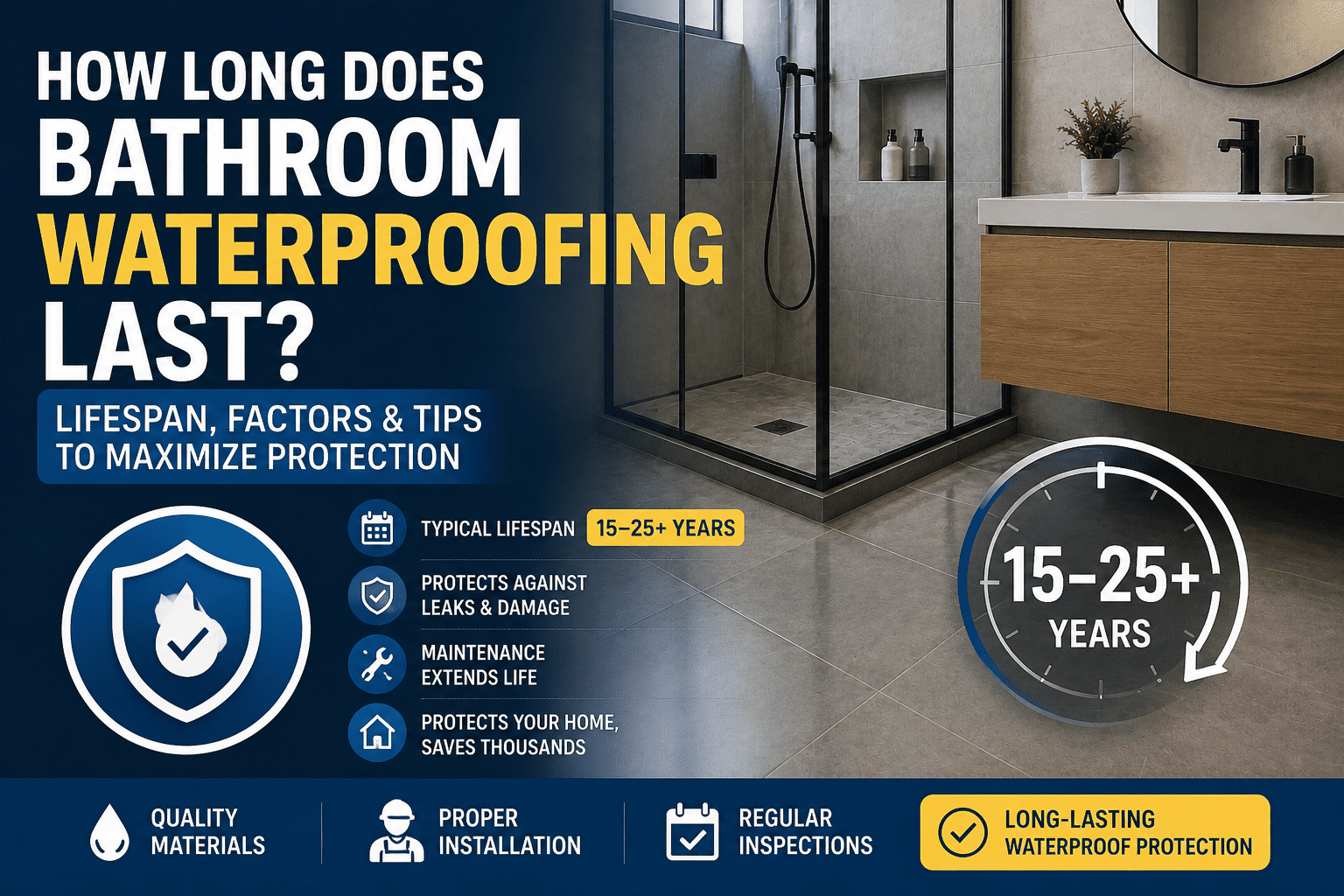
Depending on materials and installation, typical bathroom waterproofing can last:
- Cementitious membranes: 10–15 years
- Liquid membranes: 12–20 years
- Sheet membranes: 20–25 years
- Polyurethane membranes: 20–30+ years
Maintenance, water quality, and usage frequency can reduce or extend these lifespans.
Factors Affecting Bathroom Waterproofing Longevity
1. Material Quality
High-quality membranes resist cracking, mold, and chemical damage. Cheap materials often deteriorate faster.
2. Installation Accuracy
Even the best membrane fails if applied incorrectly. Membrane thickness, curing time, and surface preparation are critical.
3. Bathroom Usage
Homes with high shower frequency, steam, or standing water exposure experience faster wear on membranes.
4. Maintenance and Cleaning
Using harsh chemicals or neglecting grout and silicone maintenance can weaken the waterproof barrier over time.
Types of Waterproofing Membranes and Lifespan Comparison
| Membrane Type | Average Lifespan | Installation Difficulty | Maintenance | Advantages | Disadvantages |
|---|---|---|---|---|---|
| Cementitious | 10–15 years | Easy | Medium | Affordable, DIY-friendly | Less flexible, may crack |
| Liquid Membrane | 12–20 years | Moderate | Low | Seamless, adaptable to irregular surfaces | Thickness critical, requires curing |
| Sheet Membrane | 20–25 years | Moderate-Difficult | Low | High durability, consistent thickness | Professional install recommended, higher cost |
| Polyurethane | 20–30+ years | Moderate | Low | Flexible, crack-resistant, long-lasting | Expensive, professional install recommended |
Real-World Bathroom Waterproofing Examples
Small Apartment Bathroom
An apartment renovation used a liquid membrane properly applied with two coats. After 15 years, inspections confirmed excellent protection with no leaks or damage.
Family Home with Cementitious Membrane
The home had a cement-based membrane applied 12 years ago. High water usage led to minor grout cracks, but overall waterproofing remained functional.
Luxury Bathroom with Sheet Membrane
Sheet membrane in a large bathroom provided long-term protection. Periodic grout maintenance ensured the system lasted over 22 years without leaks.
Signs Your Bathroom Waterproofing May Be Failing
- Loose or cracked tiles
- Persistent mold or mildew
- Musty odors
- Water stains on ceilings below
- Soft subfloor spots
- Leaking around drains or shower base
Early detection is critical to prevent extensive repairs.
Frequently Asked Questions
1. Can waterproofing fail before 10 years?
Yes. Poor installation, cheap materials, high moisture exposure, or improper maintenance can shorten lifespan significantly.
2. How can I extend the life of my bathroom waterproofing?
Regular inspection, reapplying sealants, maintaining grout and silicone, and avoiding standing water help extend lifespan.
3. Are all membranes suitable for DIY installation?
Cementitious and some liquid membranes can be DIY-installed. Sheet and polyurethane membranes typically require professional installation.
4. Do waterproofing membranes require maintenance?
Indirectly yes — maintaining grout, silicone, and drainage systems helps preserve the membrane underneath.
5. How do I know when it’s time to replace waterproofing?
Signs include recurring leaks, persistent mold, soft flooring, and visible cracks in tiles or grout over high-moisture areas.
Recommended Related Reading
- 2026 Bathroom Waterproofing Guide
- How to Waterproof a Bathroom Floor Properly
- Bathroom Waterproofing Membrane Explained
- Bathroom Leak Repair Without Removing Tiles
- Most Common Bathroom Waterproofing Mistakes
Core reference: Bathroom Waterproofing Core Guide
External reference: EPA Mold and Moisture Guide
Conclusion
The lifespan of bathroom waterproofing depends on membrane type, installation quality, usage, and maintenance. While cementitious membranes may last 10–15 years, premium polyurethane or sheet membranes can exceed 25–30 years if installed correctly and maintained properly. Homeowners who understand these factors can make informed decisions, reduce the risk of leaks, and protect their bathroom investment for decades.