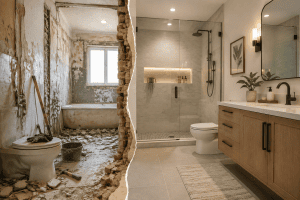
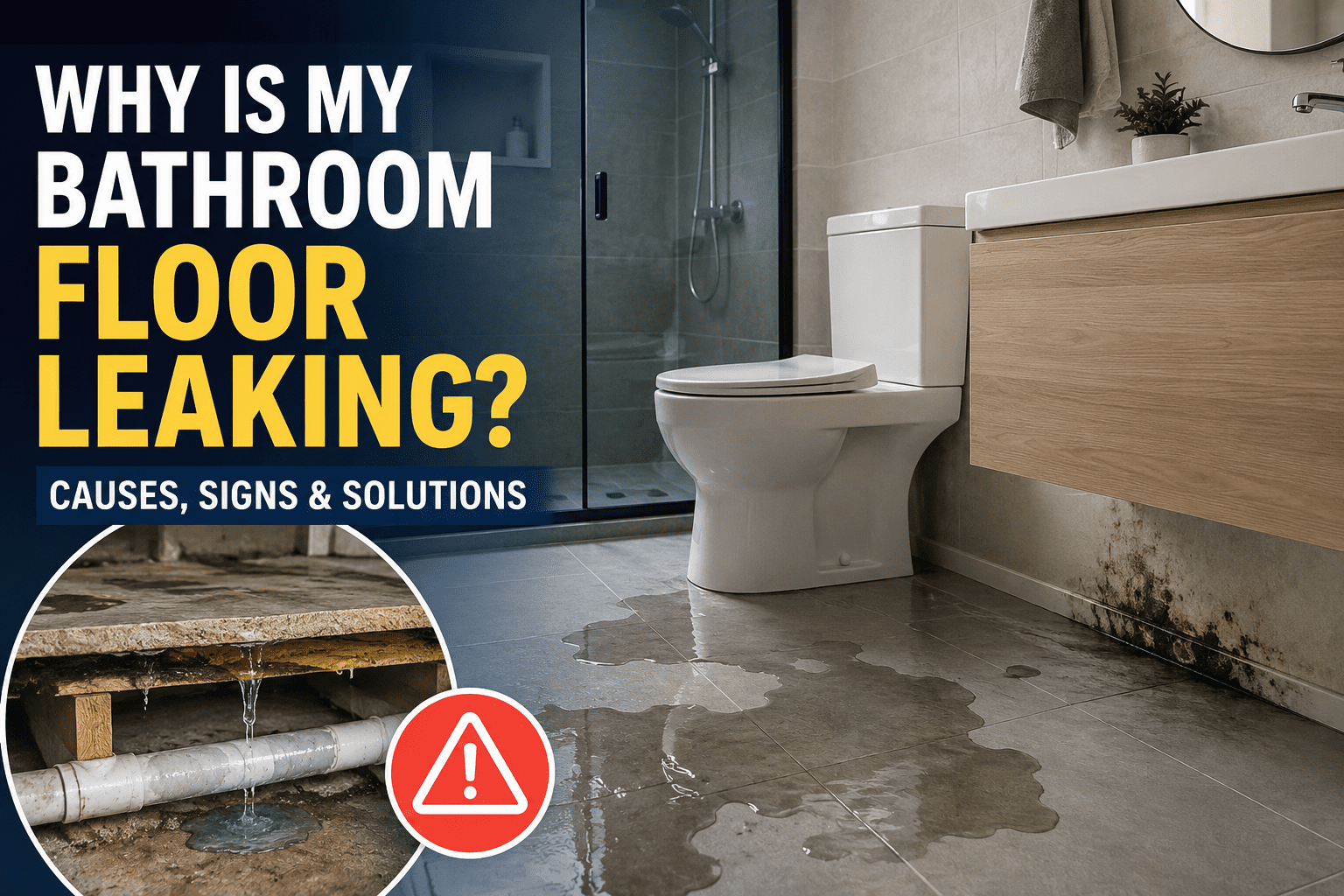
A leaking bathroom floor is one of those home problems that seems minor at first but can quickly turn into an expensive repair if ignored. You may notice water seeping into adjacent rooms, damp baseboards, peeling paint on the ceiling below, or a persistent musty smell that never quite goes away.
In my experience working on bathroom renovation and waterproofing projects, floor leaks are among the most common issues homeowners face. The tricky part is that the visible water is often only a symptom. The actual source may be hidden beneath tiles, around the toilet flange, at the shower drain, or within a failed waterproof membrane.
If you are planning a larger renovation, my Bathroom Waterproofing category covers the most important waterproofing topics in one place.
This guide explains the most common causes of bathroom floor leaks, how to diagnose them accurately, and which repair solutions make the most sense depending on your bathroom’s age and construction.
Quick Answer: Why Is My Bathroom Floor Leaking?
The most common causes of a bathroom floor leak include:
- Failed toilet wax ring or toilet flange
- Cracked grout or deteriorated silicone joints
- Leaking shower drain
- Broken water supply lines
- Failed waterproof membrane
- Condensation around plumbing fixtures
- Poor floor slope causing standing water
In many cases, the leak starts small and worsens gradually over months or even years.
How Serious Is a Bathroom Floor Leak?
Even a slow leak can cause significant damage over time. Water can saturate:
- Plywood subfloors
- Concrete underlayment
- Wall framing
- Drywall ceilings below
- Cabinets and trim
According to the U.S. Environmental Protection Agency (EPA), moisture that remains trapped for 24–48 hours can create conditions favorable for mold growth.
Cause 1: Toilet Leaking at the Base
The toilet is the first place I inspect when homeowners report water around the bathroom floor.
A worn wax ring or damaged flange allows water to escape during each flush. Over time, the leak may soften the subfloor and loosen the toilet.
Related guide: Why Is My Toilet Leaking at the Base?
Typical Symptoms
- Water appears after flushing
- Toilet rocks slightly when you sit down
- Musty odor near the toilet
- Soft flooring around the base
Cause 2: Shower Waterproofing Failure
In tiled bathrooms, the waterproof membrane beneath the tile is the true barrier against leaks. If this membrane cracks or was installed incorrectly, water can pass through grout lines and damage the floor underneath.
For a detailed explanation, see Bathroom Waterproofing Membrane Explained
Common Signs
- Loose tiles
- Persistent mildew smell
- Water stains on the ceiling below
- Dark grout that never dries completely
Cause 3: Cracked Grout and Failed Silicone
Tiles themselves are durable, but grout and silicone joints are maintenance items. Over time they crack, shrink, or separate from corners and fixtures.
This is one of the most affordable leak sources to repair, and in many cases it can be fixed without removing any tiles.
Related guide: Bathroom Leak Repair Without Removing Tiles
Cause 4: Shower Drain or Floor Drain Leaks
Drain connections are one of the highest-risk points in any bathroom. If the drain flange is not properly integrated with the waterproof membrane, water can bypass the entire system.
In apartment buildings, this is a common cause of leaks affecting downstairs neighbors.
Cause 5: Broken Supply Lines
Flexible water supply hoses connected to toilets and sinks can crack over time. Even a tiny drip may produce enough moisture to mimic a floor leak.
What to Check
- Toilet shut-off valve
- Sink supply hoses
- Bidet or smart toilet connections
- Loose compression fittings
Cause 6: Poor Floor Slope
If your bathroom floor does not slope properly toward the drain, water may pool in corners or near walls. This increases long-term exposure and accelerates waterproofing failure.
Cause 7: Condensation Mistaken for a Leak
Sometimes the “leak” is actually condensation forming on cold water pipes or toilet tanks, especially in humid climates. While less serious, chronic condensation can still damage flooring and encourage mold growth.
Bathroom Floor Leak Repair Comparison Table
| Leak Source | Typical Repair Cost | Repair Difficulty | Maintenance Needs | Advantages of Early Repair | Risks if Ignored |
|---|---|---|---|---|---|
| Toilet Wax Ring | $10–$50 DIY | Moderate | Low | Stops water immediately | Subfloor rot |
| Cracked Grout/Silicone | $20–$150 | Easy to Moderate | Medium | No tile removal required | Hidden moisture damage |
| Drain Leak | $100–$500 | Moderate to Professional | Low | Protects waterproof system | Ceiling stains below |
| Supply Line Leak | $10–$80 | Easy | Low | Quick fix | Cabinet and floor damage |
| Membrane Failure | $1,500–$8,000+ | Professional | Low | Long-term protection | Major structural repairs |
Real-World Leak Scenarios
Small Apartment Bathroom
A homeowner noticed bubbling paint in the downstairs unit. The culprit was a failed drain flange seal under the shower floor. Because the issue was localized, professional injection waterproofing solved the leak without removing all the tiles.
Family Bathroom with Loose Toilet
Water appeared only after flushing. Replacing the wax ring and reinforcing the toilet flange stopped the leak for less than the cost of a service call.
Older Bathroom Renovation
In a 20-year-old bathroom, cracked grout allowed moisture to bypass the tile layer. Once the waterproof membrane had deteriorated, a full shower rebuild became necessary.
How to Diagnose a Bathroom Floor Leak
- Dry the floor completely
- Flush the toilet and observe the base
- Run the shower for 10–15 minutes
- Inspect silicone joints and grout lines
- Check supply valves and hoses
- Use a moisture meter if available
When You Can Repair the Leak Without Demolition
Non-destructive repairs are often effective when the leak is caused by:
- Failed silicone
- Cracked grout
- Toilet wax ring issues
- Minor drain seal gaps
If the waterproof membrane itself has failed across a large area, tile removal and reconstruction are usually unavoidable.
Best Solution Based on Your Situation
- Water appears after flushing: Inspect the toilet wax ring.
- Leak only during showers: Focus on grout, silicone, and drain sealing.
- Persistent musty smell: Investigate hidden moisture and membrane failure.
- Downstairs ceiling stains: Arrange professional leak detection immediately.
- Bathroom older than 15 years: Waterproofing deterioration becomes more likely.
Frequently Asked Questions
1. Why does my bathroom floor leak only after I shower?
This usually points to cracked grout, failed silicone, or a leaking shower drain rather than a plumbing supply issue.
2. Can a toilet leak only when flushed?
Yes. A damaged wax ring often leaks only during flushing, when wastewater passes through the toilet base.
3. Is water on the floor always a plumbing leak?
No. Condensation and poor floor drainage can mimic true leaks.
4. Can bathroom leaks be repaired without removing tiles?
Yes. Surface leaks caused by grout, silicone, or drain seals can often be repaired non-destructively.
5. How much does it cost to fix a bathroom floor leak?
Simple repairs may cost under $50 DIY, while full waterproofing reconstruction can exceed several thousand dollars.
Useful Resources
For homeowners planning long-term protection, our About Home Experts Blog page explains the renovation experience and testing approach behind these guides.
Conclusion
If your bathroom floor is leaking, the most likely causes are a failed toilet seal, cracked grout, leaking drain, or deteriorated waterproof membrane. The sooner you identify the true source, the easier and less expensive the repair usually is.
In my experience, small leaks are rarely “small” if left unattended. What starts as a few drops on the floor can eventually lead to mold, structural damage, and major renovation costs. By diagnosing the leak systematically and choosing the right repair strategy, you can protect both your bathroom and the rooms around it for many years to come.