A bathroom does not have to be completely remodeled to feel noticeably better. Sometimes, the biggest improvement comes from upgrading the toilet itself.
In 2026, homeowners have more options than simply replacing an old toilet with a newer one. A comfort-height toilet can make sitting down and standing up easier. A bidet seat can improve personal hygiene. A heated seat can make cold winter mornings much more comfortable, while a soft-close seat eliminates the familiar bang in the middle of the night.
But not every toilet upgrade makes sense for every bathroom. Some improvements are inexpensive and take minutes to install, while others require electrical work, plumbing changes, or a completely new toilet.
After looking at toilet upgrades from a practical homeowner’s perspective, this guide breaks down which improvements are actually worth considering in 2026, how much installation effort they typically require, and which upgrade makes the most sense for different bathroom situations.
Quick Answer: Which Toilet Upgrades Are Worth It in 2026?
For most homeowners, the best toilet upgrades are a comfort-height toilet, bidet seat, heated seat, soft-close seat, quieter flushing system, and WaterSense-labeled toilet.
If you want the biggest improvement without replacing the entire toilet, a quality bidet seat and soft-close seat are two of the easiest upgrades to consider. If the existing toilet is already old, uncomfortable, inefficient, or frequently needs repairs, replacing the entire toilet may provide better long-term value.
| Toilet Upgrade | Typical Cost Level | Installation | Comfort Improvement | Best For |
|---|---|---|---|---|
| Soft-close seat | Low | Easy | Moderate | Most bathrooms |
| Bidet seat | Low to high | Easy to moderate | High | Better hygiene |
| Heated seat | Low to moderate | Easy to moderate | High | Cold bathrooms |
| Comfort-height toilet | Moderate | Moderate | High | Adults, taller users |
| WaterSense toilet | Moderate | Moderate | Moderate to high | Older inefficient toilets |
| Quiet flush toilet | Moderate | Moderate | Moderate | Bedrooms and shared bathrooms |
| Smart toilet | High | Moderate to high | Very high | Luxury bathroom upgrades |
1. Upgrade to a Comfort-Height Toilet
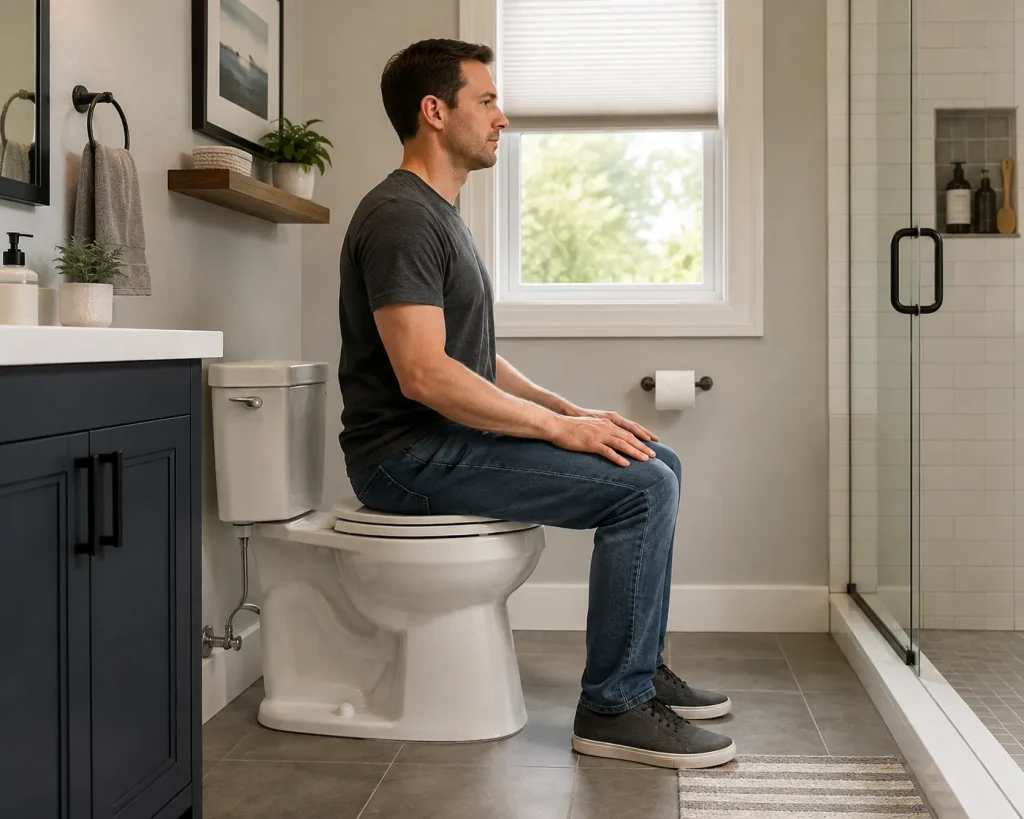
If your current toilet feels unusually low, a comfort-height model may be one of the most noticeable improvements you can make.
Traditional toilets can feel quite low compared with a standard dining chair. Comfort-height toilets are generally taller, making the sitting and standing motion easier for many adults.
This is particularly useful for:
- Taller adults
- Older homeowners
- People who find low toilets uncomfortable
- Bathrooms used frequently throughout the day
- Guest bathrooms where different users may have different needs
However, taller is not automatically better for everyone. A very tall toilet may feel awkward for shorter users, and children’s feet may not reach the floor comfortably.
My practical recommendation: if you are replacing the entire toilet, sit on a similar-height model before purchasing whenever possible. Toilet height is one of those measurements that looks insignificant on paper but becomes obvious after several days of daily use.
2. Add a Bidet Seat
A bidet seat is one of the most significant comfort upgrades you can make without replacing the entire toilet.
Depending on the model, a bidet seat may provide adjustable water temperature, water pressure, nozzle position, heated seating, oscillating wash, air drying, and other features.
Basic mechanical bidet seats can be relatively simple, while electric models usually provide substantially more features.
| Bidet Seat Type | Installation | Power Required | Features | Best For |
|---|---|---|---|---|
| Basic non-electric | Easy | No | Water washing | Simple upgrade |
| Electric bidet seat | Moderate | Yes | Heated seat, adjustable wash, dryer | Daily comfort |
| Premium bidet seat | Moderate | Yes | Multiple comfort and hygiene functions | Luxury bathrooms |
Before installing an electric bidet seat, check whether a properly located GFCI-protected electrical outlet is available and whether the bathroom’s electrical installation is suitable for the product.
Real-world consideration: an electric bidet seat can turn a basic toilet into a much more comfortable fixture without replacing the bowl. But if the bathroom does not have a suitable electrical outlet, the installation can become an electrical project rather than a simple toilet upgrade.
3. Install a Heated Toilet Seat
If you live in a colder climate or have a bathroom that stays chilly overnight, a heated toilet seat can provide a surprisingly noticeable comfort improvement.
The main advantage is simple: the seat is no longer cold when you sit down.
Many heated seats offer adjustable temperature settings, allowing you to choose a low, medium, or higher heat level.
This upgrade is particularly useful for:
- Cold winter climates
- Bathrooms with poor insulation
- Bathrooms located over garages
- Early-morning bathroom use
- People who dislike cold ceramic or plastic surfaces
For many homeowners, a heated seat is more practical when combined with a bidet seat because many electric bidet seats already include seat heating.
4. Replace the Toilet Seat With a Soft-Close Model
This is probably the simplest upgrade on this list.
A soft-close toilet seat uses a controlled hinge mechanism that prevents the seat and lid from suddenly slamming onto the bowl.
It may sound like a small improvement, but the difference becomes obvious in a shared bathroom.
Imagine someone using the bathroom at 6 a.m. while another family member is sleeping nearby. A soft-close seat eliminates one of the most common sources of unnecessary bathroom noise.
Cost-to-benefit ratio: excellent.
Installation difficulty: very low.
Best recommendation: if you are not ready to replace the toilet itself, start with the seat. It is one of the few upgrades that can make a bathroom feel better immediately without changing the plumbing.
5. Choose a Quieter Flushing Toilet
A powerful flush does not have to sound like a plumbing emergency.
Older toilets can produce a surprisingly loud combination of tank filling, valve noise, and flushing turbulence. This can be especially noticeable when the bathroom is next to a bedroom.
When replacing an older toilet, pay attention to the entire flushing experience rather than looking only at the advertised flush strength.
A quieter toilet can be particularly valuable in:
- Primary bedrooms with an attached bathroom
- Guest bedrooms
- Small apartments
- Bathrooms located near living areas
- Homes with thin interior walls
Important: do not assume that a quiet toilet is a weak toilet. Modern toilet design has improved substantially, and EPA WaterSense requirements combine water-efficiency criteria with independent performance certification. WaterSense-labeled tank toilets have a maximum effective flush volume of 1.28 gallons per flush and must meet a solid-waste removal performance requirement.
6. Upgrade to a WaterSense-Labeled Toilet
If your existing toilet is an older high-water-use model, replacing it may be more valuable than adding accessories.
According to the U.S. Environmental Protection Agency, toilets account for nearly 30% of average indoor household water consumption, and older toilets can use as much as 6 gallons per flush. Modern WaterSense-labeled toilets use 1.28 gallons per flush or less while meeting EPA performance requirements.
That makes water efficiency a practical upgrade rather than simply an environmental feature.
EPA also states that WaterSense-labeled toilets are independently certified for both efficiency and performance.
If you are replacing an old toilet anyway, I would look for the WaterSense label rather than choosing a toilet based only on appearance.
7. Consider a Dual-Flush Toilet
A dual-flush toilet gives users two flushing options, typically allowing a reduced flush for liquid waste and a stronger flush for solid waste.
The idea is simple: do not use more water than necessary for every flush.
However, I would not replace a perfectly good toilet solely because it has a single flush.
A dual-flush upgrade makes more sense when:
- You are already replacing the toilet.
- Water conservation is a major priority.
- The bathroom receives heavy daily use.
- You want users to have greater control over flush volume.
EPA’s current WaterSense program recognizes both single- and dual-flush tank toilets under its efficiency framework.
8. Upgrade to a Touchless Flush
A touchless flush system allows the toilet to be flushed without physically touching the handle.
This can be useful in a busy household because the flush control is one less frequently touched surface.
It is particularly attractive for:
- Family bathrooms
- Guest bathrooms
- Homes with children
- Bathrooms designed around hands-free operation
However, touchless technology is not automatically better simply because it is more advanced.
A good touchless system should respond consistently without false triggers. If the sensor is too sensitive, users may find the automatic flushing more annoying than convenient.
9. Upgrade to a Smart Toilet
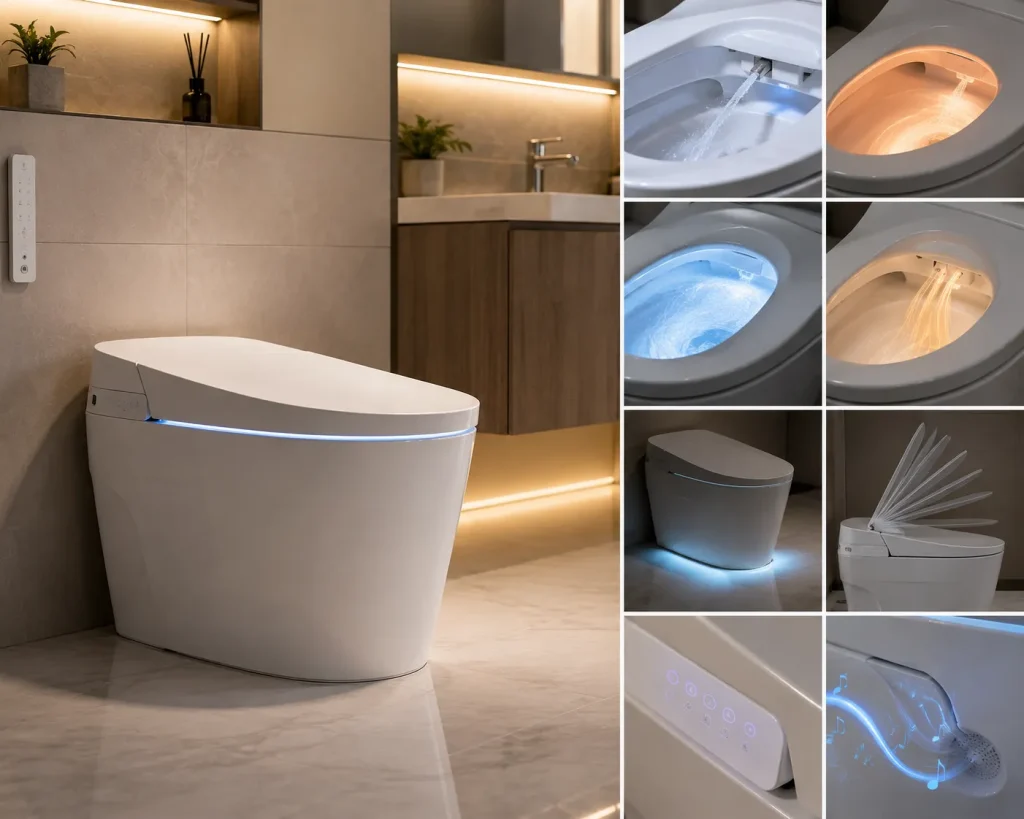
A smart toilet is the biggest step on this list because it combines several individual upgrades into one fixture.
Depending on the model, a smart toilet may include:
- Heated seat
- Bidet washing
- Warm-air drying
- Automatic flushing
- Touchless controls
- Night lighting
- Automatic lid opening and closing
- Self-cleaning or bowl-cleaning functions
The biggest advantage is convenience. Instead of adding several accessories to an existing toilet, the features are integrated into one system.
The downside is complexity.
Smart toilets may require electrical power, more installation planning, and potentially more expensive repairs if electronic components fail outside the warranty period.
My recommendation: choose a smart toilet because you genuinely want the integrated features—not simply because it is the newest technology.
10. Add a Night Light
A built-in or attachable toilet night light is a small upgrade that can make nighttime bathroom trips easier.
Instead of turning on a bright ceiling light at 2 a.m., a soft low-level light can provide enough illumination to locate the toilet without fully waking the household.
This is especially useful in:
- Primary bathrooms
- Guest bathrooms
- Hallway bathrooms
- Bathrooms used by children
- Homes where the bathroom is close to a bedroom
For the cost and installation effort, this is one of the easiest comfort upgrades to consider.
Which Toilet Upgrade Gives You the Biggest Improvement?
| What You Want to Improve | Best Upgrade | Why |
|---|---|---|
| Easier sitting and standing | Comfort-height toilet | Higher seating position |
| Better personal hygiene | Bidet seat | Integrated water washing |
| No cold seat | Heated seat | Immediate comfort improvement |
| Less bathroom noise | Soft-close seat + quieter toilet | Reduces seat and flushing noise |
| Lower water consumption | WaterSense toilet | Efficient flushing with certified performance |
| Hands-free operation | Touchless flush | Less physical contact |
| Maximum convenience | Smart toilet | Combines multiple features |
| Better nighttime use | Toilet night light | Low-level illumination |
Best Toilet Upgrades for Different Homeowners
If You Have a Small Bathroom
Do not automatically choose the largest or most feature-packed toilet.
Prioritize comfort height, the correct bowl shape, seat comfort, and appropriate rough-in dimensions. A compact elongated toilet may provide a good compromise between sitting comfort and limited floor space, while a round-front toilet can sometimes preserve more clearance in a very small bathroom.
If You Have an Older Bathroom
Start with the toilet itself.
If the toilet is inefficient, frequently clogs, has a worn flush valve, or has developed cracks or leaks, replacing it is usually more sensible than adding accessories to an aging fixture.
If You Have a Cold Bathroom
A heated seat is one of the most noticeable upgrades. If you also want improved hygiene, a heated electric bidet seat can combine both functions.
If Your Bathroom Is Next to a Bedroom
Prioritize a soft-close seat and quieter flushing. These two relatively simple changes can make nighttime bathroom use considerably less disruptive.
If You Want a Luxury Bathroom
A premium bidet seat or integrated smart toilet provides the most comprehensive comfort upgrade.
But plan the electrical supply before purchasing the fixture. Installing a high-end toilet first and discovering afterward that the bathroom lacks a suitable outlet is an avoidable problem.
Do You Need to Replace the Whole Toilet?
Not necessarily.
One of the most common mistakes homeowners make is assuming that every comfort improvement requires a new toilet.
For example, if the existing bowl is comfortable, stable, efficient, and in good condition, you may be able to upgrade the seat instead.
| Existing Toilet Condition | Recommended Strategy |
|---|---|
| Good toilet, uncomfortable seat | Replace the seat |
| Good toilet, want better hygiene | Add a bidet seat |
| Good toilet, cold seat | Add a heated seat or heated bidet seat |
| Old, inefficient toilet | Replace with a WaterSense model |
| Frequent clogs or poor flushing | Consider replacing the toilet |
| Cracked bowl or tank | Replace the toilet |
| Want multiple premium features | Consider a smart toilet |
What I Would Upgrade First in a Real Bathroom
If I were improving a normal family bathroom rather than designing a luxury showroom, I would not start by buying the most expensive toilet available.
I would first look at how the bathroom is actually used.
If the existing toilet is structurally sound, I would start with a comfortable seat and then consider a bidet seat. If cold mornings are a problem, heated seating becomes a priority.
If the toilet itself is old and uses significantly more water than modern models, I would replace the entire fixture with a WaterSense-labeled toilet rather than spending money upgrading an inefficient bowl.
For a primary bathroom, I would consider a comfort-height toilet combined with a bidet seat. For a small guest bathroom, I would keep things simpler with a quality toilet, soft-close seat, and potentially a night light.
The best toilet upgrade is not the one with the longest feature list. It is the one that solves the inconvenience you notice every day.
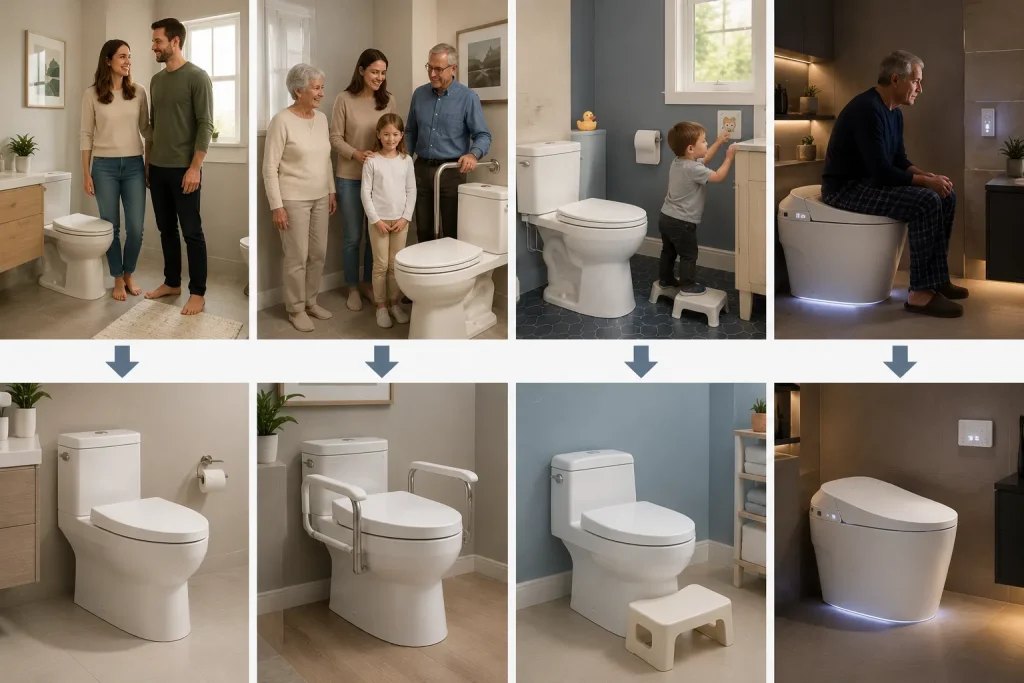
Toilet Upgrade Cost vs. Installation Effort
| Upgrade | Relative Cost | DIY Difficulty | Maintenance | Best Value |
|---|---|---|---|---|
| Soft-close seat | $ | Easy | Low | Excellent |
| Night light | $ | Easy | Low | Excellent |
| Bidet seat | $$ | Easy–Moderate | Low–Moderate | Very good |
| Heated seat | $$ | Easy–Moderate | Low | Very good |
| WaterSense toilet | $$ | Moderate | Low | Excellent for old toilets |
| Comfort-height toilet | $$ | Moderate | Low | Very good |
| Smart toilet | $$$–$$$$ | Moderate–High | Moderate | Best for luxury upgrades |
Actual prices vary substantially by brand, model, region, installation requirements, and whether electrical or plumbing work is necessary. Treat these categories as relative cost levels rather than fixed retail prices.
Important Installation Details Before Buying a Toilet Upgrade
Before ordering any major toilet upgrade, check the physical installation conditions in your bathroom.
- Measure the toilet rough-in.
- Check available floor clearance.
- Confirm the bowl shape and seat compatibility.
- Check whether the existing toilet has a standard or unusual connection.
- For electric products, confirm suitable electrical power is available.
- Check whether the bathroom has enough clearance for the seat lid and nearby fixtures.
- Verify that the new toilet will not interfere with the bathroom door.
These measurements are easy to overlook when shopping online, but they can determine whether an apparently perfect upgrade actually fits your bathroom.
Frequently Asked Questions
What is the best toilet upgrade for comfort?
For most homeowners, a comfort-height toilet, bidet seat, or heated seat provides the most noticeable comfort improvement. The best choice depends on whether your main problem is sitting height, hygiene, or temperature.
Is a bidet seat worth adding to an existing toilet?
Yes, provided the existing toilet is structurally sound and compatible with the bidet seat. It can add significant functionality without requiring a complete toilet replacement.
Are WaterSense toilets worth it in 2026?
They can be particularly worthwhile when replacing an older, inefficient toilet. EPA says WaterSense-labeled toilets use 1.28 gallons per flush or less and are independently certified for performance and efficiency.
Is a comfort-height toilet better for everyone?
No. Taller toilets can be easier for many adults to sit down on and stand up from, but shorter users and children may prefer a lower seating height. Try the approximate height before making a final purchase when possible.
Should I buy a smart toilet or upgrade my existing toilet?
If your existing toilet works well and you only want better hygiene or comfort, an upgraded seat may provide better value. If you want heated seating, bidet washing, automatic flushing, night lighting, and other functions integrated into one fixture, a smart toilet may make more sense.
Conclusion
The best toilet upgrade in 2026 is not necessarily the most expensive one. It is the upgrade that improves the way your household actually uses the bathroom.
For a simple improvement, start with a soft-close seat or night light. For better hygiene and daily comfort, consider a bidet or heated seat. If the existing toilet is old or inefficient, replace it with a WaterSense-labeled model rather than investing heavily in an outdated fixture.
If you want a more accessible bathroom, a comfort-height toilet can make everyday sitting and standing easier. And if you are building a high-end primary bathroom, a smart toilet can combine several comfort features into one integrated fixture.
The smartest approach is to solve the biggest annoyance first. A small upgrade that you use every day can be more valuable than an expensive feature that rarely makes a difference.
If you are also dealing with leaks, clogs, weak flushing, running toilets, or other common toilet problems, see the Toilet Repair section for practical repair and troubleshooting guides.