
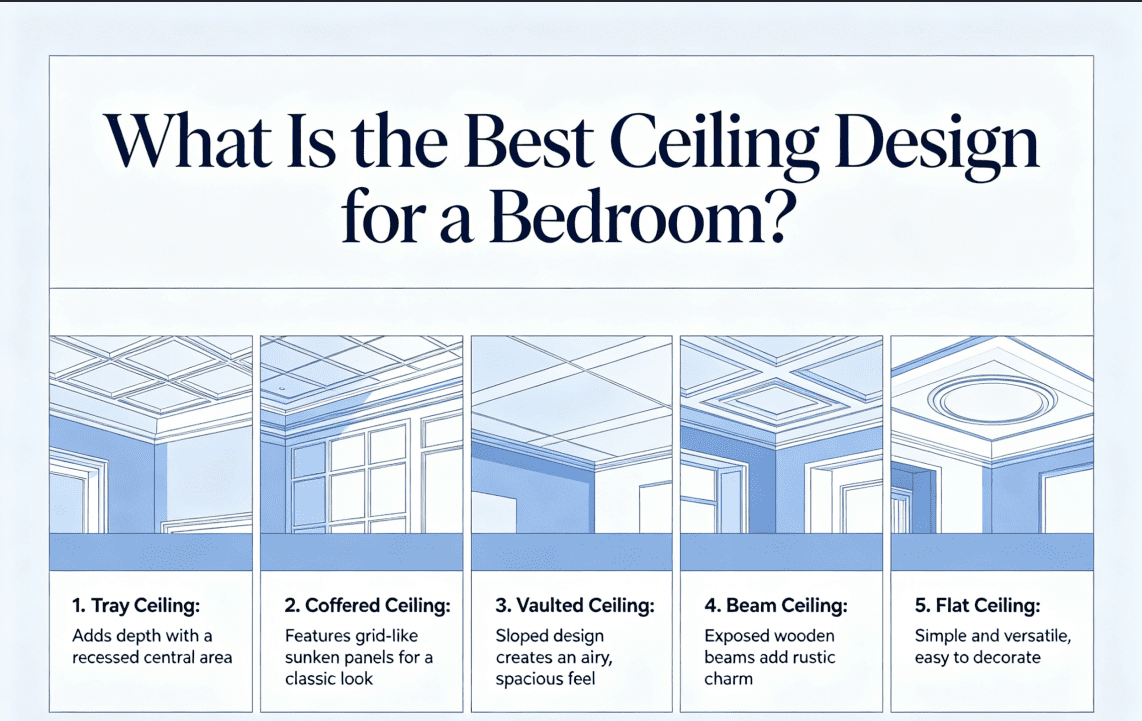
A bedroom should be the most relaxing room in your home, yet many homeowners spend far more time choosing flooring or furniture than thinking about the ceiling. In reality, the ceiling affects lighting, acoustics, visual space, and even sleep quality more than most people realize.
If you’re renovating an existing bedroom or planning a new one, choosing the right ceiling design isn’t just about appearance. The ideal design should complement your room size, ceiling height, lighting plan, maintenance requirements, and overall interior style.
In this guide, we’ll compare today’s most popular bedroom ceiling designs, explain where each one works best, and help you avoid common remodeling mistakes.
Quick Answer
For most homeowners, a simple gypsum board tray ceiling with recessed LED lighting offers the best balance of beauty, affordability, durability, and maintenance. It works well in modern, Scandinavian, transitional, and contemporary bedrooms while remaining easy to repaint and repair years later.
| Ceiling Type | Average Cost | Installation Difficulty | Maintenance | Advantages | Disadvantages |
|---|---|---|---|---|---|
| Flat Painted Ceiling | $2–$5 / sq.ft. | Easy | Very Low | Budget-friendly, timeless | Minimal visual interest |
| Tray Ceiling | $8–$18 / sq.ft. | Medium | Low | Elegant appearance, adds depth | Higher installation cost |
| Coffered Ceiling | $20–$45 / sq.ft. | High | Medium | Luxury appearance | Not suitable for low ceilings |
| Wood Slat Ceiling | $15–$35 / sq.ft. | Medium | Medium | Warm natural texture | Requires occasional refinishing |
| Stretch Ceiling | $10–$25 / sq.ft. | Professional | Very Low | Moisture resistant, modern look | Limited repair options |
Why Your Bedroom Ceiling Matters
The ceiling is often called the “fifth wall” in interior design because it has a significant impact on how a room feels. A poorly designed ceiling can make even a beautifully furnished bedroom seem small or dark.
A well-designed ceiling improves:
- Natural and artificial lighting distribution
- Visual room height
- Sound absorption
- Energy efficiency through better insulation
- Overall resale value
Professional remodelers frequently recommend planning the ceiling before selecting lighting fixtures, because recessed lighting, pendant fixtures, and ceiling fans all depend on ceiling construction.
Best Bedroom Ceiling Designs Compared
1. Flat Ceiling
The flat ceiling remains the most common option because it’s affordable, easy to maintain, and suitable for virtually every home.
If your bedroom has an 8-foot ceiling, this design often provides the cleanest appearance. Pairing it with warm white LED lighting creates a relaxing atmosphere without unnecessary complexity.
Best for: Apartments, rental homes, guest bedrooms, minimalist interiors.
2. Tray Ceiling
Among interior designers, tray ceilings are widely considered the sweet spot between luxury and practicality.
Instead of raising the entire ceiling, only the center section is recessed, creating depth without making construction excessively expensive.
Many homeowners combine hidden LED strip lighting with recessed spotlights to create soft nighttime illumination that’s comfortable before bedtime.
For readers comparing different home remodeling options, our guide on Bedroom Ceiling Design Ideas explains how various ceiling styles influence lighting, room proportions, and interior aesthetics.
Best for:
- Master bedrooms
- Modern homes
- Rooms larger than 150 sq.ft.
- Homes with ceilings above 9 feet
3. Wood Slat Ceiling
Natural wood has become increasingly popular over the last few years because it introduces warmth that painted drywall simply can’t match.
Whether using oak, walnut, pine, or engineered wood panels, slatted ceilings create texture while improving acoustic performance.
One homeowner who recently renovated a Scandinavian-style bedroom shared that adding oak slats above the bed completely changed the room’s atmosphere. The space felt quieter, warmer, and noticeably more luxurious despite keeping the existing furniture.
The only downside is maintenance. Depending on humidity levels, natural wood may require refinishing every several years.
4. Coffered Ceiling
If you’re designing a luxury custom home with high ceilings, few options look as elegant as a coffered ceiling.
The recessed grid pattern creates architectural depth and adds a premium appearance commonly found in upscale homes.
However, it isn’t ideal for standard-height bedrooms because the beams visually reduce ceiling height.
Choosing the Right Ceiling Based on Your Bedroom
Rather than asking which ceiling is objectively the “best,” it’s more useful to ask which ceiling fits your room.
| Your Situation | Recommended Ceiling |
|---|---|
| Small bedroom under 120 sq.ft. | Flat ceiling with recessed lighting |
| Modern master bedroom | Tray ceiling |
| Luxury custom home | Coffered ceiling |
| Scandinavian interior | Wood slat ceiling |
| High humidity environment | Stretch PVC ceiling |
Real-World Experience
One of the biggest renovation mistakes homeowners make is choosing decorative ceiling details before considering maintenance.
For example, elaborate moldings and deep recessed panels look beautiful in photos, but they also collect dust quickly. Families with allergies or pets often discover they spend significantly more time cleaning decorative ceilings than expected.
By contrast, a simple tray ceiling with washable paint usually requires nothing more than occasional dusting and repainting every 7–10 years.
Industry Data Worth Knowing
- Bedrooms with layered lighting generally provide higher occupant satisfaction than single-fixture lighting.
- Light-colored ceilings can make a room appear up to 10% larger visually.
- Gypsum board remains one of the most widely used residential ceiling materials because it balances cost, fire resistance, and easy repairs.
- LED recessed lighting typically consumes 70–80% less electricity than traditional incandescent fixtures.
For additional guidance on residential ceiling materials and safety considerations, the U.S. Department of Energy provides practical recommendations for insulation and home efficiency at https://www.energy.gov.