
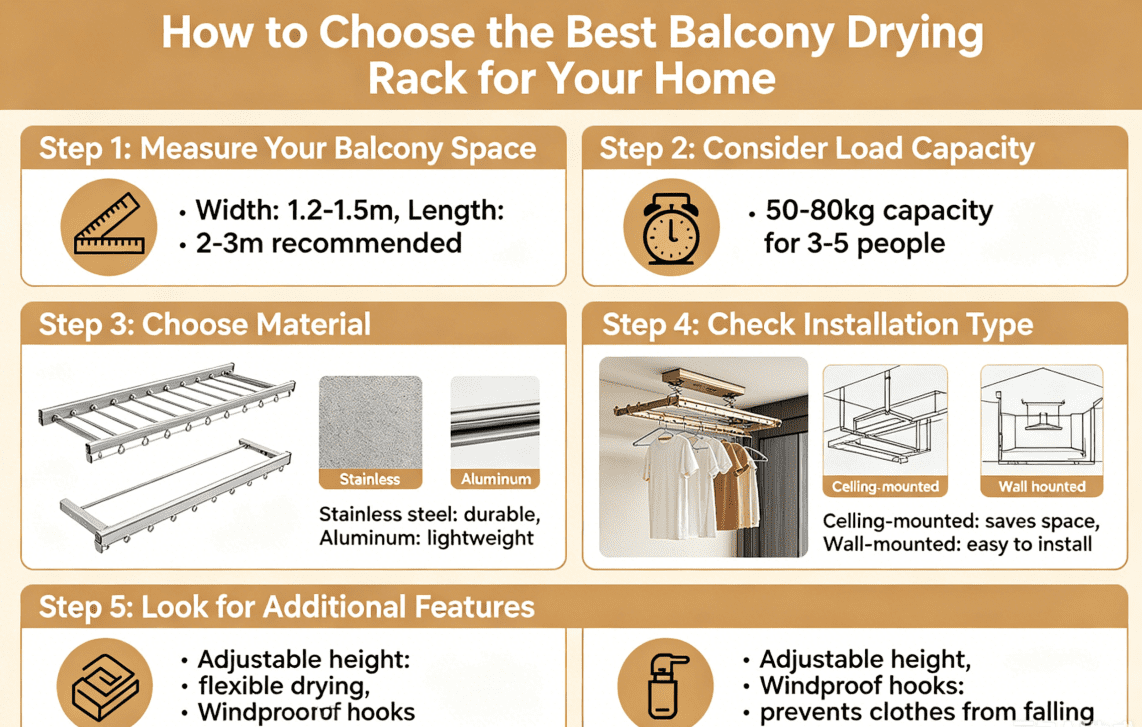
Drying clothes may seem like a simple household task, but choosing the right balcony drying rack can make a noticeable difference in convenience, laundry efficiency, and even the appearance of your outdoor space. Whether you live in a compact apartment, a modern condo, or a spacious family home, the right drying rack helps maximize available space while protecting your clothes from unnecessary wear.
Many homeowners purchase the first drying rack they see online, only to discover that it rusts quickly, doesn’t fit their balcony, or struggles to support heavier laundry like blankets and winter jackets. After helping friends renovate their apartments and testing different rack styles over the years, I’ve learned that spending a little more time choosing the right model saves both money and frustration later.
This guide explains everything you need to know before buying a balcony drying rack, including materials, installation methods, weight capacity, maintenance, and which design works best for different households.
Quick Answer
The best balcony drying rack depends on your available space and daily laundry needs.
- Small apartments → Foldable wall-mounted racks
- Families of 3–5 → Ceiling-mounted lifting racks
- Renters → Freestanding drying racks
- Rainy climates → Covered or retractable systems
- Heavy laundry → Stainless steel ceiling-mounted racks
Why Your Choice Matters
A drying rack isn’t just somewhere to hang wet clothes. It affects:
- Daily convenience
- Drying speed
- Balcony organization
- Indoor humidity
- Long-term maintenance costs
A poor-quality rack may begin rusting within a year, while a well-built stainless steel model can easily last over 10 years with minimal maintenance.
Types of Balcony Drying Racks
| Type | Typical Price | Installation | Maintenance | Advantages | Disadvantages |
|---|---|---|---|---|---|
| Wall-Mounted Foldable | $30–100 | Easy | Low | Saves space, folds away neatly | Limited drying capacity |
| Ceiling-Mounted Lift Rack | $120–350 | Moderate | Low | Large capacity, excellent space utilization | Requires ceiling installation |
| Freestanding Rack | $20–80 | None | Very Low | Portable, renter-friendly | Occupies floor space |
| Retractable Clothesline | $40–120 | Easy | Low | Minimal visual impact | Lower weight capacity |
| Motorized Smart Rack | $300–900+ | Professional | Medium | Automatic lifting, lighting, drying functions | Higher purchase cost |
Choose According to Your Home
Small Apartment Balcony
If your balcony measures less than 1.5 meters wide, every centimeter counts.
A foldable wall-mounted drying rack keeps the floor clear while still providing enough hanging space for everyday clothing. Once laundry is dry, simply fold the rack flat against the wall.
This is one of the most practical solutions for city apartments.
Medium-Sized Family Home
For households with children, laundry volume increases dramatically.
A ceiling-mounted lifting rack offers significantly more drying space while leaving the balcony free for plants, storage cabinets, or seating.
Many homeowners report that lifting racks make their balconies feel much larger because nothing occupies the floor.
Rental Apartments
If you’re renting, avoid drilling into walls whenever possible.
A high-quality freestanding stainless steel rack can be folded away after use and moved whenever needed.
It also eliminates concerns about landlord approval.
Which Material Is Best?
| Material | Durability | Rust Resistance | Maintenance | Recommended? |
|---|---|---|---|---|
| Plastic | Low | Excellent | Very Easy | Small loads only |
| Painted Steel | Medium | Medium | Moderate | Budget option |
| 304 Stainless Steel | Excellent | Excellent | Very Low | ★★★★★ |
| Aluminum Alloy | Very Good | Excellent | Very Low | ★★★★☆ |
If your balcony is exposed to rain, humidity, or coastal air, stainless steel remains the safest long-term investment.
Features Worth Paying For
- Adjustable height for easier access
- Retractable poles to save space
- Wind-resistant hanger holes to prevent clothes from blowing away
- Heavy-duty bearings for smoother lifting
- UV-resistant materials for outdoor durability
- Anti-rust hardware for longer lifespan
These upgrades may increase the purchase price slightly, but they significantly improve everyday usability.
Real-Life Buying Experience
One family member originally purchased a very inexpensive painted steel drying rack for an apartment balcony. It looked great initially, but after about 18 months of outdoor exposure, rust spots began appearing around the joints. Eventually, some shirts developed rust stains after rainy days.
They later upgraded to a 304 stainless steel ceiling-mounted system. Although it cost nearly three times as much, it has now been used for several years without corrosion, even during humid summers. Maintenance is limited to wiping the rails occasionally with a damp microfiber cloth.
This experience reinforced an important lesson: buying quality once is often cheaper than replacing low-cost products repeatedly.
Common Mistakes When Choosing a Balcony Drying Rack
- Buying without measuring balcony dimensions
- Ignoring maximum load capacity
- Choosing painted steel for outdoor installation
- Installing racks too close to sliding doors
- Overlooking wind exposure
- Selecting smart racks without nearby power outlets
Spending a few extra minutes planning can prevent expensive replacements later.
For homeowners comparing different home organization solutions, our guide on How to Choose the Perfect Living Room Sofa explains another important aspect of maximizing everyday comfort, while What Is a Kitchen Storage Rack and Why Do You Need One? explores efficient storage ideas throughout the home.
Industry installation recommendations and material durability information can also be found through the International Association of Certified Home Inspectors (InterNACHI), which publishes practical homeowner maintenance guidance.
How to Maintain Your Balcony Drying Rack
Even the highest-quality drying rack requires basic maintenance to stay safe and functional. Fortunately, most maintenance tasks take only a few minutes each month.
| Maintenance Task | Frequency | Purpose |
|---|---|---|
| Wipe dust and dirt from rails | Weekly | Prevents stains on clothing |
| Check screws and mounting brackets | Monthly | Maintains structural stability |
| Lubricate moving joints or pulleys | Every 6 months | Ensures smooth operation |
| Inspect for rust or corrosion | Twice a year | Extends service life |
| Deep clean the entire rack | Annually | Removes accumulated grime |
Avoid using harsh acidic cleaners or abrasive steel wool, especially on stainless steel or aluminum surfaces. A soft cloth with mild detergent is usually enough to keep the rack looking new.
How to Choose Based on Your Lifestyle
For Singles or Couples
If you do laundry only once or twice a week, a compact foldable wall-mounted rack provides sufficient drying space while keeping your balcony open for other activities.
For Families with Children
Families often wash towels, school uniforms, bedding, and sportswear in large batches. A ceiling-mounted lifting rack with multiple hanging rods offers the best combination of capacity and convenience.
For Rainy or Humid Areas
If your region experiences frequent rain or high humidity, prioritize corrosion-resistant materials such as 304 stainless steel or aluminum alloy. Installing the rack under a covered balcony can also improve drying efficiency and extend the rack’s lifespan.
For Elderly Homeowners
Ease of use is especially important. Lightweight lifting mechanisms or motorized drying racks reduce the need for overhead reaching and make laundry safer and more comfortable.
Signs It’s Time to Replace Your Drying Rack
- Visible rust that continues to spread despite cleaning
- Loose mounting brackets that no longer tighten securely
- Bent support bars that cannot safely hold wet laundry
- Cracked plastic connectors or hinges
- Lifting systems that repeatedly jam or fail
- Noticeable wobbling when fully loaded
If your rack shows several of these signs, replacement is generally safer and more cost-effective than repeated repairs.
Estimated Lifespan by Material
| Material | Average Lifespan | Maintenance Level |
|---|---|---|
| Plastic | 2–5 years | Low |
| Painted Steel | 3–8 years | Medium |
| Aluminum Alloy | 10–15 years | Low |
| 304 Stainless Steel | 15–20+ years | Very Low |
Frequently Asked Questions
1. Is a ceiling-mounted drying rack better than a wall-mounted model?
For most families, yes. Ceiling-mounted racks offer significantly greater drying capacity while keeping the balcony floor free. Wall-mounted racks are better suited to compact apartments or households with lighter laundry needs.
2. What is the best material for outdoor balcony drying racks?
304 stainless steel is generally considered the best choice because it resists rust, handles heavy loads, and performs well in humid environments. Aluminum alloy is another excellent option due to its lightweight construction and corrosion resistance.
3. How much weight should a drying rack support?
Most quality household drying racks support between 30 and 50 kg (66–110 lbs). If you frequently dry blankets, quilts, or winter coats, choose a heavy-duty model with reinforced mounting hardware.
4. Are motorized drying racks worth the extra cost?
They can be a worthwhile investment for homeowners who value convenience, have mobility concerns, or regularly dry large amounts of laundry. However, manual lifting racks remain a cost-effective and reliable solution for most households.
5. How can I make my drying rack last longer?
Keep it clean, avoid exceeding the recommended weight capacity, inspect mounting hardware regularly, lubricate moving parts when necessary, and choose corrosion-resistant materials if the rack is exposed to outdoor weather.
Final Thoughts
The best balcony drying rack is the one that matches your home’s layout, your family’s laundry habits, and your long-term maintenance expectations. While budget models may seem attractive initially, investing in a durable, corrosion-resistant rack often provides better value over many years of daily use.
Before making a purchase, measure your available space carefully, estimate your typical laundry volume, and consider future needs rather than only current requirements. A thoughtfully chosen drying rack not only simplifies household chores but also keeps your balcony organized, functional, and visually appealing.
Whether you prefer a compact wall-mounted rack, a spacious ceiling-mounted system, or a portable freestanding model, selecting quality materials and following a simple maintenance routine will ensure dependable performance for years to come.