Keeping a kitchen organized is one of the easiest ways to make cooking more enjoyable. Whether you live in a spacious family home or a compact apartment, countertop clutter, overflowing cabinets, and hard-to-find utensils can quickly turn meal preparation into a frustrating experience.
A kitchen storage rack is a practical solution designed to maximize available space while keeping everyday essentials within easy reach. From simple countertop organizers to heavy-duty pantry shelving, the right storage rack can transform both the appearance and functionality of your kitchen.
In this guide, you’ll learn what a kitchen storage rack is, the different types available, how to choose the right one, common mistakes to avoid, and whether investing in one is worth it for your home.
Quick Answer
A kitchen storage rack is a shelving or organizational system designed to increase storage space while improving accessibility and kitchen efficiency. It helps reduce countertop clutter, organizes cookware and pantry items, protects kitchen equipment, and makes daily cooking faster and more convenient. For most homeowners, adding one is an affordable upgrade that delivers immediate practical benefits.
What Is a Kitchen Storage Rack?
A kitchen storage rack is any standalone or wall-mounted shelving unit used to organize kitchen items such as cookware, dishes, spices, small appliances, pantry supplies, or cleaning products.
Unlike traditional cabinets, storage racks provide open access, allowing frequently used items to remain visible and easy to reach. They are available in numerous styles, sizes, and materials to fit almost any kitchen layout.
Common materials include:
- Powder-coated steel
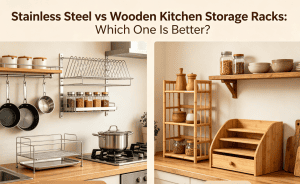
- Solid wood
- Bamboo
- Stainless steel
- Engineered wood
- Heavy-duty wire shelving
Modern kitchen storage racks are also designed to complement various interior styles, from minimalist and Scandinavian kitchens to farmhouse and industrial spaces.
Why Do You Need a Kitchen Storage Rack?
Many homeowners underestimate how much usable storage space is wasted in a kitchen. Empty wall areas, unused corners, and vertical space often remain completely overlooked.
A well-designed storage rack solves several everyday problems.
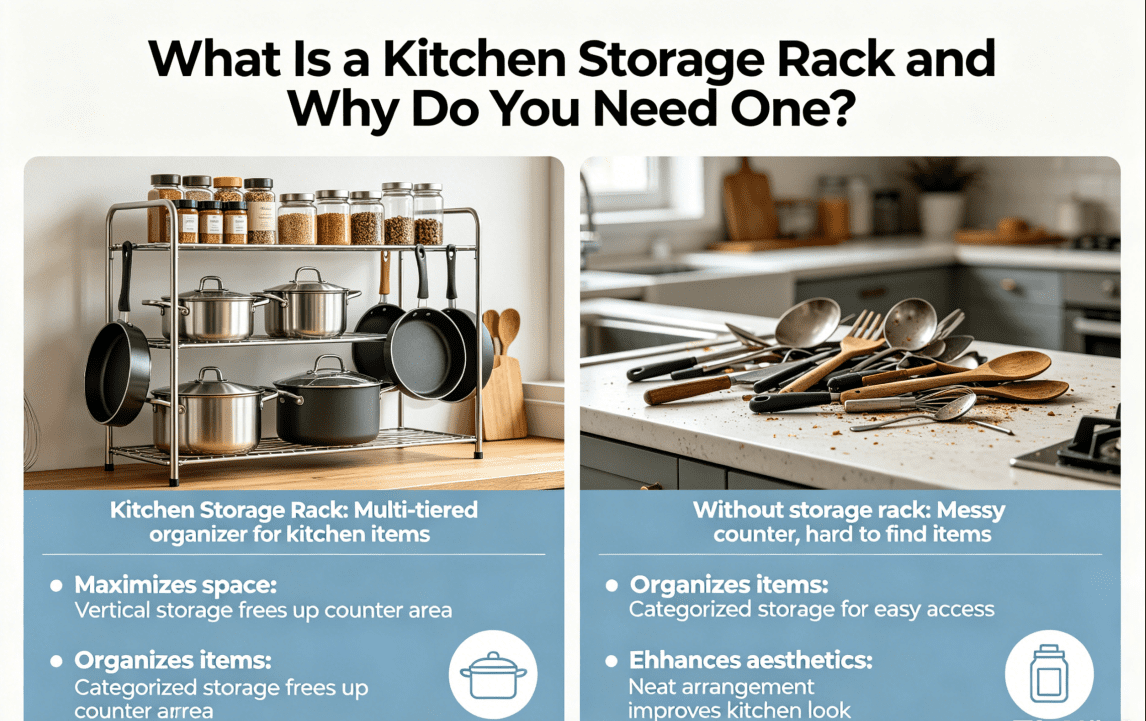
1. Reduce Countertop Clutter
Countertops quickly become crowded with coffee machines, toasters, spice jars, cutting boards, and cooking oils. Moving these items onto a storage rack instantly creates more working space for meal preparation.
For example, placing your microwave, coffee station, and spice organizer on a dedicated baker’s rack can free up several feet of valuable countertop space.
2. Make Cooking More Efficient
Professional kitchens emphasize organization because every second matters during cooking.
At home, keeping pots, pans, spices, and utensils organized means less time searching through cabinets and more time actually preparing food.
Many homeowners find they naturally cook more often after reorganizing their kitchens because the space feels less stressful.
3. Maximize Vertical Space
Instead of expanding outward, storage racks build upward.
This is especially valuable in:
- Small apartments
- Studio kitchens
- Rental homes
- Condominiums
- Tiny houses
Vertical storage can often increase usable kitchen storage by 30–50% without requiring expensive remodeling.
4. Improve Kitchen Appearance
An organized kitchen simply looks cleaner.
Matching storage baskets, neatly arranged cookware, and organized pantry containers create a professional appearance while making cleaning much easier.
Types of Kitchen Storage Racks
| Type | Typical Price | Installation | Maintenance | Advantages | Disadvantages |
|---|---|---|---|---|---|
| Countertop Rack | $20–$80 | None | Very Easy | Affordable, portable | Limited capacity |
| Wall-Mounted Rack | $30–$120 | Moderate | Easy | Saves countertop space | Requires drilling |
| Baker’s Rack | $80–$250 | Easy | Easy | Large storage capacity | Needs floor space |
| Rolling Kitchen Cart | $70–$200 | Easy | Easy | Portable and versatile | Smaller shelves |
| Heavy-Duty Pantry Rack | $120–$400 | Moderate | Very Easy | Excellent for bulk storage | Larger footprint |
Which Kitchen Storage Rack Is Right for You?
The best option depends on how you use your kitchen.
For Small Apartments
- Countertop organizers
- Wall-mounted shelves
- Slim rolling carts
These maximize limited space without making the room feel crowded.
For Large Family Kitchens
- Large baker’s racks
- Freestanding pantry shelving
- Heavy-duty metal storage systems
These provide room for bulk groceries, cookware, and small appliances.
For Home Cooks
If you cook almost every day, prioritize accessibility over appearance. Frequently used pans, mixing bowls, seasonings, and cooking oils should remain within arm’s reach.
Real-Life Example
A homeowner with a small apartment kitchen struggled to find workspace every evening because the countertop was occupied by an air fryer, microwave, coffee maker, and spice collection.
After installing a four-tier baker’s rack beside the refrigerator, the microwave and coffee station moved off the countertop, while baskets stored onions, potatoes, and canned food below.
The result wasn’t just a cleaner-looking kitchen—it also reduced cooking preparation time because everything had a dedicated place.
Common Buying Mistakes
- Buying a rack without measuring available space.
- Ignoring weight capacity for heavy appliances.
- Choosing appearance over durability.
- Selecting shelves that are too shallow.
- Forgetting to match the kitchen’s overall style.
Helpful Buying Checklist
- ✔ Measure available floor or wall space.
- ✔ Identify what items need storage.
- ✔ Choose moisture-resistant materials.
- ✔ Verify weight limits.
- ✔ Consider adjustable shelves.
- ✔ Leave enough walking clearance.
If you are planning a complete kitchen organization project, our guide—"What Is a Kitchen Storage Rack and Why Do You Need One?"—introduces practical storage layouts suitable for kitchens of all sizes and helps you choose between materials such as wood, steel, stainless steel, and bamboo.
For additional organization recommendations, the National Association of Home Builders provides practical kitchen design guidance at https://www.nahb.org.