Introduction
Siphonic toilets are known for their powerful flushing action, larger water surface area, and quieter operation. These advantages make them a popular choice in many homes across North America and other regions. However, maintaining those benefits requires proper cleaning techniques.
Many homeowners clean only the visible areas of the toilet while overlooking important components such as rim jets, the trapway, and the tank. Over time, mineral deposits, hard water scale, and hidden buildup can reduce flushing performance and increase the likelihood of clogs.
The good news is that effective cleaning does not require expensive products or complicated procedures. With the right cleaning methods and schedule, homeowners can keep a siphonic toilet operating efficiently for many years.
For those comparing toilet technologies, our comprehensive Siphonic vs Washdown Toilets: Which One Is Better for Your Bathroom? guide explains how cleaning and maintenance requirements differ between the two flushing systems.
Quick Answer
The best cleaning methods for siphonic toilets include weekly bowl cleaning, periodic rim jet maintenance, trapway descaling, tank inspections, and prompt removal of mineral deposits. Using non-abrasive cleaners and following a consistent cleaning schedule helps maintain flushing power, improve hygiene, and extend toilet lifespan.
Why Proper Cleaning Matters for Siphonic Toilets
A siphonic toilet relies on smooth water flow and a properly functioning trapway to create the suction effect that removes waste efficiently.
When mineral deposits, hard water buildup, or residue accumulate inside the toilet, homeowners may notice:
- Weaker flushing performance
- More frequent clogs
- Reduced bowl cleaning effectiveness
- Persistent odors
- Longer refill times
- Higher maintenance costs
Understanding the flushing mechanism helps explain why certain cleaning methods are more effective than others. Our article on How Does a Siphonic Toilet Create Strong Suction? explains how water flow and trapway design influence flushing performance.
Comparison of Common Cleaning Methods
| Cleaning Method | Estimated Cost | Difficulty | Maintenance Frequency | Advantages | Disadvantages |
|---|---|---|---|---|---|
| Weekly Bowl Cleaning | $5-$15/year | Easy | Weekly | Improves hygiene and appearance | Does not clean hidden areas |
| Vinegar Descaling | $10-$30/year | Easy | Monthly | Removes mineral deposits naturally | May require repeated treatments |
| Rim Jet Cleaning | $0-$10 | Easy | Every 3 Months | Restores flushing efficiency | Often overlooked |
| Trapway Cleaning | $10-$40/year | Moderate | Every 3-6 Months | Reduces clogging risk | Requires more time |
| Tank Cleaning | $5-$20 | Easy | Annually | Protects internal components | Not immediately visible |
Method 1: Weekly Bowl Cleaning
Regular bowl cleaning remains the foundation of toilet maintenance. A weekly routine prevents stains, bacterial growth, and surface buildup.
Focus on:
- Cleaning the entire bowl surface
- Scrubbing beneath the rim
- Removing visible mineral deposits
- Inspecting for unusual discoloration
Many homeowners underestimate how much buildup can accumulate beneath the rim where water enters the bowl during a flush.
Method 2: Remove Hard Water Deposits with Vinegar
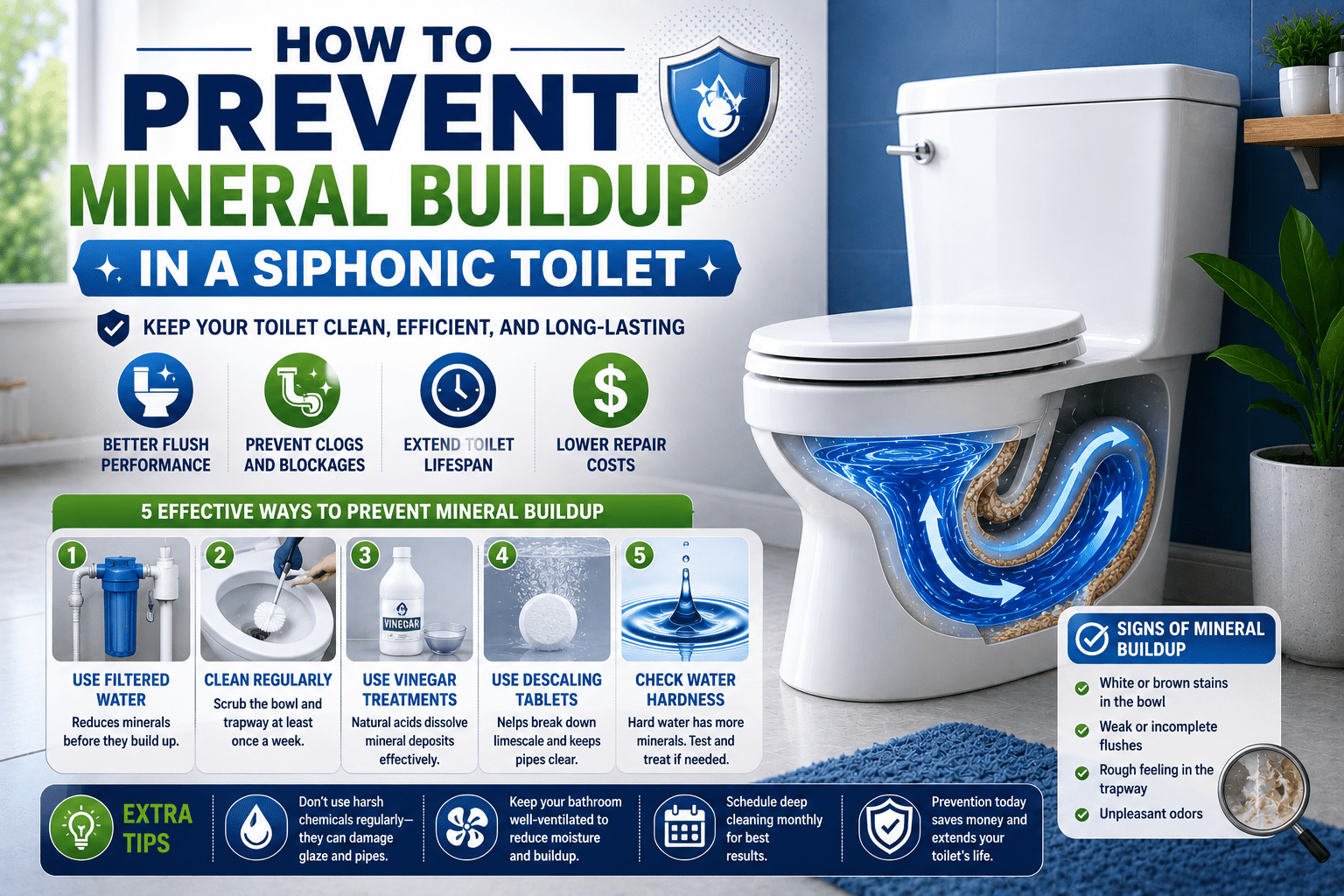
Hard water is one of the biggest threats to long-term siphonic toilet performance. Calcium and lime deposits gradually narrow water passages and reduce flushing efficiency.
A practical cleaning method involves:
- Pouring white vinegar into the bowl
- Allowing it to sit overnight
- Scrubbing affected areas the next day
- Flushing several times to remove loosened deposits
This approach is inexpensive and generally safe for most toilet components.
Method 3: Clean Rim Jets Regularly
Rim jets distribute water around the bowl and help initiate the siphon effect during flushing.
When these openings become partially blocked, flushing performance may decline even if the toilet appears clean.
- Inspect rim jets every three months
- Use a flashlight to locate buildup
- Clean deposits with a small brush
- Flush repeatedly after cleaning
In many homes, restoring water flow through rim jets produces an immediate improvement in flushing performance.
Method 4: Descale the Trapway
The trapway is the hidden passage responsible for creating the siphon effect.
Over time, mineral deposits and residue can reduce its internal diameter. This is especially common in homes with hard water.
Homeowners interested in deeper maintenance should also review How Often Should You Clean a Siphonic Toilet Trapway?, which explains cleaning intervals and warning signs of buildup.
For most households, cleaning the trapway every three to six mohttps://www.homeexpertsblog.com/how-often-should-you-clean-a-siphonic-toilet-trapway/nths helps maintain optimal performance.
Method 5: Inspect and Clean the Toilet Tank
Although the tank is hidden from view, it contains important components that influence flushing performance.
- Inspect the flapper
- Check the fill valve
- Look for sediment accumulation
- Remove debris from the tank bottom
- Verify proper water level settings
A clean tank helps ensure consistent flush volume and reduces wear on internal components.
According to the EPA WaterSense program, maintaining plumbing fixtures properly can help preserve efficiency and reduce unnecessary water waste.
Real-World Homeowner Scenario
A homeowner in Texas noticed that their siphonic toilet required multiple flushes to clear waste. The toilet was only seven years old and appeared clean at first glance.
After inspecting the fixture more closely, they discovered significant mineral buildup inside the rim jets and trapway. Following a vinegar descaling treatment and rim jet cleaning, flushing performance improved noticeably without requiring replacement parts.
This example highlights a common situation where cleaning, rather than repair, restores performance.
Recommended Cleaning Schedule by Household Type
| Household Type | Recommended Cleaning Schedule |
|---|---|
| Single Occupant | Weekly bowl cleaning, trapway every 6 months |
| Couple | Weekly bowl cleaning, trapway every 4-6 months |
| Family of 4+ | Weekly bowl cleaning, trapway every 3 months |
| Hard Water Area | Monthly descaling and quarterly trapway cleaning |
| Rental Property | Quarterly inspections and preventive maintenance |
Pros and Cons of Regular Toilet Cleaning
| Pros | Cons |
|---|---|
| Maintains flushing power | Requires ongoing effort |
| Reduces clogging risk | Some tasks take time |
| Improves hygiene | Hard water areas need more frequent cleaning |
| Extends toilet lifespan | Hidden buildup can still occur if inspections are skipped |
| Lowers long-term repair costs | Maintenance schedules must be followed consistently |
Expert Recommendations
For most homeowners, a combination of weekly cleaning and quarterly preventive maintenance provides the best balance between effort and performance.
- Clean the bowl every week.
- Inspect rim jets every three months.
- Descale the trapway every three to six months.
- Inspect the tank annually.
- Address performance changes immediately.
Preventive cleaning is usually far less expensive than repairing chronic clogs or replacing worn components caused by neglected maintenance.
Frequently Asked Questions
What is the best cleaner for a siphonic toilet?
Non-abrasive toilet cleaners and white vinegar are among the safest and most effective options for routine maintenance.
How often should I clean the trapway?
Most households should clean the trapway every three to six months, while hard water areas may require more frequent maintenance.
Can vinegar damage a siphonic toilet?
No. White vinegar is generally safe for porcelain surfaces and is commonly used to remove mineral deposits.
Why does my toilet still flush weakly after cleaning the bowl?
The issue may be hidden inside the rim jets, trapway, or tank components rather than the visible bowl surface.
Does regular cleaning help prevent clogs?
Yes. Removing buildup from critical areas such as the trapway and rim jets can significantly reduce the likelihood of recurring clogs.
Conclusion
The best cleaning methods for siphonic toilets go beyond basic bowl cleaning. Regular maintenance of the rim jets, trapway, and tank helps preserve flushing performance, improve hygiene, and extend the lifespan of the fixture.
By following a consistent cleaning schedule and addressing buildup before it becomes a problem, homeowners can avoid many common toilet issues while keeping their siphonic toilet operating efficiently for years to come.