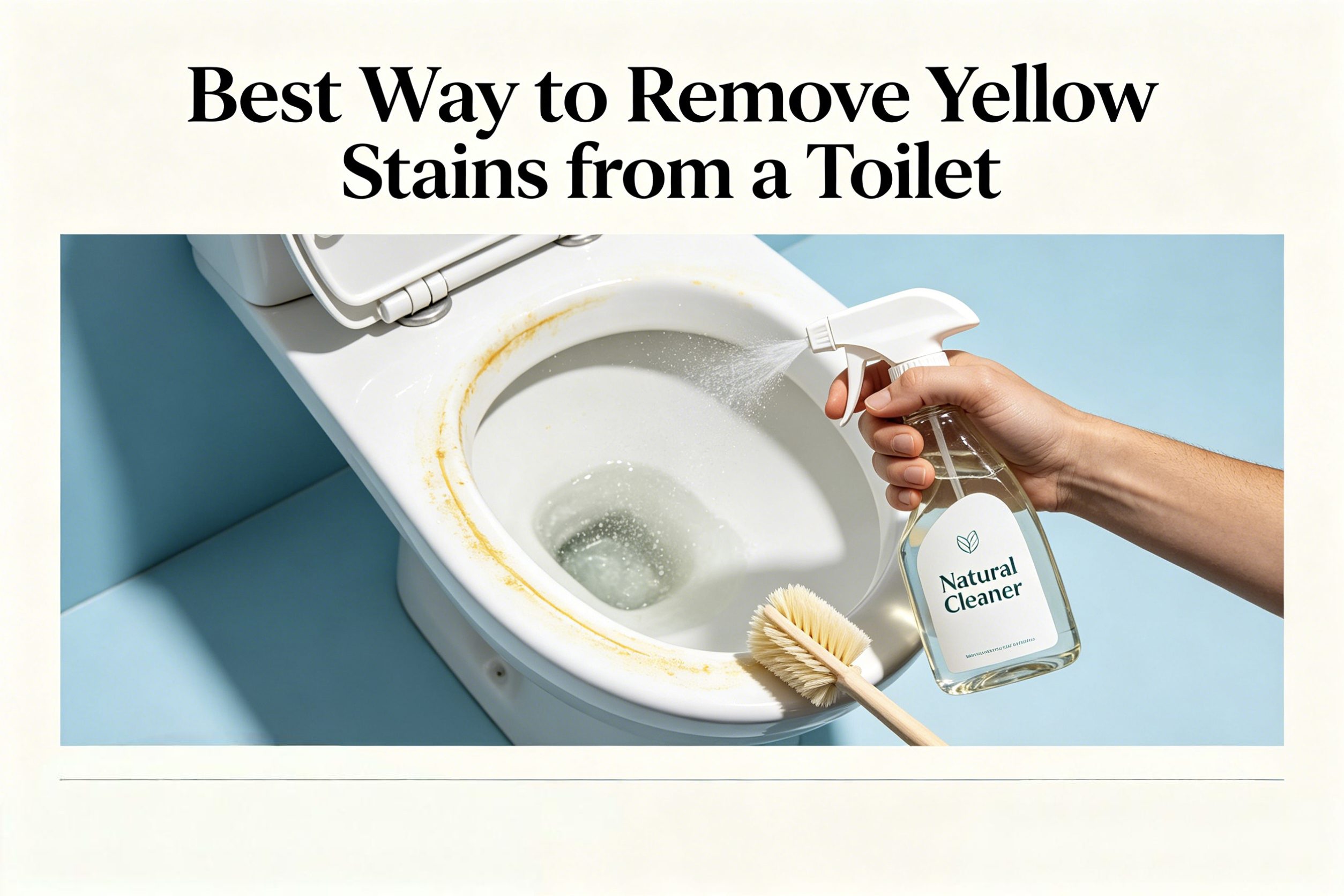
Yellow stains in a toilet bowl can make an otherwise clean bathroom look neglected. The frustrating part is that these stains often come back even after scrubbing with regular toilet cleaners. If you’ve tried bleach and still see a yellow ring around the waterline, you’re dealing with something more stubborn than ordinary dirt.
In my experience maintaining bathrooms in homes with both hard water and well water, the most effective solution is surprisingly simple: citric acid. It dissolves uric acid crystals, hard water minerals, and scale buildup far better than most general-purpose cleaners, and it does so without damaging porcelain.
This guide explains the best way to remove yellow stains from a toilet, including the exact step-by-step method I use, the most effective products, and practical tips to stop stains from returning.
Quick Answer
The best way to remove yellow stains from a toilet is to soak the bowl with citric acid or a mineral-removing cleaner for 30 to 60 minutes, then scrub with a toilet brush or pumice stone. This method effectively dissolves uric acid, hard water deposits, and stubborn yellow rings without damaging the porcelain.
Why Toilets Develop Yellow Stains
Most yellow stains are caused by a combination of:
- Uric acid deposits from urine
- Hard water minerals such as calcium and magnesium
- Bacterial biofilm
- Iron in well water
If you want to understand the root causes in more detail, read What Causes Yellow Stains in a Toilet Bowl?.
The Best Method: Citric Acid Soak
After testing vinegar, bleach, CLR, and many commercial cleaners, citric acid consistently delivers the best balance of effectiveness, safety, and cost.
What You Need
- 1/2 to 1 cup citric acid powder
- Toilet brush
- Rubber gloves
- Pumice stone (for severe buildup)
Step-by-Step Instructions
- Turn off the water supply if possible.
- Flush the toilet and remove as much water as possible from the bowl.
- Sprinkle citric acid directly onto the stained areas.
- Let it soak for 30 to 60 minutes.
- Scrub thoroughly with a toilet brush.
- Use a wet pumice stone for stubborn deposits.
- Flush to rinse the bowl.
For very old buildup, our detailed guide How to Remove Old Yellow Stains from a Toilet covers advanced restoration techniques.
External Expert Reference
According to the U.S. Geological Survey (USGS), hard water contains calcium and magnesium that commonly create mineral deposits in toilets, sinks, and shower surfaces.
Cleaning Methods Compared
| Method | Price | Difficulty | Maintenance | Advantages | Disadvantages |
|---|---|---|---|---|---|
| Citric acid | $8–$15 | Easy | Monthly | Highly effective and natural | Requires soaking time |
| White vinegar | $3–$5 | Easy | Weekly | Safe and inexpensive | Slower on heavy stains |
| CLR | $10–$15 | Easy | As needed | Very strong on minerals | Chemical odor |
| Pumice stone | $5–$10 | Moderate | Occasional | Removes hard deposits | Requires careful use |
| Bleach | $4–$8 | Easy | Weekly | Excellent disinfectant | Does not remove scale effectively |
Real-Life Example
A homeowner in Phoenix had a yellow ring that returned every week despite using bleach tablets. After switching to a monthly citric acid soak, the stains disappeared completely. Cleaning time dropped from 20 minutes of scrubbing to less than 5 minutes.
When to Use a Pumice Stone
If the stain feels rough or crusty, it has likely hardened into mineral scale. In these cases, soaking with citric acid first and then using a wet pumice stone is the fastest way to restore the bowl.
Always keep both the stone and porcelain wet to avoid scratching.
Best Products for Yellow Toilet Stains
- Citric acid powder
- CLR Calcium, Lime & Rust Remover
- Lime-A-Way Toilet Cleaner
- Pumice stone
- Enzymatic toilet cleaners
How to Prevent Yellow Stains from Returning
- Brush the toilet once per week.
- Use citric acid monthly.
- Clean under the rim thoroughly.
- Flush rarely used toilets regularly.
- Install a water softener if your home has hard water.
If stains keep returning after cleaning, our article Why Yellow Toilet Stains Keep Coming Back explains how to eliminate the root cause permanently.
Which Method Is Best for Your Situation?
- Light yellow ring: White vinegar or citric acid.
- Moderate hard water stains: Citric acid or CLR.
- Heavy crust buildup: Citric acid followed by pumice stone.
- Recurring stains in multiple toilets: Water softener installation.
Frequently Asked Questions
1. What is the fastest way to remove yellow toilet stains?
A 30- to 60-minute citric acid soak followed by scrubbing is usually the most effective method.
2. Does bleach remove yellow stains?
Bleach disinfects but does not dissolve uric acid or mineral deposits effectively.
3. Can vinegar remove yellow stains?
Yes, but it generally works more slowly than citric acid on heavy buildup.
4. Is a pumice stone safe?
Yes, when both the stone and porcelain are kept wet during use.
5. How often should I deep-clean my toilet?
Monthly mineral removal is sufficient for most homes, with weekly brushing for maintenance.
Conclusion
The best way to remove yellow stains from a toilet is to use citric acid to dissolve uric acid and hard water deposits, followed by thorough scrubbing. This method is inexpensive, highly effective, and safe for porcelain.
In my experience, homeowners who switch from bleach to citric acid see faster results and spend far less time scrubbing. Combined with regular maintenance and hard water control when needed, this approach keeps toilet bowls bright and stain-free for the long term.