Introduction
A siphonic toilet is designed to deliver powerful waste removal while maintaining a quieter flushing experience than many other toilet types. Thanks to its larger water spot and siphon-assisted flushing action, it remains one of the most popular choices in North America and many modern residential bathrooms.
However, even the best-designed toilet can lose efficiency over time if regular maintenance is ignored. Mineral deposits, worn tank components, partial blockages, and improper usage habits can gradually reduce flushing performance and increase the likelihood of repairs.
Proper maintenance not only helps preserve flushing power but can also extend the lifespan of your toilet by several years. For homeowners comparing different flushing technologies, our Siphonic vs Washdown Toilets: Which One Is Better for Your Bathroom? guide explains how maintenance requirements differ between the two systems.
Quick Answer
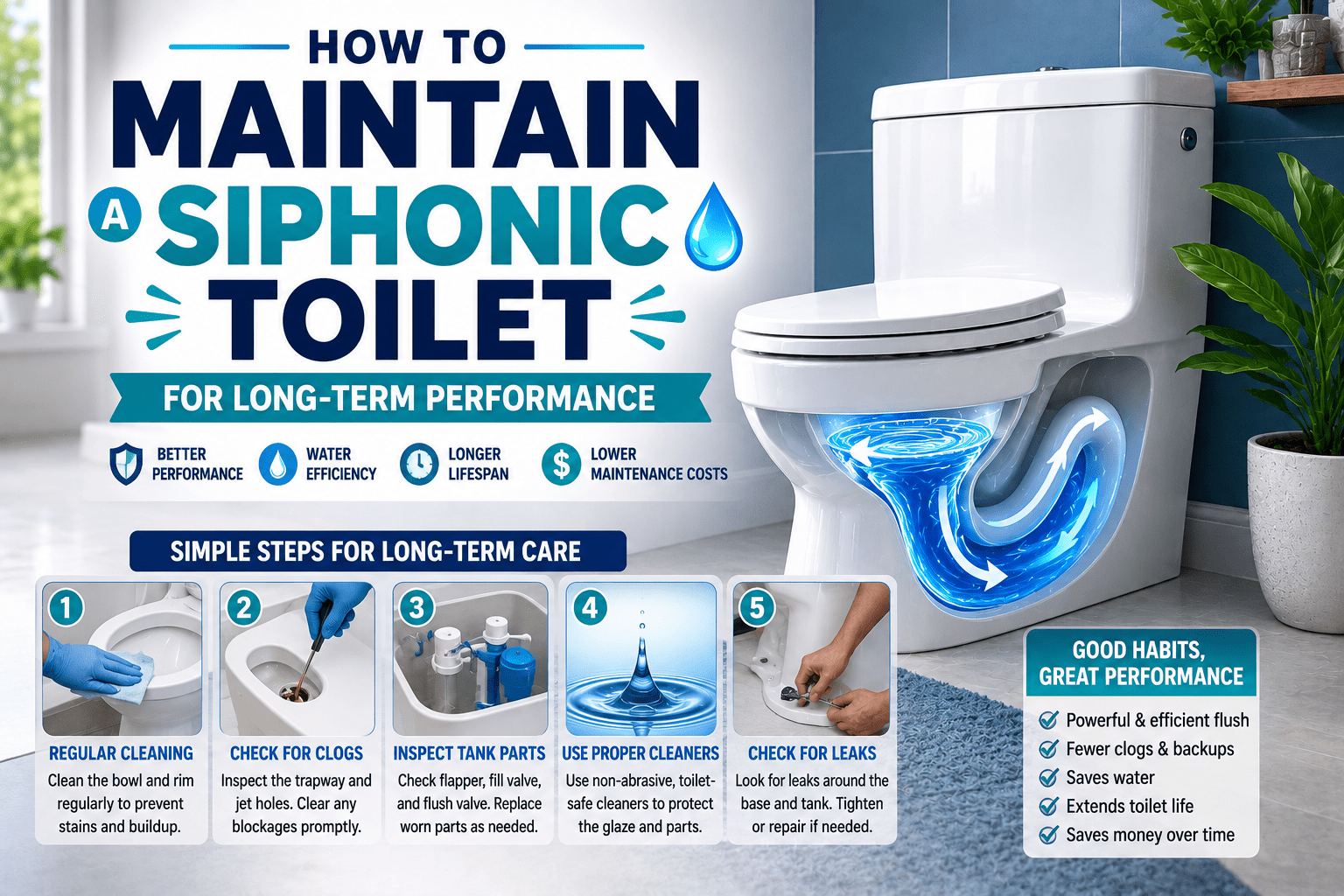
To maintain a siphonic toilet for long-term performance, clean the bowl regularly, inspect internal tank components twice a year, prevent mineral buildup, avoid flushing inappropriate items, and address minor issues before they become major repairs.
Most homeowners can keep a siphonic toilet operating efficiently for 10–20 years with only basic maintenance and occasional replacement of inexpensive parts such as flappers and fill valves.
Why Regular Maintenance Matters
Siphonic toilets rely on a carefully balanced flushing system. When enough water enters the bowl quickly, a siphon effect forms inside the trapway, creating strong suction that removes waste efficiently.
If water flow becomes restricted due to mineral buildup or worn components, that siphon action becomes weaker. Over time, homeowners may notice:
- Reduced flushing power
- Frequent clogs
- Slow bowl drainage
- Longer refill times
- Running water noises
- Higher water bills
Understanding the mechanics behind the flushing process can help identify potential problems early. Our article on How Does a Siphonic Toilet Create Strong Suction? explains how the siphon effect contributes to flushing performance.
Recommended Maintenance Schedule
| Maintenance Task | Estimated Cost | Installation/Skill Level | Maintenance Frequency | Advantages | Disadvantages |
|---|---|---|---|---|---|
| Weekly Bowl Cleaning | $5-$15/year | Easy | Weekly | Improves hygiene and appearance | Requires consistency |
| Rim Jet Cleaning | $0-$10 | Easy | Every 3-6 Months | Maintains flush power | Can be overlooked |
| Flapper Replacement | $5-$20 | Easy DIY | Every 3-5 Years | Stops leaks and water waste | Requires inspection |
| Fill Valve Replacement | $15-$40 | Moderate DIY | Every 5-10 Years | Restores refill performance | May require adjustment |
| Professional Inspection | $100-$250 | Professional | As Needed | Identifies hidden issues | Additional expense |
Clean the Bowl and Trapway Regularly
The bowl may look clean on the surface while hidden deposits develop inside the trapway. Over time, hard water minerals can narrow water passages and reduce flushing efficiency.
For most households, a weekly cleaning routine is sufficient. Use a non-abrasive toilet cleaner and thoroughly scrub beneath the rim where water enters the bowl.
Homes located in areas with hard water often require more frequent cleaning because calcium and lime deposits accumulate faster.
Keep Rim Jets Free from Mineral Buildup
Rim jets play a critical role in directing water into the bowl during a flush. When these openings become partially blocked, the toilet may appear functional while gradually losing performance.
A practical maintenance technique is to inspect the rim jets every few months using a flashlight. Small deposits can often be removed using a plastic brush and white vinegar.
According to guidance provided by the EPA WaterSense program, maintaining plumbing fixtures helps preserve water efficiency and long-term performance.
Inspect Internal Tank Components
The toilet tank contains several moving parts that naturally wear over time.
Twice each year, remove the tank lid and inspect:
- Flapper condition
- Fill valve operation
- Flush chain alignment
- Water level settings
- Signs of leaks
A leaking flapper is one of the most common causes of water waste. Even a slow leak can waste hundreds of gallons annually while reducing available flush volume.
Avoid Common Causes of Clogs
Many homeowners mistakenly blame their toilet when the actual issue is improper use.
A siphonic toilet is designed to flush:
- Human waste
- Reasonable amounts of toilet paper
The following items should never be flushed:
- Wet wipes
- Paper towels
- Cotton swabs
- Dental floss
- Feminine hygiene products
- Grease or food waste
If clogging becomes a recurring issue, our guide on Why Does My Siphonic Toilet Keep Clogging? covers the most common causes and practical solutions.
Real-World Usage Scenario
Consider a family of five living in a suburban home with moderately hard water. Their siphonic toilet initially performed well, but after six years they noticed weaker flushes and occasional incomplete bowl clearing.
Instead of replacing the toilet, they cleaned mineral deposits from the rim jets, replaced a worn flapper, and adjusted the tank water level. The total cost was under $30, and flushing performance improved immediately.
This is a common real-world example. In many cases, simple maintenance restores performance without requiring expensive repairs or replacement.
Pros and Cons of Maintaining a Siphonic Toilet
| Pros | Cons |
|---|---|
| Preserves strong flushing performance | Requires periodic inspections |
| Reduces risk of clogs | Mineral buildup may require extra cleaning |
| Extends toilet lifespan | Some components eventually wear out |
| Helps lower water waste | Neglected maintenance can lead to performance loss |
| Reduces long-term repair costs | Annual upkeep takes time |
Expert Recommendations
Based on typical residential usage, homeowners should follow a simple maintenance plan:
- Clean the bowl weekly.
- Inspect rim jets every three months.
- Check tank components twice per year.
- Replace worn flappers immediately.
- Address slow flushing before clogging develops.
For households with hard water, installing a water softening system can significantly reduce mineral accumulation and maintenance requirements over time.
Frequently Asked Questions
How often should a siphonic toilet be cleaned?
Weekly cleaning is recommended for most households. Homes with hard water may benefit from more frequent maintenance to prevent mineral buildup.
What is the most common maintenance issue with siphonic toilets?
Mineral deposits in rim jets and worn flappers are among the most common causes of reduced flushing performance.
Can a siphonic toilet last more than 15 years?
Yes. With proper maintenance and occasional replacement of internal components, many siphonic toilets remain functional for 15 to 20 years or longer.
How do I know if my flapper needs replacement?
Signs include running water, increased water bills, slow tank refill cycles, and reduced flush effectiveness.
Is professional maintenance necessary every year?
No. Most maintenance tasks can be performed by homeowners. Professional assistance is typically only required for persistent leaks, severe clogs, cracks, or major component failures.
Conclusion
Maintaining a siphonic toilet is one of the simplest ways to protect long-term flushing performance, reduce water waste, and avoid unnecessary repair costs. Regular cleaning, periodic inspections, and prompt replacement of inexpensive components can keep a toilet operating efficiently for many years.
For homeowners evaluating different toilet technologies, maintenance requirements should be considered alongside flushing performance and water efficiency. Understanding the key differences between flushing systems can help you choose the most suitable option for your bathroom and long-term maintenance preferences.