A loud toilet flush can become surprisingly annoying in daily life, especially in apartments, small homes, shared bathrooms, or households with children. Many homeowners upgrading their bathrooms now specifically look for toilets designed for quieter flushing.
But what actually makes one toilet quiet while another sounds extremely loud?
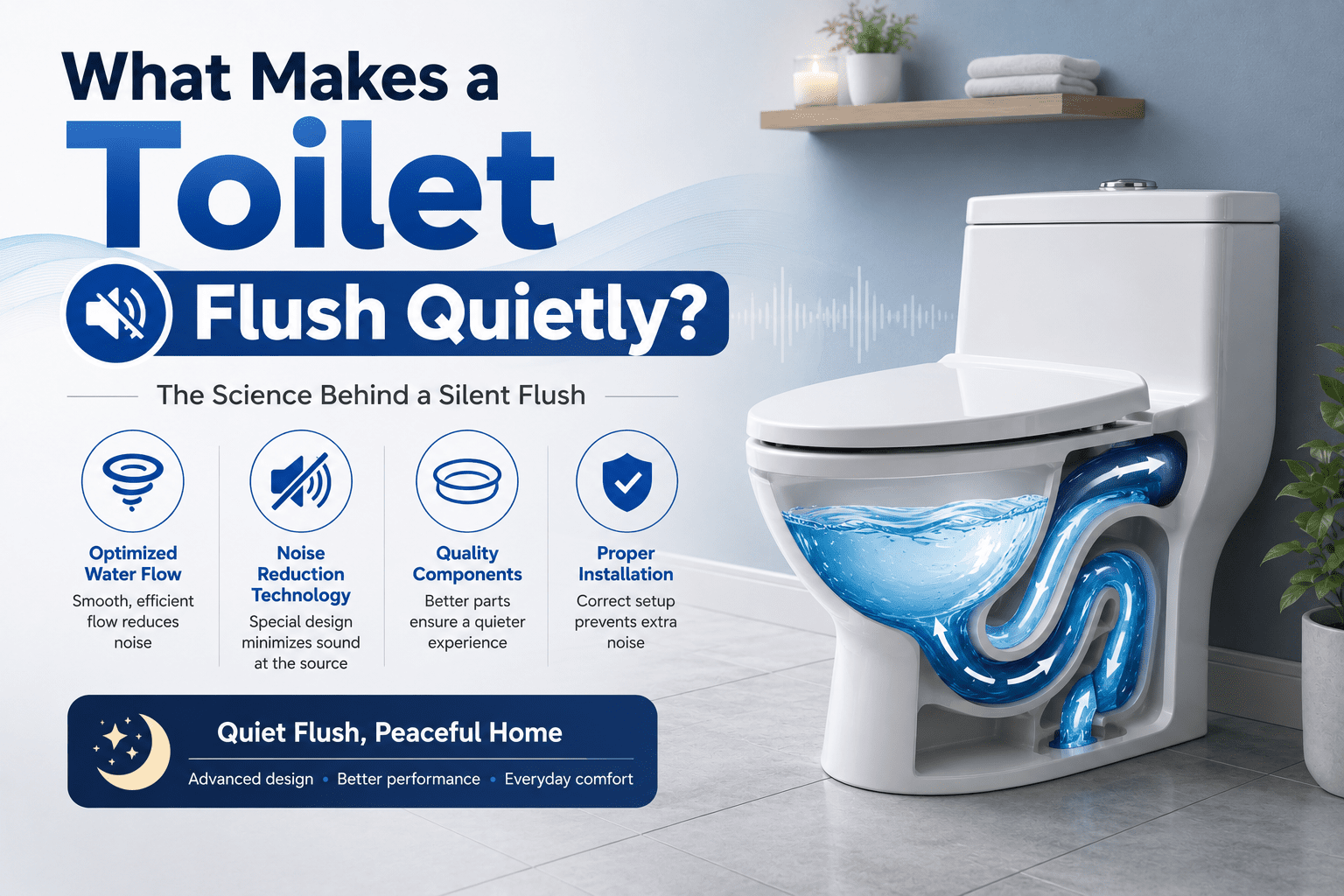
The answer comes down to flushing technology, bowl design, water flow engineering, tank components, and installation quality.
Modern toilets are far more advanced than older models, and many manufacturers now focus heavily on reducing flush noise without sacrificing performance.
Quick Answer
A toilet flushes quietly when it uses smoother water flow, optimized trapway design, insulated tank components, and controlled flushing pressure. Siphonic toilets are generally quieter than washdown toilets because they rely on suction rather than aggressive direct water force.
What Creates Toilet Flush Noise?
Several parts of the flushing process generate sound:
- Rapid water release from the tank
- Water rushing through the bowl rim
- Air movement inside the trapway
- Waste evacuation through the drain
- Tank refill valve operation
The louder these processes become, the noisier the overall toilet flush sounds.
Siphonic vs Washdown Toilets: Which Is Quieter?
Flush system type plays the biggest role in noise level.
| Feature | Siphonic Toilet | Washdown Toilet |
|---|---|---|
| Flush Noise | Quiet | Louder |
| Flush Style | Smooth suction | Direct water push |
| Water Flow Speed | Controlled | Aggressive |
| Best For | Homes & apartments | Commercial bathrooms |
| Typical Sound Level | Lower | Higher |
Siphonic toilets create quieter flushing because they use vacuum-style suction instead of relying entirely on direct gravity force.
You can compare both systems in Siphonic vs Washdown Toilets: Which One Is Better for Your Bathroom?.
1. Trapway Design Matters
The trapway is the curved internal channel that carries waste from the bowl into the drain.
Quiet toilets usually have:
- Smooth glazed trapways
- Gradual curves
- Reduced turbulence
- Balanced airflow
These features reduce vibration and water turbulence during flushing.
Premium toilet manufacturers spend significant time optimizing trapway geometry to minimize noise while maintaining strong performance.
2. Water Pressure Control
Extremely high water pressure often creates loud flushing sounds.
Quiet toilets carefully regulate:
- Water release speed
- Flush valve timing
- Rim jet distribution
- Bowl refill rates
This creates a smoother flush cycle.
3. Tank Fill Valve Quality
Many homeowners think flushing noise only comes from the bowl, but refill valves are often responsible for significant sound.
Cheap fill valves may produce:
- Whistling noises
- Hissing sounds
- Pipe vibration
- Water hammer effects
Modern quiet toilets typically use insulated or low-noise fill valves.
4. Bowl Water Surface Design
The water spot inside the bowl also affects flushing sound.
Siphonic toilets usually have larger water surfaces, which helps absorb sound and reduce splash noise.
This is one reason many homeowners describe siphonic toilets as more comfortable and refined.
Learn more in Why Are Siphonic Toilets Popular in Modern Homes?.
5. Installation Quality Can Increase Noise
Even premium toilets can become noisy if installed incorrectly.
Common installation problems include:
- Loose mounting bolts
- Unstable flooring
- Poor wax ring sealing
- Pipe vibration transfer
- Improper water pressure settings
These issues can amplify flushing sounds throughout the bathroom.
Real-World Example
A homeowner living in a small apartment replaced an older washdown toilet with a modern siphonic model after repeated complaints about nighttime flushing noise.
After installation, they immediately noticed:
- Softer flush sounds
- Less pipe vibration
- Reduced water refill noise
- Lower disturbance during nighttime use
In apartments and condos, these differences can dramatically improve daily comfort.
Are Pressure-Assisted Toilets Quiet?
Usually not.
Pressure-assisted toilets use compressed air to create extremely powerful flushing action.
Advantages include:
- Excellent clog resistance
- Strong commercial performance
- Very efficient waste removal
However, they are often much louder than gravity-fed siphonic toilets.
Features That Make Modern Toilets Quieter
| Quiet Feature | Benefit |
|---|---|
| Glazed trapway | Smoother water movement |
| Siphonic flushing | Reduced turbulence |
| Slow-close seat | Prevents slamming noise |
| Insulated fill valve | Less refill sound |
| Optimized rim jets | Balanced water flow |
| Dual-flush systems | Controlled water release |
Best Toilet Type for Quiet Bathrooms
If quiet operation is your top priority, siphonic toilets are usually the best choice for:
- Master bathrooms
- Luxury homes
- Nighttime use
- Apartments
- Guest bathrooms near bedrooms
Washdown toilets remain excellent for commercial environments where powerful flushing matters more than noise reduction.
How Many Decibels Is a Quiet Toilet?
Most standard toilets operate between 70–90 decibels during flushing.
Modern quiet siphonic toilets may reduce noise levels into the 60–70 decibel range depending on:
- Bathroom acoustics
- Tank design
- Water pressure
- Installation quality
According to the U.S. Department of Energy, reducing plumbing vibration and water turbulence can significantly lower household noise levels.
How to Make an Existing Toilet Quieter
If replacing the toilet is not possible, several upgrades may help:
- Install a quiet fill valve
- Adjust water pressure
- Tighten mounting hardware
- Add pipe insulation
- Replace worn flush valves
- Use a slow-close toilet seat
These improvements can noticeably reduce bathroom noise.
Frequently Asked Questions
1. Why are siphonic toilets quieter?
They use suction-based flushing instead of aggressive direct water force.
2. Are washdown toilets always loud?
Not always, but they are generally louder due to faster water movement.
3. Can water pressure affect toilet noise?
Yes. Excessively high water pressure often increases flushing noise.
4. Do expensive toilets flush more quietly?
Usually yes, because premium models use better engineering and noise-control components.
5. What is the quietest toilet type?
Modern gravity-fed siphonic toilets are typically the quietest option for residential bathrooms.
Conclusion
A quiet toilet flush depends on more than just the toilet itself. Trapway design, water flow control, tank components, installation quality, and flushing technology all influence noise levels.
Siphonic toilets remain the most popular choice for homeowners seeking quieter bathrooms because their suction-based flushing creates smoother and less aggressive water movement. Combined with modern engineering improvements, today’s quiet toilets can significantly improve comfort in apartments, family homes, and luxury bathroom spaces.