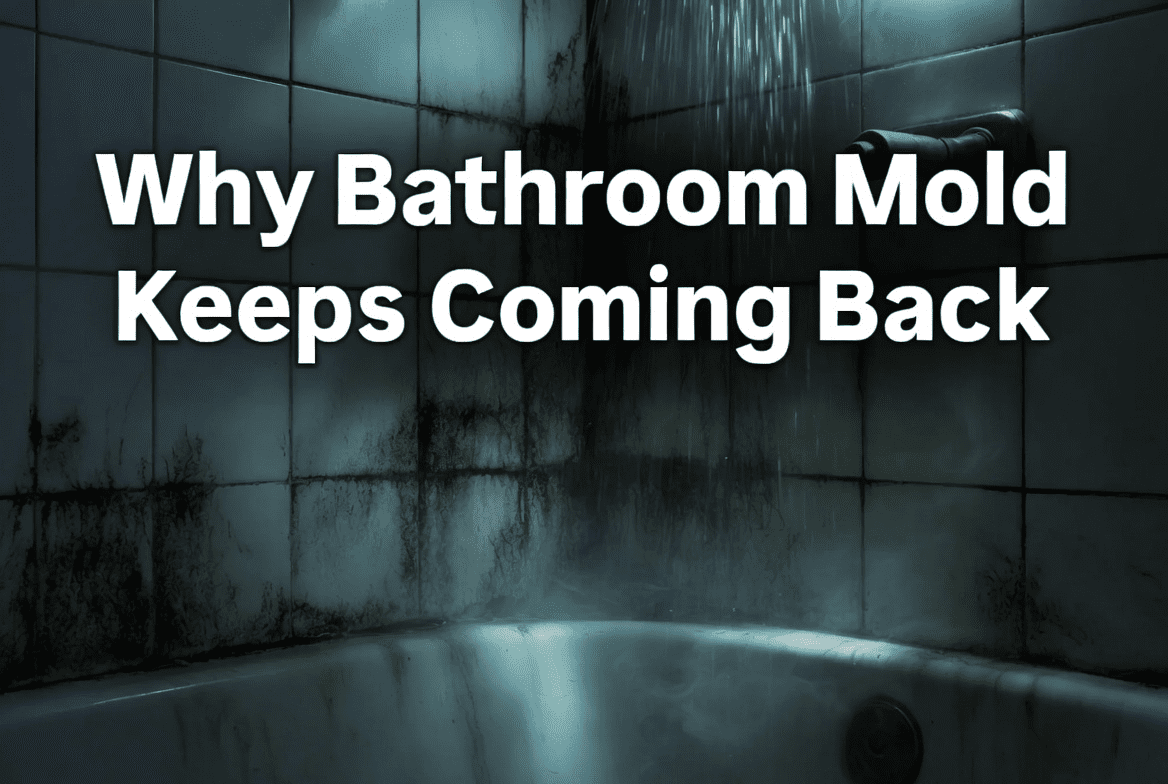
Mold in bathrooms can feel like a never-ending battle. You clean the walls, scrub the grout, use commercial mold removers, and yet, a few weeks later, those dark spots reappear. Why does this happen? Understanding the underlying causes is essential to preventing recurring mold growth.
Drawing on 15+ years of experience in home renovation and waterproofing, I’ve observed that recurring bathroom mold is usually caused by moisture management issues, ventilation deficiencies, or structural leaks rather than just surface contamination.
For a broader understanding of moisture control in bathrooms, check our Bathroom Waterproofingcategory.
Quick Conclusion
Bathroom mold keeps returning because the underlying moisture problem is not addressed. Mold thrives in damp, poorly ventilated areas, and cleaning it superficially only removes the visible growth, not the root cause.
Common Reasons Mold Returns
- Poor Ventilation: Bathrooms without exhaust fans or open windows trap humidity.
- Leaking Fixtures: Leaks from faucets, showerheads, or toilets provide a constant moisture source.
- Waterproofing Failure: Cracked or improperly installed membranes allow water to penetrate walls or floors.
- Condensation: Cold surfaces, such as tiles or mirrors, collect moisture that promotes mold growth.
- Improper Cleaning: Some cleaners remove surface mold but do not kill spores or prevent regrowth.
Comparison Table: Mold Prevention Approaches
| Solution | Price | Installation | Maintenance | Advantages | Disadvantages |
|---|---|---|---|---|---|
| Exhaust Fan Upgrade | Medium | Moderate | Low | Reduces humidity effectively | Initial installation cost |
| Waterproof Membrane Repair | High | Advanced | Low | Prevents hidden leaks | Requires partial renovation |
| Mold-Resistant Paint | Medium | Easy | Medium | Slows surface growth | Does not fix moisture issues |
| Regular Cleaning with Antifungal Cleaners | Low | Easy | High | Keeps surfaces clean | Does not address hidden mold |
Real-World Scenarios
Scenario 1: Small Apartment Bathroom
A tenant repeatedly cleaned visible mold on the ceiling. The issue persisted because there was no exhaust fan. Installing a high-capacity fan and leaving the door open after showers solved the problem long-term.
Scenario 2: Older Home with Tile Floors
Visible mold appeared at the tile baseboards. Investigation revealed a leaking shower drain. Repairing the drain and reinforcing the waterproof membrane stopped recurrence.
Scenario 3: Luxury Bathroom
Despite regular cleaning, mold appeared behind decorative panels. This was traced to condensation caused by poor insulation on cold walls. Adding thermal insulation and maintaining ventilation eliminated the recurring mold.
Best Practices for Long-Term Mold Prevention
- Install and maintain a high-quality exhaust fan.
- Repair leaks promptly—both visible and hidden.
- Use mold-resistant paints and tiles in high-moisture zones.
- Ensure proper waterproofing membranes under showers and floors.
- Maintain airflow, especially in small or enclosed bathrooms.
Data and Observation
Studies indicate that bathrooms with poor ventilation have up to 90% higher chance of recurring mold within six months, while bathrooms with exhaust fans and regular maintenance have only a 15–20% recurrence rate.
Frequently Asked Questions
1. Can mold grow even if I clean every week?
Yes. Surface cleaning removes visible mold but cannot eliminate moisture trapped behind tiles, walls, or cabinets.
2. Is mold dangerous to health?
Yes. Prolonged exposure to mold spores can trigger allergies, respiratory issues, and asthma.
3. How can I detect hidden mold?
Look for musty odors, water stains, warped tiles, or discoloration behind fixtures and walls.
4. Does waterproofing prevent mold?
Proper waterproofing reduces leaks and moisture penetration, significantly lowering mold growth risk.
5. Can ventilation alone stop mold?
Ventilation reduces humidity but is most effective when combined with leak repair, waterproofing, and regular cleaning.
Related Articles
- Bathroom Waterproofing Guide
- Most Common Bathroom Waterproofing Mistakes
- Why Is My Bathroom Floor Leaking?
- Bathroom Waterproofing Membrane Explained
Core reference: Bathroom Waterproofing Core Guide
External reference: EPA Mold Guidelines
Conclusion
Recurring bathroom mold is rarely due to surface dirt alone. It almost always indicates an underlying moisture problem, whether from poor ventilation, leaks, or inadequate waterproofing. To permanently eliminate mold, address the source of moisture, reinforce waterproofing where needed, and maintain airflow and regular cleaning.
In my professional experience, combining structural solutions with routine maintenance is the most reliable way to keep bathrooms mold-free and healthy over the long term.