
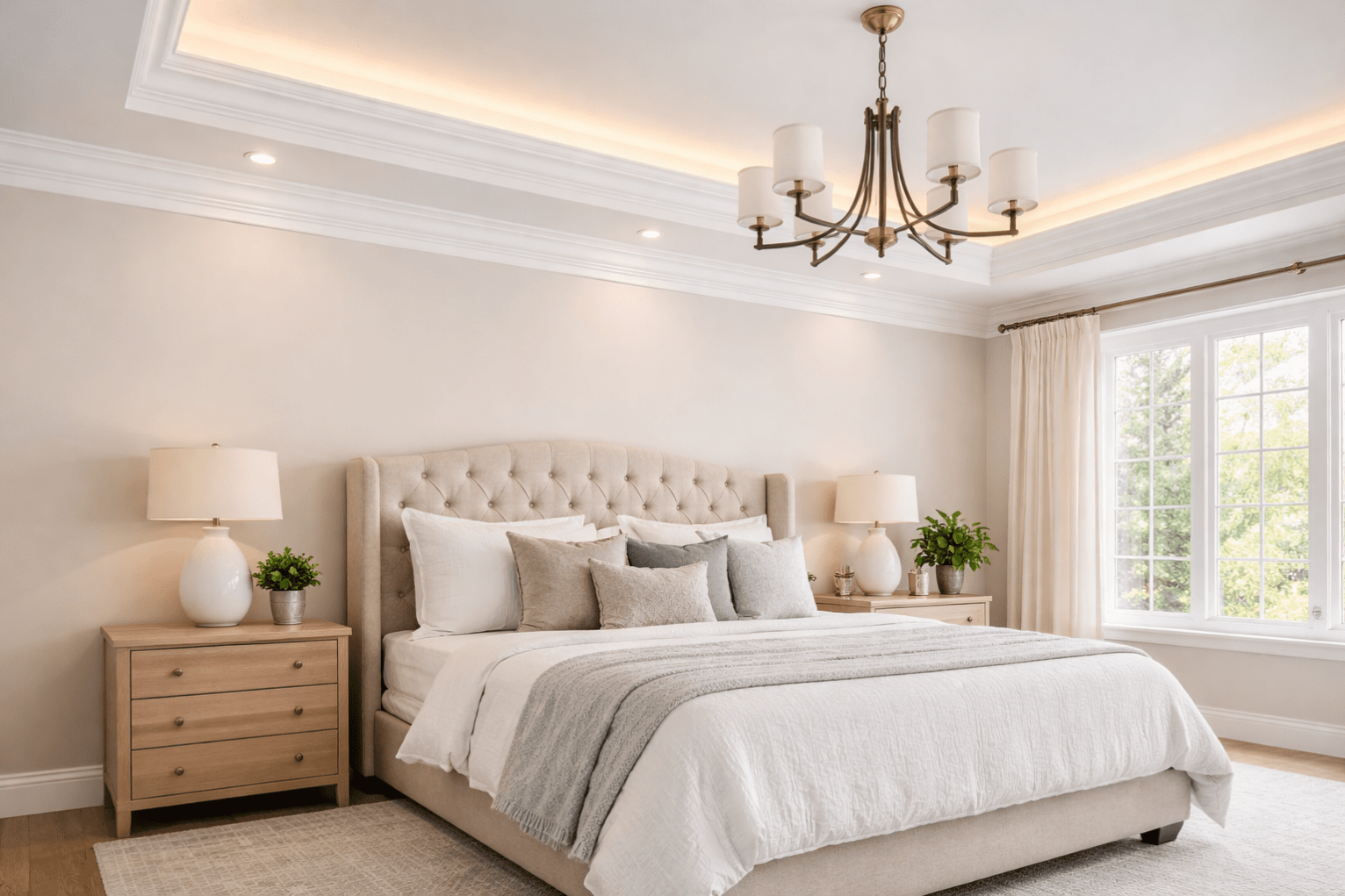
When designing or renovating a bedroom, ceiling details are often overlooked. However, the right ceiling molding (commonly referred to as plaster lines or crown molding) can significantly elevate the overall look of your space.
If your bedroom falls within the 200–300 sq ft range (approximately 20–30㎡), choosing the correct molding style, size, and material becomes especially important. Too large, and it overwhelms the room. Too small, and it looks underwhelming.
In this guide, I’ll walk you through practical, experience-based recommendations to help you select the right ceiling molding for both functionality and aesthetics.
Why Ceiling Molding Matters in Bedroom Design
Ceiling molding serves both decorative and functional purposes:
- Enhances visual depth – Creates a transition between wall and ceiling
- Improves perceived height – Makes ceilings feel taller
- Hides imperfections – Covers gaps or uneven edges
- Adds style – Defines modern, classic, or minimalist aesthetics
Recommended Molding Sizes for 200–300 sq ft Bedrooms
| Ceiling Height | Recommended Molding Width | Style Suggestion |
|---|---|---|
| 8 ft (2.4m) | 2–3 inches | Simple, clean lines |
| 9 ft (2.7m) | 3–5 inches | Moderate detail |
| 10 ft+ (3m+) | 5–7 inches | Decorative or layered molding |
How to Choose the Right Style
1. Match Your Interior Style
The molding should complement your bedroom design:
- Modern style – Slim, straight profiles with minimal detail
- Classic style – Curved lines and decorative patterns
- Minimalist style – Almost invisible or very subtle molding
2. Consider Ceiling Height First
In a 200–300 sq ft bedroom, ceiling height matters more than floor area.
A common mistake is choosing wide, ornate molding for low ceilings, which makes the room feel compressed.
3. Choose the Right Material
- Plaster (gypsum) – Traditional, durable, but heavier
- PU (polyurethane) – Lightweight, easy to install, moisture-resistant
- PVC – Budget-friendly but less premium look
For most homeowners, PU molding offers the best balance between cost and ease of installation.
4. Keep Proportions Balanced
In mid-sized bedrooms, balance is key. Avoid:
- Overly complex designs
- Excessive layering
- Too many decorative elements
If you’re also planning furniture layout, you may find our living room layout guide helpful for optimizing your overall home design.
Design Tips That Make a Big Difference
- Use light colors – White or off-white keeps the space open
- Combine with indirect lighting – LED strips enhance depth
- Keep consistency – Match molding with door and window trims
Common Mistakes to Avoid
- Choosing based on looks only – Ignore proportions
- Using oversized molding – Makes the room feel smaller
- Poor installation – Visible gaps ruin the effect
- Ignoring lighting integration – Missed opportunity for design upgrade
For more professional interior design insights and trends, you can refer to Architectural Digest, a trusted authority in home design.
Questions about ceiling decorative strips
1. What is the best molding size for a standard bedroom?
For most standard bedrooms (8–9 ft ceilings), 2–5 inches wide molding provides a balanced and proportional look.
2. Can I install ceiling molding myself?
Yes, especially with PU materials. However, precise cutting and alignment are essential for a clean finish.
3. Does ceiling molding make a room look bigger or smaller?
When chosen correctly, it can make a room feel taller and more refined. Poor sizing, however, can have the opposite effect.
Conclusion
Choosing the right ceiling molding for a 200–300 sq ft bedroom is all about proportion, style alignment, and material selection. By focusing on ceiling height, keeping the design balanced, and avoiding common mistakes, you can significantly enhance the overall look of your space.
A well-chosen molding detail may seem subtle, but it plays a major role in creating a polished, cohesive bedroom design.