
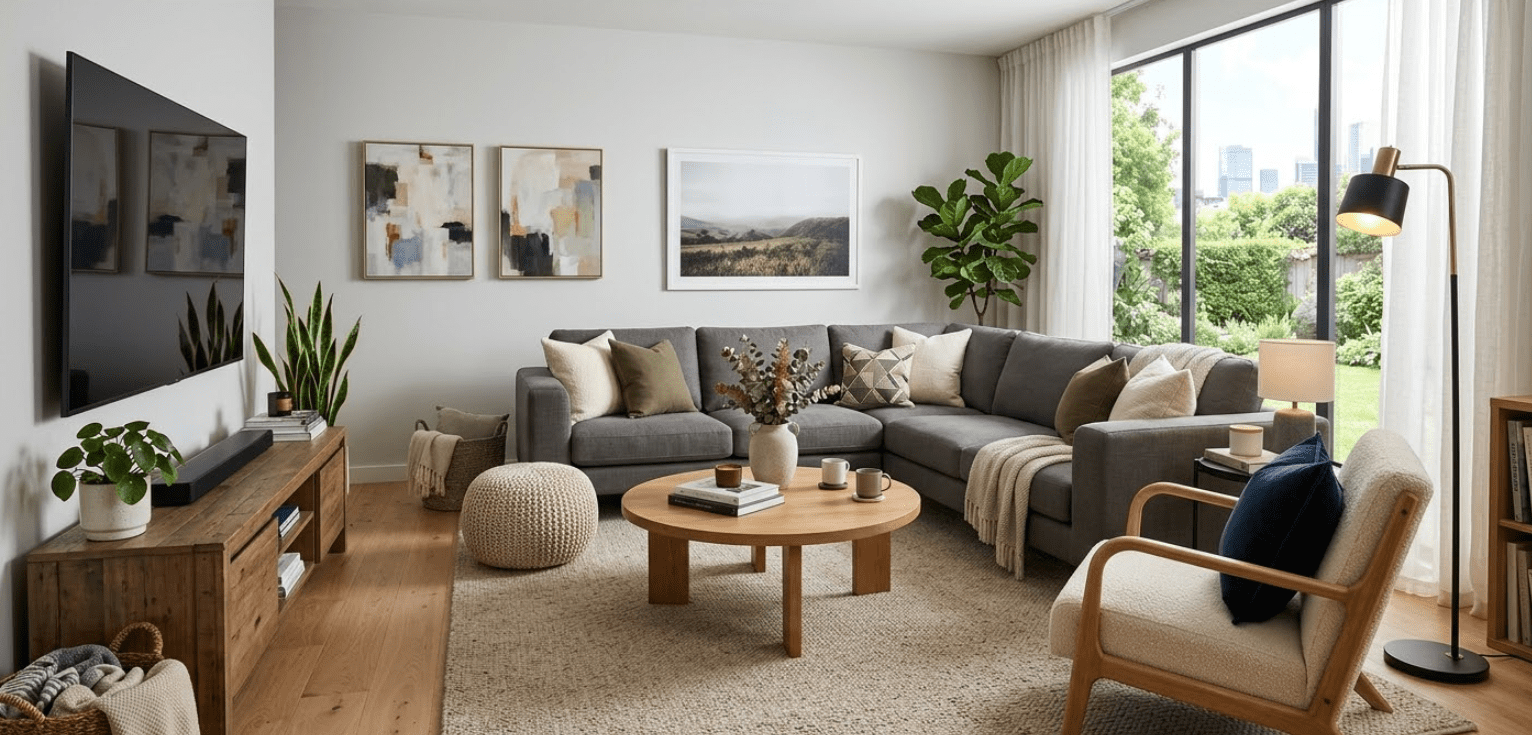
Arranging a sofa in your living room may seem simple, but the right layout can completely transform how your space looks and feels. A well-planned sofa arrangement improves comfort, enhances traffic flow, and creates a more inviting atmosphere for both everyday living and entertaining guests.
Based on years of hands-on home design and renovation experience, I’ll walk you through practical sofa layout strategies that actually work in real homes—not just in staged photos.
Why Sofa Placement Matters More Than You Think
Your sofa is typically the largest and most important piece of furniture in the living room. Its placement determines:
- Traffic flow – How easily people move around
- Focal point – TV, fireplace, or window view
- Comfort level – Conversation and usability
- Visual balance – Overall room aesthetics
Common Sofa Layout Types
| Layout Type | Best For | Key Benefit |
|---|---|---|
| Against the Wall | Small spaces | Maximizes open area |
| Centered Layout | Medium to large rooms | Creates balanced focal point |
| L-Shaped (Sectional) | Family rooms | Defines seating zone |
| Floating Sofa | Open-concept layouts | Divides space naturally |
Step-by-Step Guide to Arranging Your Sofa
1. Identify the Focal Point
Start by deciding what your living room revolves around. This could be a TV, fireplace, large window, or even a statement wall.
Your sofa should either face or align with this focal point to create a natural visual flow.
2. Consider Traffic Flow
A common mistake is blocking pathways. Make sure there’s enough space for people to move comfortably.
- Leave at least 30–36 inches for walkways
- Avoid placing sofas directly in high-traffic paths
3. Choose the Right Distance
The distance between your sofa and other elements matters:
- TV viewing distance: 6–10 feet (depending on size)
- Coffee table gap: 14–18 inches from sofa
4. Use Rugs to Define the Layout
A well-sized rug can anchor your sofa and create a cohesive seating area.
- Front legs of the sofa should sit on the rug
- Ensure the rug is large enough for the seating zone
5. Add Complementary Seating
Don’t rely on a sofa alone. Add chairs, ottomans, or benches to create a conversational layout.
If you’re planning a full home upgrade, you may also find our Floor-Standing Toilet vs Wall-Mounted Toilet: Which One Is Right for Your Bathroom? helpful for improving other areas of your home.
Small Living Room Sofa Layout Tips
- Use a compact sofa – Avoid oversized sectionals
- Place against the wall – Saves space
- Choose light colors – Makes the room feel larger
- Use multifunctional furniture – Storage ottomans, etc.
Open-Concept Living Room Layout Tips
- Float the sofa – Use it as a divider
- Pair with a console table – Adds functionality
- Align with area rugs – Defines zones clearly
Common Mistakes to Avoid
- Pushing all furniture against walls – Makes the room feel disconnected
- Ignoring scale – Sofa too big or too small for the room
- Poor TV placement – Causes discomfort
- Blocking natural light – Reduces room appeal
For professional interior layout standards and ergonomic guidelines, you can refer to the Architectural Digest, a trusted source for home design inspiration and best practices.
Common Questions Regarding Sofa Placement
1. Should a sofa always face the TV?
Not necessarily. While many living rooms are TV-focused, you can also orient your sofa toward a fireplace, window, or conversation area depending on your lifestyle.
2. How far should a sofa be from the wall?
In small rooms, placing it against the wall is fine. In larger spaces, leaving a few inches or even floating it can improve layout and flow.
3. Is a sectional sofa better than a standard sofa?
Sectionals are great for maximizing seating in family rooms, but they can overwhelm smaller spaces. Choose based on your room size and needs.
Conclusion
A well-planned sofa arrangement is the foundation of a functional and beautiful living room. By focusing on layout, spacing, and balance, you can create a space that feels both comfortable and visually appealing.
Whether you’re working with a small apartment or a large open-concept home, the key is to prioritize flow, functionality, and proportion. With the right setup, your living room becomes a place people naturally want to gather and stay.
